Score |
60






A Tree Without Roots.

<p>A tree without roots does not stand for long. It does not matter how tall it grows or how green its leaves look from a distance. Cut the roots, and the first strong wind decides the rest.</p><p><br/></p><p>A people work the same way. A community can build skyscrapers, run governments, win prizes abroad, and still fall over the moment it forgets where it came from. History is not decoration. It is the root system. It holds everything else in place.</p><p><br/></p><p>I study oral history, so I spend a lot of time with people who remember things nobody wrote down. </p><p><br/></p><p>Old men who can recite six generations by heart. Women who know why a compound is built the way it is built, or why a river is treated with respect. </p><p>None of this is written in any textbook. It survives because someone kept saying it out loud, and someone else kept listening.</p><p><br/></p><p>Names carry the same weight. Every name in every African language once meant something. </p><p><br/></p><p>A name could record the season a child was born, the condition the mother was in, a prayer the family was making, or a debt owed to an ancestor. </p><p><br/></p><p>A name was never just a sound. It was a small piece of archive, small enough to fit in a mouth, passed from one generation to the next without needing paper.</p><p><br/></p><p>Colonial contact changed some of that. So did trade, religion, and migration, long before any colonizer arrived. Culture has never stood perfectly still. It borrows, it absorbs, it adapts. The danger is not that culture changes. </p><p>Change is normal. The danger is forgetting why it changed and forgetting what it looked like before.</p><p><br/></p><p>Take the Kenyan writer born James Ngugi. He wrote his early, celebrated novels in English, the language of his schooling. Then, around 1970, he set that name aside and became Ngũgĩ wa Thiong'o. </p><p>Soon after, he stopped writing fiction in English altogether and began writing in Gikuyu, his mother's language, arguing that a people's language carries their memory in a way nothing else can replace. </p><p><br/></p><p>He was jailed for it. He kept going anyway. That is what it looks like when someone decides their roots are worth more than the comfort of staying where colonial history left them.</p><p><br/></p><p>Or take Timbuktu, in Mali. When extremist fighters took the city in 2012, a librarian named Abdel Kader Haidara understood what was at stake before almost anyone else did. </p><p><br/></p><p>Hundreds of thousands of manuscripts, some dating back to the eleventh century, sat in libraries across the city, proof of centuries of African scholarship in mathematics, astronomy, law, and medicine. </p><p><br/></p><p>Haidara and a network of volunteers spent months smuggling those manuscripts out by donkey, by boat, and by road, past checkpoints on both sides of the conflict, to keep them from being burned. </p><p><br/></p><p>Thousands of pages were lost. Hundreds of thousands were not, because ordinary people decided that history was worth the risk.</p><p><br/></p><p>Neither of those stories is about a name alone. They are about people who understood that roots do not protect themselves. Somebody has to choose, again and again, to protect them.</p><p><br/></p><p>That is the real threat to any people: not evolution, but amnesia. A community that cannot trace its own names, its own oral records, or its own origin stories is a tree standing in soil it no longer remembers growing from.</p><p><br/></p><p>The work in front of us is not to freeze culture in place, pretending nothing should ever change. The work is to know our own root system well enough that we can tell the difference between growth and erasure.</p><p><br/></p><p>Ask an elder what your name means. Ask what your grandmother's name meant. Write it down before the person who knows it is gone. </p><p>That is how a tree keeps its roots, even as it grows new branches every year.</p>


 40
40


Other insights from Quareeb Jagun







Referral Earning

Points-to-Coupons

Insights for you.


Igbo Kwenu!!!
Today, I refuse to be humble Not when I speak about my tribe...Cha Cha Cha Cha Cha,Igbo...
673 views
46 upvotes
36 comments


Confessions of a Nearly-Native
My name is Idara. I am Annang from Akwa Ibom. And I cannot speak my language.My mother ...
335 views
32 upvotes
35 comments
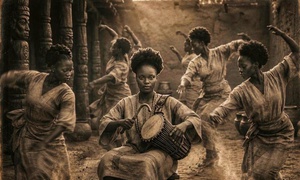

ÈMI NI ÌLÙ (I Am the Drum)
Mò fẹ́ kí ara mi gbọ́ mi.Before the world gives me a name,let my own soul remember mine.B...
114 views
24 upvotes
27 comments
Agbada and Other Silences
They said it with authority no one questioned.... “Àgbà kì í wà l’ọ́jà, kí orí ọmọ tuntu...
309 views
22 upvotes
28 comments


ÌLÚ MI, ILÉ MI
Modakeke Akoraye omo ogunteludo omo akinkanju loju ogun. Maybe because of you my father...
295 views
17 upvotes
22 comments






71 views
18 upvotes
18 comments


DID YOU KNOW?
1. That the Sahara Desert wasn’t always a desert?A bazillion years ago, it was actually...
286 views
14 upvotes
14 comments