Score |
81



Writer | Speaker | Creative Voice. I tell stories, make calls & design confidence. @ Yabatech
Lagos, Nigeria
 15169
15169
 17417
17417
 1128
1128
 1131
1131
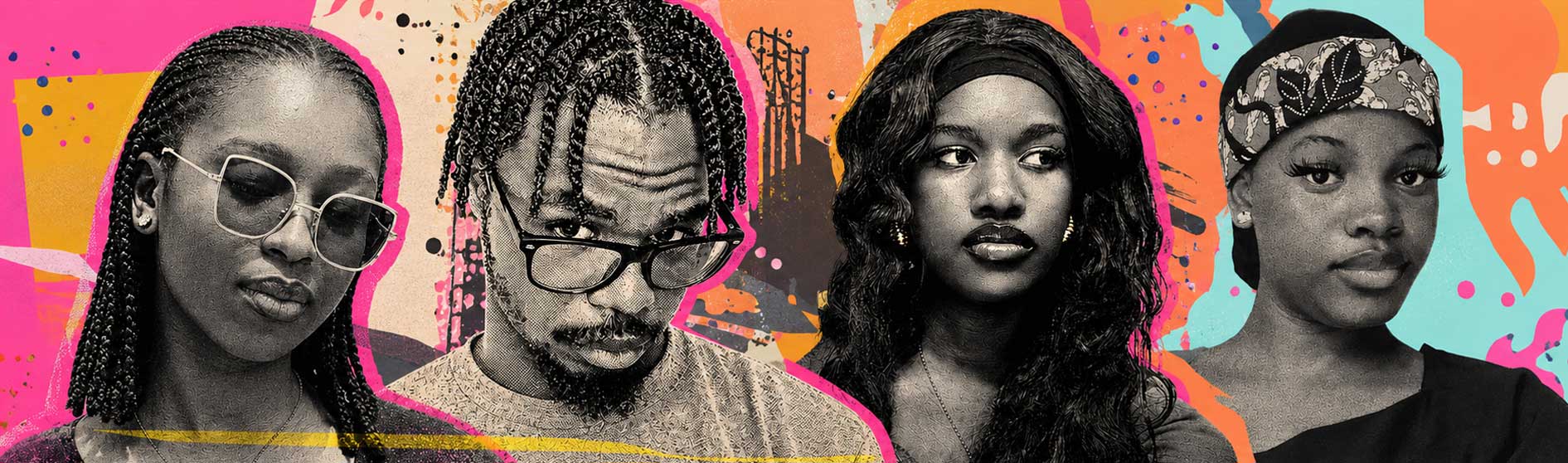
Olodo: The New Influence

<p><span style="background-color: transparent;">Back in school, nobody wanted to be called an Olodo. It was the playground mark of failure.. the label reserved for the back-bencher who couldn't get the math, stumbled through dictation, and was quietly expected to sit in the corner. Decades of cultural habit taught us a simple rule: hide what you don't know, study in silence, and only speak when you can project total competence.</span></p><p><br/></p><p>Welcome to the era of the reverse flex.</p><p><br/></p><p>Today, the Olodo isn't hiding in the back, they’re owning the main stage, running the narrative, and collecting the check. Look at your feed right now. The creators breaking through aren't always the sharpest minds or the most prepared voices. Often, they’re the loudest, the rawest, and the least polished. They drop videos saying things factually wild or grammatically chaotic, and instead of getting laughed off the platform, they blow up overnight. Meanwhile, people with actual degrees and years of experience sit there getting five likes from their close friends.</p><p><br/></p><p>It’s easy to throw our hands up and declare that culture is ruined, but that misses what’s actually happening. Let’s drop the intellectual snobbery and name this accurately: this isn't a celebration of stupidity; it's a vote of no confidence in fake authority.</p><p><br/></p><p>For years, public discourse was dominated by gatekeepers and self-appointed experts who presented every idea with absolute, corporate certainty. Every expert sounded like a press release, and every influencer acted like a walking brand deal. The market finally snapped. Audiences aren't backing ignorance for the fun of it, they are aggressively running away from performative perfection. When everyone sounds like a script, a bit of unfiltered noise feels like real life.</p><p><br/></p><p>Think about how you act around your real friends. You don't hang out with people who talk like a textbook or lecture you all day. You hang out with people who keep it real, admit when they’re clueless, and don't try to act smarter than they are. When an everyday creator posts something flawed, unedited, and slightly unhinged, it feels human. We let our guard down because raw delivery bypasses our mental spam filter.</p><p><br/></p><p>But to be honest, the answer to this whole uprising isn't a clean yes or no.</p><p><br/></p><p>There is a real, dangerous downside here. When engagement algorithms consistently reward hot takes, factual blunders, and loud confidence over accuracy, the broader discourse suffers. Bad information spreads fast when noise replaces substance, and relatability suddenly becomes a lazy substitute for truth. We end up in a culture where doing the work researching, verifying, thinking deeply, yields lower reach than simply turning on a camera and spouting half-baked opinions.</p><p><br/></p><p>The tension is real: We want accuracy, but we hate pretension. We crave authenticity, but we need substance. Right now, the internet is forcing us to choose between an arrogant expert and an engaging amateur and until we find a way to bridge that gap, this conflict isn't going anywhere.</p><p><br/></p><p>Thankfully, the blueprint for that bridge already exists.</p><p><br/></p><p>Look at the likes of <strong>Eric Gugua</strong>. He isn't out here farming outrage or chasing cheap virality with empty noise, nor is he sitting on a high horse lecturing his audience. Whether he's breaking down complex ideas or sharing everyday truths, he communicates with quiet conviction, plain language, and zero pretension. He doesn't act like a podium; he speaks like a person. Creators like him prove that you don't have to trade depth for reach, or sacrifice authenticity just to be understood. They represent the real evolution of content: high-value substance wrapped in accessible, unpretentious humanity.</p><p><br/></p><p>So, to answer the motion before us: Are WE rewarding ignorance or authenticity?</p><p><br/></p><p>We were never rewarding ignorance for its own sake. Ignorance was simply the collateral damage of a culture desperately starving for something real. What we are actually rewarding and what we have been craving all along, is unfiltered authenticity. The crowd gravitated toward the Olodo not because of their mistakes, but because they were the only ones brave enough to show up without a mask.</p><p><br/></p><p>The Olodo Uprising was never the final destination; it was just the wake-up call. The future belongs to those who possess both the substance of an expert and the raw honesty of a human being, because in a world full of noise, authenticity will always win the audience, but substance is what keeps them.</p>


 14
14






Other insights from Big Dee






Referral Earning

Points-to-Coupons

Insights for you.


Before You Say “I Love You”
The people in our community said my parents had a strong marriage.They saw school fees ...
320 views
19 upvotes
29 comments
YOU ALL ARE MONSTERS
You All Are Monsters.Yes. I'm talking to you, oh and of course, me too.Why are you shoc...
289 views
23 upvotes
26 comments

Shut Down
Look at him...not bleeding…but burning.Because bleeding is mercy.Bleeding means somethi...
229 views
21 upvotes
24 comments

December Still Owes Me
Friday.December 22nd, 2017.Three days to Christmas.Three days to her birthday.The world...
209 views
21 upvotes
23 comments




My Two Cents on Twocents... The First...
It all started with one desire—a desire to be heard.A desire that leaned closer…and cho...
240 views
19 upvotes
20 comments

Untie the knot
I was reading through a thread the other day that left a heavy knot in my chest. It was...
202 views
19 upvotes
20 comments


























Comments