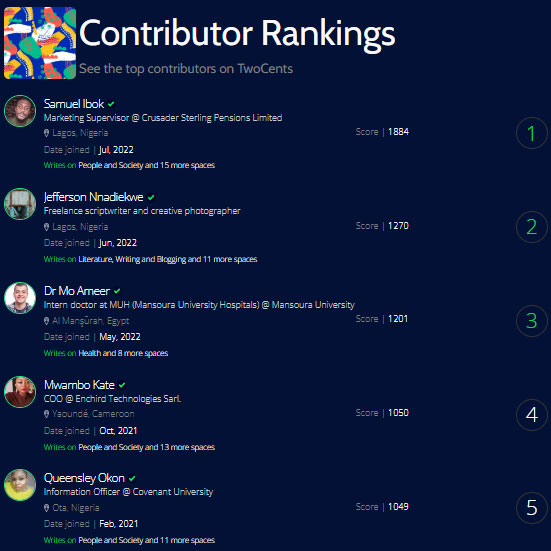
Score |
77





The parable of the lamp

<p>In a small village where the road ended and the hills began, there lived a potter named Amaru. His hands were rough, his clothes plain, and his workshop no larger than a goat’s shed. Yet travelers often paused there, not because of the size of his shop, but because of the light that shone from it every evening.</p><p>Amaru made clay lamps. They were not decorated with gold, nor painted with bright colors. Each lamp looked ordinary, and some even thought them imperfect—slightly uneven at the rim, faintly marked by fingerprints. But once lit, they gave a steady, gentle glow that lasted through the night.</p><p>One day, a merchant from a distant city arrived. He was known for trading in fine things: silk, silver, polished glass. Seeing Amaru’s lamps, he laughed softly.</p><p>“Why do people buy these?” the merchant asked. “They are plain, and the market prefers beauty.”</p><p>Amaru smiled and said nothing.</p><p>The merchant bought one lamp out of curiosity and continued his journey. That night, a storm rose. Wind howled, rain beat down, and darkness swallowed the road. The merchant lit his new lamp, expecting it to flicker and fail. But it did not. While his expensive glass lantern cracked in the cold, the clay lamp held firm, its flame protected.</p><p>When the storm passed, the merchant returned to Amaru’s village.</p><p>“Teach me your secret,” he said. “What makes your lamps endure?”</p><p>Amaru replied, “There is no secret. I choose good clay, knead it patiently, and fire it slowly. I do not rush the process, and I do not abandon the lamp when it looks ugly before it is finished.”</p><p>The merchant frowned. “But what has this to do with love? People say you are wise in such things.”</p><p>Amaru lifted an unbaked lamp and held it gently. “Love is like this clay. At first, it is soft and full of promise. If you squeeze it too hard, it collapses. If you leave it unattended, it dries and cracks. It must be shaped with care.”</p><p>He placed the lamp into the kiln. “Fire is not the enemy. Without heat, the lamp cannot hold light. In love, fire comes as hardship, misunderstanding, and sacrifice. Many run when the heat rises. They think love should always feel warm, never burn.”</p><p>The merchant listened as the kiln glowed.</p><p>“When love survives the fire,” Amaru continued, “it becomes strong enough to carry light for others. Not just in easy nights, but in storms.”</p><p>The merchant looked down, remembering relationships he had left when they became inconvenient, people he had loved only while they were useful or beautiful.</p><p>Before leaving, he bought many lamps—not to sell for profit, but to give away.</p><p>And so the parable spread through the villages:</p><p>That love is not proven by how brightly it shines at first, but by how long it endures the dark;</p><p>That love shaped patiently, fired honestly, and held gently becomes a light that does not fail;</p><p>And that the truest love, like a humble clay lamp, may look ordinary to the eye, yet saves many from the night.</p>


 84
84


Referral Earning

Points-to-Coupons

Insights for you.


A WORD IS ENOUGH FOR THE WISE
There is something extremely powerful about words, they hold power most never pay atten...
1883 views
9 upvotes
10 comments


Education vs Religion
I thought this is an interesting topic, especially when Religion is a form of education...
1343 views
5 upvotes
1 comment


THE MAK LAW SCHOOL EXPERIENCE
Around July 2022, I met Mr. Tobi Igbendion who introduced me to the Two Cents Platform....
1273 views
4 upvotes
5 comments

ASUU IS COMPLICIT
The Academic Staff Union of Universities (ASUU) was formed in 1978. It is officially re...
1232 views
2 upvotes
2 comments

CURIOSITY: THE FUEL OF EDUCATION
Anything worth doing is worth doing well. This is one of the many age old sayings tha...
1203 views
2 upvotes
2 comments


Rebellious for a Reason
Students in most universities, professional schools and institutions in Cameroon face a...
1128 views
8 upvotes
7 comments



Learning French has been Messy
Many people ask me about my french learning journey. I usually have long winding voice ...
1120 views
7 upvotes
4 comments
































Comments