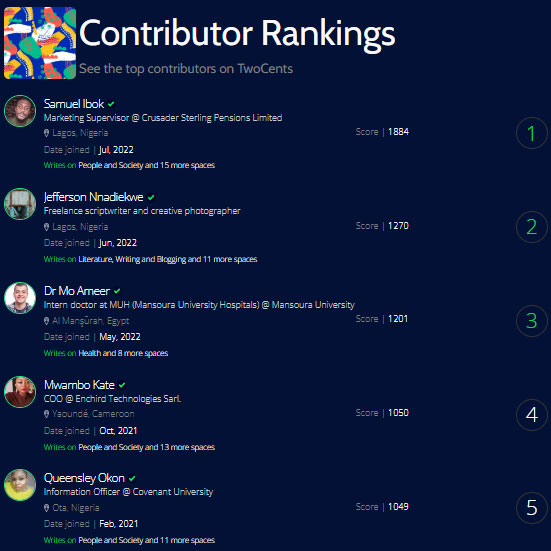
Score |
10






The Olodo Uprising: Are We Rewarding Ignorance or Authenticity?

<p><br/></p><p>Every generation has its trends, catchphrases, and personalities that dominate conversations. Lately, one recurring theme across social media is the celebration of what many jokingly call the "Olodo uprising." While the term is often used humorously to describe someone who appears uninformed or intellectually unserious, it raises a much deeper question: Are we rewarding ignorance, or are we simply embracing authenticity?</p><p><br/></p><p>At first glance, the answer seems obvious. People love authenticity. In a world full of filters, curated lifestyles, and carefully crafted online personas, someone who is unapologetically themselves feels refreshing. They make mistakes publicly, laugh at themselves, and aren't afraid to admit that they don't know everything. That kind of honesty is valuable because it reminds us that perfection isn't a requirement for acceptance.</p><p><br/></p><p>However, there is a fine line between being authentic and glorifying ignorance.</p><p><br/></p><p>Authenticity means acknowledging your strengths while recognizing your weaknesses. It means being comfortable enough to say, "I don't know," while remaining curious enough to ask questions and learn. Ignorance, on the other hand, becomes problematic when it is worn as a badge of honor, when people reject facts, mock education, dismiss expertise, or proudly refuse to improve simply because doing so has become entertaining.</p><p><br/></p><p>Social media has amplified this tension. Platforms reward engagement, not necessarily wisdom. A confident but inaccurate opinion often spreads faster than a thoughtful, well-researched explanation. Funny mistakes become memes, misinformation becomes content, and people who speak with certainty even when they're wrong, sometimes gain more attention than those who speak with knowledge and nuance. In that environment, being loud can appear more valuable than being informed.</p><p><br/></p><p>But this isn't just about the individuals creating the content. It's also about the audience. Every like, share, repost, and comment tells platforms what we enjoy seeing. If we constantly reward anti-intellectual behavior because it's funny or relatable, we unintentionally create a culture where learning is seen as boring and ignorance becomes a form of entertainment.</p><p><br/></p><p>That doesn't mean everyone needs to be an academic or speak perfect English to deserve respect. Intelligence comes in many forms. Some people may not have had access to quality education, yet possess incredible emotional intelligence, practical wisdom, creativity, or entrepreneurial skills. Judging people solely by grammar, vocabulary, or formal education is unfair and elitist.</p><p><br/></p><p>The real issue isn't lacking knowledge, it's resisting growth.</p><p><br/></p><p>There is no shame in not knowing something today. The shame lies only in refusing to learn tomorrow. The smartest people are rarely those who claim to know everything; they are usually the ones who remain curious, ask questions, and continuously seek improvement. Growth begins with humility, not perfection.</p><p><br/></p><p>Perhaps the "Olodo uprising" reflects something deeper about our society. Maybe people are tired of pretending to be perfect. Maybe they want spaces where they can be vulnerable without fear of ridicule. If that's the case, then authenticity should absolutely be celebrated. But authenticity should never become an excuse to reject learning or dismiss the value of knowledge.</p><p><br/></p><p>Imagine a culture where people proudly admitted, "I was wrong," and celebrated discovering something new just as much as they celebrated being funny. Imagine if curiosity became as viral as confidence. We would still have authentic people, but we would also have a society that values growth over stagnation.</p><p><br/></p><p>The question, then, is not whether we should reward authenticity. We should. The better question is whether we are confusing authenticity with an unwillingness to learn.</p><p><br/></p><p>Authenticity says, "This is who I am today, but I'm open to becoming better tomorrow."</p><p><br/></p><p>Ignorance says, "This is who I am, and I don't care whether I'm wrong."</p><p><br/></p><p>Those are two very different mindsets.</p><p><br/></p><p>As the "Olodo uprising" continues to trend, perhaps it's worth asking ourselves what we're really applauding. Are we encouraging people to be genuine while pursuing growth? Or are we rewarding a culture where remaining uninformed is easier and sometimes more profitable than becoming informed?</p><p><br/></p><p>Because in the end, authenticity and intelligence are not enemies. The most authentic people are often those who are humble enough to keep learning.</p>



 8
8


Other insights from Favour Umoakpan










Referral Earning

Points-to-Coupons

Insights for you.

Gen Z, Are We.... Hungry?
If aliens were to read our texts, they'd think Gen Z are in a perpetual state of starva...
456 views
34 upvotes
33 comments


Dear Dad
Dear dad,It's been 7 years, 3 months and 1 day and your name still echoes in my brain.W...
159 views
37 upvotes
25 comments

I Think We Broke Gen Alpha
I think we broke Gen Alpha...Yesterday I opened TikTok.A child who couldn't have been o...
173 views
27 upvotes
26 comments

GOD IS A GIRL DAD.
Fathers and daughters, a match made in heaven.Literally.They say a girl's first love is...
347 views
19 upvotes
20 comments




Insufficient!
I met a young man this evening in a shared ride, first it was Arsenal that got us talki...
503 views
25 upvotes
25 comments



What Makes a Criminal?
Desperation had never carried this much anxiety.For the first time since her husband di...
123 views
22 upvotes
25 comments


Untie the knot
I was reading through a thread the other day that left a heavy knot in my chest. It was...
204 views
21 upvotes
22 comments

Food Wahala!
As the rain pours down heavily and the sun announces her temporary resignation, I sit q...
116 views
19 upvotes
21 comments































Comments