Score |
2



Student @ Adekunle Ajasin University of Akungba, Akoko



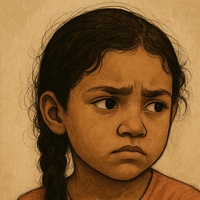
"We Laugh, But We Are Tired"

<p>We need to talk about the current situation we find ourselves in as a country.</p><p>I truly admire the resilience of Nigerians. We have a way of surviving anything. We laugh, we joke, we turn pain into memes, and somehow we still find reasons to smile even in the middle of hardship. It is a beautiful thing this ability to endure. But the real question is: to what end?</p><p>How long do we keep laughing through suffering before we admit that things are no longer just “hard,” but deeply broken?</p><p>Children are no longer going to school not because they don’t want to, but because their parents simply cannot afford it anymore. Education, which is supposed to be a basic right, is gradually becoming a luxury. What kind of future are we building when the next generation is being denied the tools to succeed?</p><p>Even begging, something people once turned to as a last resort, no longer guarantees survival. The streets are filled with too many people struggling for the same scraps. Poverty has become so widespread that even desperation now has competition.</p><p>There is no stable electricity. Power supply is inconsistent, and yet people are still expected to pay bills they can barely afford. But how do you pay for what you hardly receive? How do you meet obligations when your basic means of survival are already stretched to the limit?</p><p>Safety is no longer guaranteed. People are not safe at home, not safe on the road, not even safe at work if they are lucky enough to have a job in the first place. And even when someone secures employment, there is no certainty of being paid. Hard work no longer guarantees reward.</p><p>You go to school, you graduate, and then what? Where are the jobs? Where are the opportunities? What assurance does education even provide anymore if it does not translate into a better life?</p><p>You can’t imagine my surprise when I got to school and saw students bathing with so-called “spiritual soaps.” What once sounded strange, even absurd, has now become a normal routine for some. The mindset is simple: if you don’t use it, you can’t cash out. That alone says a lot about how far things have gone. When young people begin to believe that success depends on rituals rather than effort or opportunity, it reflects a system that has failed them deeply.</p><p>People are working tirelessly, pushing through every day, giving their all and yet, at the end of it all, there is often little or nothing to show for it. Effort has been disconnected from outcome. And in a society like this, success is no longer measured by how hard you work, but simply by whether you “made it” or not no matter how.</p><p>This is why more youths are turning to desperate means rituals, fraud, crime. It is not new, but it is becoming more alarming. When a system consistently fails people, some begin to look for shortcuts, no matter how dangerous or immoral. It doesn’t make it right, but it makes the problem impossible to ignore.</p><p>Let’s not even get started on the killings going on. Lives are being lost so frequently that it is almost becoming just another headline another story we react to briefly before moving on. But these are real people, real families, real futures being cut short. The normalization of violence is one of the most frightening parts of it all.</p><p>Even criminals are becoming bolder. Kidnappers no longer hide. They operate with audacity, almost as if there are no consequences. Fear has become a normal part of everyday life.</p><p>And so, we find ourselves stuck in a cycle struggling, surviving, enduring but not progressing. We keep adapting to dysfunction instead of demanding change. We normalize what should never be normal.</p><p>Yes, Nigerians are strong. Yes, we are resilient. But resilience should not be a permanent way of life in the face of continuous hardship.</p><p>At some point, survival is not enough. We deserve to live.</p>


 2
2


Other insights from Bu Kun


Bu Kun
 Abeokuta, Nigeria
Abeokuta, Nigeria





Referral Earning

Points-to-Coupons

Insights for you.


Igbo-Ora
I once heard there's a town in Nigeria called "Igbo-Ora" and that it's considered the t...
1401 views
7 upvotes
3 comments


The Land of Promise
Most people live their lives without seeing true beauty. Most Nigerians think they've s...
1256 views
5 upvotes
2 comments


A Dysfunctional Masterpiece
Redesigning a country's currency has been in practice all over the world.
With new and...
1133 views
8 upvotes
6 comments

I had no shoes
Dear all, Yesterday I experienced the great walk toward freedom. In other words, I trek...
1081 views
5 upvotes
2 comments

Twilight
Sometimes things fall apart before they fall into place.
In 2019, I was scarred for my...
1020 views
3 upvotes
3 comments

NIGERIA DECIDES
Today will go down in history as the day Nigerians decided to move forward. Or maybe no...
971 views
2 upvotes
0 comments


The Lines That Divide
It's no news that the 2023 elections in Nigeria are around the corner, and our politici...
941 views
3 upvotes
0 comments

MY HOME FOR NOW!
I speak of a country called a giant
One whose shoulders I won't stand on ...
937 views
9 upvotes
3 comments

"De Play, Just de Play"
Coughs...I came to rant responsibly, clears throat!
So yeah, this would be a long post...
913 views
1 upvote
3 comments






























Comments