Score |
54






The many disguises of money.

<p>Money never enters a room with one name. It changes its clothes depending on who is collecting it and who is paying.</p><p>Full post copy:</p><p>Money never enters a room with one name. It changes its clothes depending on who is collecting it and who is paying.</p><p>In law, it's a fine. </p><p>In hotels, a bill. </p><p>In travel, a fare. </p><p>In auctions, a bid. </p><p>In work, a salary. </p><p>In banking, a loan. </p><p>In school, a tuition. </p><p>In shopping, a price. </p><p>Same paper. Same value. Different name every single time.</p><p>I started paying attention to this after I watched someone hand an official money to skip a queue in Ilorin. Nobody called it a bribe out loud. The man said, "Something small for your time." That phrase did a lot of work. It made an illegal act sound like a tip, like a kindness, like nothing.</p><p>That's when it hit me. The name we give money is never random. It tells you exactly who holds power in that exchange.</p><p>A fine means the state has power over your freedom. A salary means your employer has power over your hours and your years. A loan means a bank has power over your future, sometimes before you've even lived it. A bribe means someone is trying to buy a power they didn't earn and didn't deserve. Same naira note, completely different weight, depending on whose hand is asking and whose hand is giving.</p><p>Even our religious and political spaces do this dance. In church, it's an offering or a seed. During election season, it's not "buying your vote," it's stomach infrastructure, empowerment, and gift items. Soft names. Comfortable names. Names built so the person collecting and the person giving can both look away from what is actually happening.</p><p>This is something Achebe understood when he wrote about how language shapes what a society is willing to tolerate. If you can rename a thing, you can make people stop seeing it clearly. A bribe called "something for the boys" stops feeling like theft. It starts feeling like culture, like normal, like how things work here. And once a thing feels normal, nobody fights it anymore.</p><p>I think this is part of why corruption survives even where laws exist to punish it. The law can only fight what it can name. But we, the people living the exchange, keep inventing gentler names faster than the law can catch up. You cannot legislate against a phrase like "long throat" or "egunje" if the people using those words don't believe they're describing a crime.</p><p>So maybe the real fight against corruption doesn't start in courtrooms. Maybe it starts in language. In calling things exactly what they are, even when it's uncomfortable, even when everyone around you is using the soft version.</p><p>Next time money changes hands in your life, in school, at work, or in a queue somewhere, pause and ask yourself what name you're giving it. And ask yourself honestly whether that name is doing the work of hiding something you already know in your spirit.</p><p>Because money doesn't lie. Only the names we give it do.</p>


 84
84


Other insights from Quareeb Jagun








Referral Earning

Points-to-Coupons

Insights for you.

Drums Before Guns
Before we had tanks, we had talking drums. Before we had political parties, we had prai...
235 views
29 upvotes
26 comments
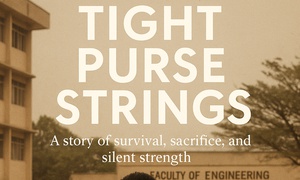

Tight purse strings: trying to mainta...
Tight Purse StringsChinedu stared at his phone, the banking app's balance glaring back ...
478 views
17 upvotes
14 comments
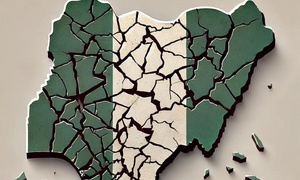

The Fallen Giant: A lament for Nigeri...
Oh My Country NigeriaOh My Country Nigeria, your soil drinks the tears of toddlers, l...
177 views
18 upvotes
18 comments
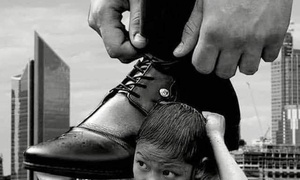
Classism in a third-world country is ...
If you've ever driven through Abuja, you'd see the absurd theater of our class wars. A ...
410 views
18 upvotes
24 comments


We Are All Olodo's
/oh-loh-doh/ A Nigerian slang used to describe someone who is dull, slow to grasp conce...
127 views
19 upvotes
19 comments


Olodo Must Go! Or Must He?
The Big Celeb runs for dear life.The mob is faster.“See him there!”“Him wan try run. Ca...
107 views
21 upvotes
16 comments

THIS IS NIGERIA- NOT ALL OF IT
Popo stop me I fear dem wan to shoot meSearch my bags like say He wan to loot meComot m...
378 views
14 upvotes
18 comments


A CASE FOR JANUARY.
The hype of December is the very sponsor of the dread of January. But upon closer exami...
986 views
16 upvotes
14 comments

Dear Chicken, Beware of Christmas
My mum is approaching the empty nest phase of life. My dad doesn’t live in Nigeria, so ...
345 views
12 upvotes
20 comments


Lagos..... The Agbero uprising.
In Lagos, Looking Rich Is Becoming a Security RiskThere is a new kind of anxiety that c...
108 views
16 upvotes
17 comments