Score |
11




Student @ Prince Abubakar Audu University Kogi State.
Abuja, Nigeria
 10872
10872
 21846
21846
 812
812
 760
760
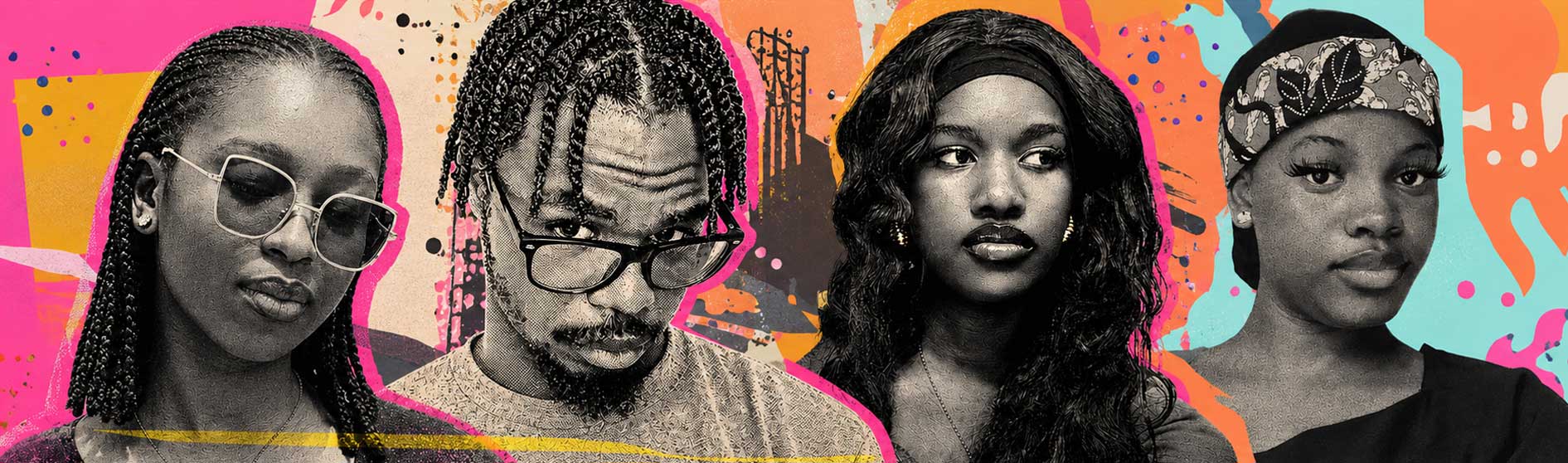
We Are All Olodo's

<p>/oh-loh-doh/ </p><p>A Nigerian slang used to describe someone who is dull, slow to grasp concepts or clueless. </p><p>Literally the word "olodo" means one who doesn't know book. </p><p><br/></p><p>In Yoruba context "Olodo" is a term traditionally used to mock someone deemed intelligent or a failure in school. Historically it carried heavy social shame. </p><p><br/></p><p>You've probably exempted yourself from the tag many times because you have a degree, or perhaps you are in school and consider yourself educated. </p><p>I have watched a couple of videos about the "Olodo Uprising", and interestingly, most of them want to exempt themselves from the reference.</p><p>But the truth is we are all OLODO'S. We are a major contributor to the fact that we do have an Olodo Uprising. And if you think this is about degrees?? You are an Olodo. </p><p><br/></p><p>You see, the Nigerian education system, has in many ways, been structured to keep you an Olodo. And it is not necessary the academic curriculum, it is the environment.</p><p><br/></p><p>In an average Nigerian University, questioning an authority, feels like a crime. </p><p>Lecturers skip classes, mistakes are made during the upload of results, and in most cases, decisions and laws are imposed without the consent of students. Students are designed to fear Administrative bodies. </p><p>So, many of the intellectuals amongst us, are self taught. People who took it upon themselves to learn what the classrooms never taught. Students who study professional courses, have infrastructure, and a failing government right beside them— withholding them from seeing the practical version of the theories packed Inside their heads. </p><p><br/></p><p>The federal government also believes that 90 percent of it's citizens are OLODO'S, and the remaining 10 percent intellectuals are too timid to speak up. By the way, this timidness In the remaining 10 percent of intellectuals is structured by the government to keep them shut. And we can see it in how easily the DSS or EFCC could easily track an offender who commits a crime, or uses her freedom of speech to speak against its government inconsistency. How you can be easily tracked in less than 24 hours, but bandits would go live while holding children, men, and women hostage for days. Yet, the government finds it difficult to track them. </p><p><br/></p><p>In this context, how do we then become a contributor to this uprising? It is by how the same Nigerians in this dilemma tune in to watch the Bandits live— who have put the country in a state of insurgency. And even seeking financial assistance. </p><p>We turn serious national issues into entertainment. </p><p><br/></p><p>This is why news like snake swallow money can fly in a supposedly modern society. Or someone in power can come and announce that they are empowering women by starting Akara, kuli-kuli and corn business.</p><p><br/></p><p>So, the Olodo Uprising is the intellectuals refusing to be brave enough to speak up. The people who know enough but have refused to speak. </p><p><br/></p><p>People pay to secure admission these days, while cut off marks seem like regulations that apply only to the poor. </p><p><br/></p><p>Here are other subtle ways you must have been an Olodo or a contributor without knowing. </p><p>—Being dogmatic rather than receptive.</p><p>—You confuse confidence with always being right. Smart people know when to say "I might be wrong". But you are always right you say.</p><p>— Watching an intellectual video for 1 minute and immediately putting it on 4× speed. While watching comedy reels at normal speed.</p><p>— Saying BBN has nothing to do with the Olodo Uprising. When cowbellpedia faded into the background. </p><p>—Equating money to intelligence.</p><p>—Lack of attention span to read books or even long articles, that even reading feels like punishment (Like saying this my essay entry is too long to read, but spend 2 hours watching IG reels) </p><p>—Trying to Sound intellectual by saying "Olodo Uprising" when you are also an Olodo.</p><p>—" Peller is richer that Ycee, therefore Ycee is just hating ". Biggest Olodo existing. </p><p>— Seeing your own tribal language as unattractive, while considering English “tush.”</p><p>— Associating whiteness with civilization and sophistication, while viewing your own culture through the lens of colonial inferiority.</p><p>— "Come with me to braid my hair in a non- aesthetic salon". </p><p>—Bleaching your skin to white. </p><p>—Finding the fastest way out when conversation gets intellectual.</p><p>— Starting a sentence with small letter. </p><p>You are an Olodo!</p><p>I am an Olodo!</p><p>We are all Olodo's! </p>


 15
15





Other insights from Letters From Delight ♡♡


Referral Earning

Points-to-Coupons

Insights for you.


Drums Before Guns
Before we had tanks, we had talking drums. Before we had political parties, we had prai...
186 views
26 upvotes
22 comments


My Periods Are Miracles
As a woman I have always been curious about my periods. About how they arrive, how they...
385 views
19 upvotes
27 comments

The Morning After You Killed Yourself
Your bed is exactly as you left it. Your blankets sway in corners all around your bed. ...
342 views
22 upvotes
25 comments

"If They Wanted To They Would"
It's something I used to say and believe also. Like it was an answer to every expectati...
405 views
12 upvotes
15 comments

"Am I Next?"
Lately, it feels as though the world has become a catalogue of broken stories.Headlines...
347 views
15 upvotes
12 comments

My 2025 Wrapped.
Seated in my solitude, reminiscing on all that the year has held for me.These fragments...
362 views
19 upvotes
17 comments

These Are My Earpods 🥀
Younno I've seen a lot of earpods and earpiece.But this one stands out.They look small,...
407 views
20 upvotes
20 comments
Classism in a third-world country is ...
If you've ever driven through Abuja, you'd see the absurd theater of our class wars. A ...
379 views
17 upvotes
24 comments
Do You Know Anarchy? I'll Tell You!
Anarchy was a black teenage girl, enslaved in Alabama. She became one of the most exper...
462 views
9 upvotes
16 comments

























Comments