Score |
106






Does Fate Exist, or Do We Create Our Own Destiny
<p><strong>Few questions have divided philosophers, scientists, and theologians as profoundly as this: Are the stories of our lives already scripted, or are we the true architects of our own futures? Every victory, disappointment, unexpected coincidence, or lost opportunity tends to spark the debate anew. Some insist that all events unfold according to a fixed plan, while others believe our personal decisions—not destiny—shape our results.</strong></p><p><strong><br/></strong></p><p><strong>Advocates of fate often point to the countless factors entirely beyond human influence. No one chooses their country of birth, their biological relatives, or the early environment in which they are raised. A child born into wealth begins life with advantages that a child raised in hardship may never attain. Abrupt events—a devastating mishap, a fortunate meeting with the ideal companion, or simply being in the wrong place at the wrong time—can completely alter the direction of a person’s existence. These unforeseen moments make it tempting to believe an invisible force is guiding our journey.</strong></p><p><strong><br/></strong></p><p><strong>Spiritual beliefs also strongly support this view. Many traditions around the world teach that a supreme being has a unique purpose and path for each individual. For the faithful, what appears to be mere coincidence is often seen as part of a divine plan. Postponements, hardships, and unexpected detours are commonly understood as essential elements of a larger design that human minds cannot fully comprehend.</strong></p><p><strong><br/></strong></p><p><strong>On the other hand, many people reject the idea that fate controls their lives. They contend that seeing life as preordained can easily become an excuse for passivity. If our achievements and setbacks are already determined, why strive diligently? Why embrace daring challenges? Why learn from our errors? According to this outlook, our everyday decisions—our attitude, the routines we build, the people we surround ourselves with, and the directions we deliberately follow—carry far more weight in determining our future than any notion of destiny.</strong></p><p><strong><br/></strong></p><p><strong>History abounds with stories of people who overcame enormous obstacles through determination and perseverance. Numerous legendary individuals rose from extreme poverty, faced entrenched prejudice, or experienced repeated setbacks before attaining success. Their experiences show that although our starting conditions shape us, they do not ultimately confine us.</strong></p><p><strong><br/></strong></p><p><strong>In the end, the truth probably lies somewhere between these two perspectives. We cannot control every situation we encounter, but we have complete authority over how we respond. We do not select the opening sentences of our story, yet we hold significant influence over how the rest of the tale develops. Chance, fortune, belief, and personal resolve all come together to form a human life.</strong></p><p><strong><br/></strong></p><p><strong>Perhaps destiny simply distributes the cards, but our choices determine how we play them.</strong></p><p><strong><br/></strong></p><p><strong>The real danger comes from embracing either position too rigidly. Blaming everything on fate can weaken personal responsibility, while insisting we have total command can make us overlook the difficult truths of inequality, luck, and powers entirely outside our influence.</strong></p><p><strong><br/></strong></p><p><strong>Thus, the more important question may not be “Does fate exist?” but instead, “How will we respond to the life we have received?”</strong></p>


 60
60


Other insights from Abdullah


Referral Earning

Points-to-Coupons

Insights for you.

626 views
94 upvotes
89 comments


Your Mess has a Personality.
I know you probably don't know this, but what I'm about to tell you might actually blow...
171 views
55 upvotes
54 comments

Instincts
It's telling me, it's telling meGotten shut off a million timesBut, it's still telling ...
321 views
51 upvotes
37 comments

Why Luxury?
If I brought you two bags right now;A Chanel bag and a Tote bag sewn by a roadside tail...
189 views
38 upvotes
43 comments
The Main Character Effect.
Have you ever walked past a mirror, caught your reflection, and immediately fixed your ...
183 views
41 upvotes
39 comments

THE BEAST WITHIN US🤡
“Ivy! Ivy! Ivy!!! Answer me now.”“You two faced…”“Don’t even dare complete that stateme...
116 views
40 upvotes
36 comments
The Cage Called Her
You are her....Hidden..Wanting so badly to be and not be...Afraid of being seen, Yet cr...
351 views
44 upvotes
31 comments


How many, more? I'm tired...
The weight arrives before the morning light.A heavy hand presses upon the chest.We slee...
108 views
32 upvotes
31 comments
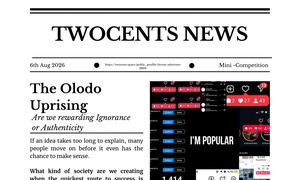

THE ALGORITHM RUNS THE SOCIETY NOW.
Seveentin!Yeah like she couldn’t spell it.It’s SEVENTEEN I know how to spell, before yo...
245 views
31 upvotes
30 comments

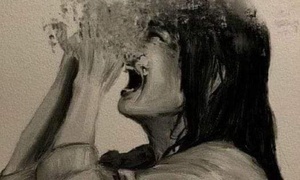
TRAUMA😣💊😊
"Get out of my house, you have no place in this world.""Why is she so quiet? She's dang...
399 views
25 upvotes
19 comments