Score |
195






The mirror room
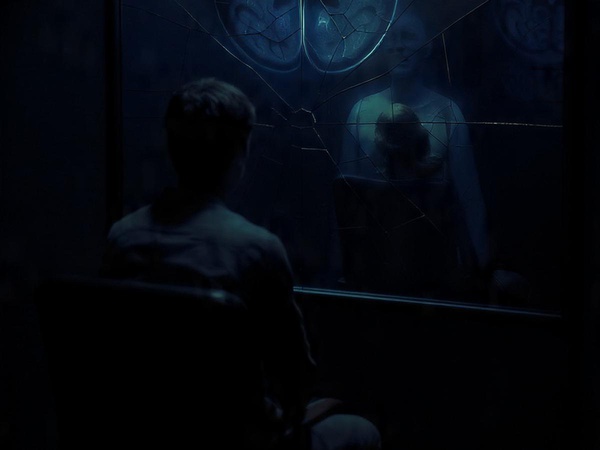
<p><br/></p><p>Dr. Amina Bello hated mirrors. </p><p><br/></p><p>Not because of vanity. Because of what they showed her patients. </p><p><br/></p><p>She ran a small practice on the 4th floor in Abuja, tucked between a law firm and a dental clinic. The sign on her door read: `A. Bello, PhD - Clinical Psychology. Specializing in Trauma & Identity.` </p><p><br/></p><p>Her newest patient was the reason she started hating mirrors more. </p><p><br/></p><p>His name was Tunde. 28. Software engineer. Referred to her after a "panic episode" at work. In the intake form he wrote: _I keep seeing myself do things I didn't do._ </p><p><br/></p><p>First session, he sat perfectly still in the gray chair. </p><p>"Talk to me," Amina said. </p><p>"I dream I'm in this room," he said. "But it's not this room. The walls are white. There's only one chair. And a mirror. In the mirror, I'm screaming. But in the room, I'm smiling." </p><p><br/></p><p>Amina wrote it down. Classic dissociative symptom. Stress-induced depersonalization. Nothing she hadn't seen. </p><p><br/></p><p>Week 2, Tunde brought a photo. "I didn't take this." </p><p>It was him, asleep in his apartment. Timestamp 3:17 AM. </p><p>"Maybe your roommate?" </p><p>"I live alone." </p><p><br/></p><p>Week 3, he didn't show up. He texted: _Don't want to come. The mirror me says you'll hurt me._ </p><p><br/></p><p>Amina should have referred him out. But something about the way he described the "mirror room" stuck. She'd read about it in grad school. A rare case study from the 1980s: patients under extreme cognitive dissonance creating an "observer self" to process trauma. The brain splits not into personalities, but into witness and actor. </p><p><br/></p><p>She called him. "Tunde, what if we try something different? Exposure therapy. But with a mirror." </p><p><br/></p><p>He laughed, bitter. "You want to put me in a room with a mirror?" </p><p>"I want to put you in control of the mirror." </p><p><br/></p><p>He agreed. </p><p><br/></p><p>Amina cleared out her storage room. Painted it white. One chair. One large, unbreakable mirror on the wall. She installed a camera, not to record him, but to record the reflection. She told him: "You sit. You look. You narrate what the other you is doing. Out loud. We take the power back." </p><p><br/></p><p>Session 1 in the Mirror Room was awful. </p><p>Tunde sat. Stared. Sweat dripped. </p><p>"He's crying," Tunde whispered. "Mirror me is crying." </p><p>"What's he crying about?" </p><p>"He's saying it's my fault. That I didn't stop it." </p><p>"Stop what?" </p><p>Silence. </p><p><br/></p><p>Session 4, something shifted. </p><p>"He's not crying anymore," Tunde said. "He's writing on the mirror. With his finger." </p><p>"What does it say?" </p><p>Tunde squinted. "S-O-R-Y." </p><p>"Who is he sorry to?" </p><p>"To me. To us." </p><p><br/></p><p>That night Amina couldn't sleep. She pulled out old journals from her residency. A footnote: _In cases of suppressed childhood trauma, the "observer self" often holds the memory the conscious self cannot._ </p><p><br/></p><p>She called Tunde's emergency contact. His older sister. </p><p>"Did anything happen to Tunde when he was 10?" </p><p>A long pause. "Why?" </p><p>"Please." </p><p>"There was a fire. In our house in Kano. Our cousin died. Tunde was the last one out. He tried to go back in. My dad pulled him out.</p><p>Session 6. </p><p>Tunde walked in and went straight to the Mirror Room. Didn't wait for Amina. </p><p>She followed. </p><p>In the mirror, his reflection was standing. In the room, he was sitting. </p><p>The reflection mouthed words. Tunde translated. </p><p>"He says... he says I didn't start the fire. I just couldn't save him. I've been punishing myself for 18 years." </p><p>Amina felt her chest tighten. "What do you say back?" </p><p>Tunde looked at his reflection. Really looked. </p><p>"I forgive you," he said. Both versions said it. At the same time. </p><p><br/></p><p>The camera caught it. For one frame, the reflection and the real Tunde had the exact same expression. </p><p><br/></p><p>After that, the panic attacks stopped. The photo stopped appearing. Tunde got promoted at work. He sent Amina a text 3 months later: _I took the mirror down in my bathroom. I don't need it anymore._ </p><p><br/></p><p>Amina closed his file. Marked: `Resolved.` </p><p><br/></p><p>Two weeks later, a new patient came in. 24. Female. Graphic designer. </p><p>On the intake form under "Reason for visit" she wrote: _I keep seeing myself do things I didn't do._ </p><p><br/></p><p>Amina stared at the words. Her pen hovered. </p><p>In the corner of her office, the storage room door was slightly open. White light spilled out. </p><p><br/></p><p>She stood up. </p><p>Because in psychology we learn this: the mind doesn't create new rooms. It reuses the ones that worked before. </p><p><br/></p><p>And somewhere, in a white room with one chair, someone else was waiting in the mirror. </p><p><br/></p><p><br/></p>


 43
43


Other insights from Maqdiya Abdulsalam










Referral Earning

Points-to-Coupons

Insights for you.


509 views
68 upvotes
65 comments

Instincts
It's telling me, it's telling meGotten shut off a million timesBut, it's still telling ...
293 views
48 upvotes
35 comments

Your Mess has a Personality.
I know you probably don't know this, but what I'm about to tell you might actually blow...
89 views
41 upvotes
37 comments
The Cage Called Her
You are her....Hidden..Wanting so badly to be and not be...Afraid of being seen, Yet cr...
321 views
42 upvotes
28 comments

Why Luxury?
If I brought you two bags right now;A Chanel bag and a Tote bag sewn by a roadside tail...
122 views
28 upvotes
28 comments
The Main Character Effect.
Have you ever walked past a mirror, caught your reflection, and immediately fixed your ...
117 views
29 upvotes
27 comments

THE ALGORITHM RUNS THE SOCIETY NOW.
Seveentin!Yeah like she couldn’t spell it.It’s SEVENTEEN I know how to spell, before yo...
174 views
28 upvotes
27 comments


Maybe; Just Maybe...
Maybe; just maybe, life has a funny way of reflecting you.Like a shattered mirror revea...
179 views
25 upvotes
22 comments


TRAUMA😣💊😊
"Get out of my house, you have no place in this world.""Why is she so quiet? She's dang...
374 views
22 upvotes
14 comments


Shut Down
Look at him...not bleeding…but burning.Because bleeding is mercy.Bleeding means somethi...
238 views
23 upvotes
24 comments






























Comments