Score |
75






MJANJA WA MAUMIVU ( The Trickster of pain)

<p style="text-align: left;">Authors Note: This story is not about religion or faith. It's about the commercialization of suffering and the people who learn to profit from borrowed pain.</p><p style="text-align: left;"><span style="background-color: transparent;">The boy came back to the village on a Tuesday when the dust hung thick and golden in the air. He stepped off the matatu with nothing but a small canvas bag and a limp that hadn’t been there before. The limp was the first thing everyone noticed. The second was the stillness in his eyes—a heavy, settled stillness, like water that had forgotten how to ripple.</span></p><p><br/></p><p>“Zawadi,” he said when he saw his aunt Mama Zawadi standing by the kiosk. Not Shangazi. Not Auntie. He used her name like a gift he was giving her. “I have crawled back from the dead to see your face.”</p><p><br/></p><p><span style="background-color: transparent;">By evening, word had spread. Kipenzi, the son of the late Mwangi, had returned. City-swallowed and city-spat. He had seen things, people whispered. He had suffered things. You could tell by the way he moved, slow and deliberate, like every step cost him something. You could tell by the way he spoke, low and musical, never wasting a syllable.</span></p><p><span style="background-color: transparent;">Mama Zawadi watched him from her stool by the fire that night as neighbours gathered. They brought him tea and mandazi and their open, hungry faces.</span></p><p><span style="background-color: transparent;">“Nairobi is a beast,” Kipenzi said, cupping the tea in both hands but not drinking. “It chews you and chews you and then it swallows. I was in the belly of that beast for six years.” He paused. Everyone leaned in. “I learned things in the belly. Things I cannot unlearn.”</span></p><p><br/></p><p>“Tell us,” said young Wanjiku, she of the too-trusting eyes and the sickly mother.</p><p><br/></p><p>Kipenzi smiled. It was a sorrowful smile, a smile that seemed to cost him deeply. “The first thing I learned is that pain is the only honest teacher. People who have not been broken cannot love. They cannot understand.”</p><p><br/></p><p>Murmurs of agreement. Nods. Someone was already crying softly—Bibi Kalunde, who had lost two sons and wore her grief permanently.</p><p><span style="background-color: transparent;">Mama Zawadi did not cry. She watched her nephew’s hands. They were clean, uncalloused. City suffering, it seemed, did not leave marks on the skin.</span></p><p><br/></p><p><span style="background-color: transparent;">Over the weeks, Kipenzi’s following grew. He held what he called midahalo ya uponyaji—healing dialogues—under the big fig tree at the village edge. Twenty people came. Then forty. Then so many that the tree’s shade could not hold them all and they spilled into the sun, squinting and sweating, refusing to leave.</span></p><p><br/></p><p>He spoke in parables. A man drowning who learned to breathe water. A woman burned by fire who became fire herself. A child locked in darkness who discovered that darkness was the only true light. The parables circled without landing, leaving listeners with a feeling of profundity they could not quite explain to themselves or each other.</p><p><br/></p><p>“You can’t understand with your mind,” Kipenzi would say when someone asked a question. “You must understand with your wounds. And if you have no wounds…” He would shrug, that sorrowful smile returning. “Then you are blessed, and I cannot help you.”</p><p><br/></p><p>This was the genius of him. Any failure to comprehend became proof of the listener’s spiritual immaturity. The only way to belong was to admit you were broken enough to understand.</p><p><br/></p><p>He began asking for offerings. Small at first. “The healed must feed the healer,” he said. “It is the natural order.” People gave chickens, bags of maize, money etc . He received each offering with bowed head, humble, almost embarrassed, as if the generosity was a weight he alone was strong enough to carry.</p><p><br/></p><p>“He is stealing from them,” Mama Zawadi said to her friend Nasimiyu one afternoon as they shelled groundnuts.</p><p><br/></p><p>“He is healing them,” Nasimiyu said. “Have you seen Bibi Kalunde? She laughs now. She hasn’t laughed since the burials.”</p><p><br/></p><p>“Chickens are not laughter.”</p><p><br/></p><p>“You have always been hard-hearted, Zawadi. Even as girls. The boy has been through something terrible. It has changed him.”</p><p><br/></p><p>“Yes,” Mama Zawadi said. “It has made him hungry for chickens.”</p><p><br/></p><p>She remembered Kipenzi at seven years old, stealing sugar from her cupboard and blaming the neighbour’s cat. At twelve, he had convinced three younger boys to give him their school fees by telling them a story about a teacher who was secretly a night-runner and only he could protect them. The story had been magnificent, detailed, terrifying. The boys had paid him for a month before anyone discovered.</p><p><br/></p><p>The limp, she noticed, switched legs depending on the day.</p><p><br/></p><p><span style="background-color: transparent;">Wanjiku came to Mama Zawadi in the third month. Her eyes were red from crying.</span></p><p><br/></p><p>“He says I must give myself to him to complete the healing. My body is the final offering. He says it is a sacred act, that the healed woman must unite with the healer to seal the wound.” She swallowed. “I want to be healed, Mama Zawadi. My mother is still sick. I want to be whole.”</p><p><br/></p><p>Mama Zawadi felt something cold settle in her chest. “And has your mother’s sickness improved?”</p><p><br/></p><p>Wanjiku hesitated. “He says healing is not always visible to the eye.”</p><p><br/></p><p>“Ah. Another thing that cannot be understood with the mind.” Said Mama Zawadi </p><p><br/></p><p>That night, Mama Zawadi went to the fig tree. Kipenzi was alone, sitting with his back against the trunk, counting money by the light of a small torch. He did not hear her approach.</p><p><br/></p><p>“Kipenzi.”</p><p><br/></p><p>He startled, shoving the money into his bag. Then the mask slid back—the sorrowful smile, the heavy stillness.</p><p><br/></p><p>“Shangazi. You never come to my dialogues. I have been wounded by this.”</p><p><br/></p><p>“Sit down,” she said, and her voice was flat and old and unimpressed. “I want to tell you a story.”</p><p><br/></p><p>He hesitated. She was his elder. He had to obey. He sat</p><p><br/></p><p>“When I was a girl,” she began, “there was a man in this village called Babu Ochieng. He had been to the Second World War. He had seen men die in mud. He came back with a shaking hand and eyes that looked at nothing for hours. He never spoke of what he saw. Not once. People would ask him, ‘Babu, what was it like over there?’ And he would just shake his head and walk away.”</p><p><br/></p><p>She paused. Kipenzi was watching her carefully, trying to read her.</p><p><br/></p><p>“One day, a young man came to the village. He said he had also been a soldier. He told magnificent stories. Battles. Rescues. Brothers lost in his arms. People flocked to him. They gave him food and shelter and respect. He was invited to every home. He blessed the young men who were going to join the army. He was a hero.”</p><p><br/></p><p>"Shaganzi I have to -” </p><p>"Listen to me, Kipenzi "</p><p><br/></p><p>“Babu Ochieng heard him speak one evening. Just once. Then he stood up, walked across the fire to the young man, and spat at his feet. ‘You were never a soldier,’ he said. ‘A real soldier does not decorate his pain like a bride. He carries it quietly because it is ugly and it is private and it belongs only to him and the dead.’” Mama Zawadi leaned forward. “The young man left three days later. He had never been to war. He had only learned that a man who has suffered is given something a happy man is not. So he became a thief of compassion.”</p><p><br/></p><p>The fire crackled. Kipenzi’s face was unreadable.</p><p><br/></p><p>“You limp on different legs,” she said. “Your hands have never held a tool harder than a teacup. I have known you since before you could walk, Kipenzi. I knew you at seven, stealing sugar. I knew you at twelve, stealing school fees with the night-runner story. You are still that boy. You have just learned that pain pays better than fear.”</p><p><br/></p><p>For a long moment, he said nothing. When he spoke, his voice was cold and entirely different—the performance dropped.</p><p><br/></p><p>“What do you want, old woman?”</p><p><br/></p><p>“I want you to leave. Tomorrow. Quietly. If you leave, I will tell no one what I know. I will let them believe the healer was called away. You can keep your chickens and your money. But if you touch Wanjiku, or any other girl, if you stay one day longer than tomorrow…” She stood up. “I will tell them Babu Ochieng’s story. And I will ask them which one you remind them of.”</p><p><br/></p><p>She walked away into the darkness, leaving him with his torch and his bag of folded money and the sacred fig tree that had witnessed everything and said nothing at all.</p><p style="text-align: center; "><br/></p><p><span style="background-color: transparent;">He left. The village mourned briefly and then forgot. Wanjiku’s mother recovered on her own, through the steady work of a doctor in the next town. The fig tree became just a tree again.</span></p><p><span style="background-color: transparent;">Mama Zawadi never told the story of Babu Ochieng to anyone else. But she often sat by her fire, shelling groundnuts, thinking about the difference between a man who has suffered and a man who has learned the price of suffering and sells it at a profit.</span></p><p><span style="background-color: transparent;">Mjanja wa maumivu, she called him to herself. The trickster of pain.</span></p><p><span style="background-color: transparent;">And she wondered how many more of him were out there, limping on different legs.</span></p><p><br/></p><p><br/></p>


 43
43





Other insights from Nonso Obi







Referral Earning

Points-to-Coupons

Insights for you.

Dear African Parents,
Every "African parent" disapproves of suicide. "Why take his life over something so lit...
207 views
47 upvotes
46 comments


BREAST IRONING
Ever heard of the breast ironing practice? well, I am from Cameroon and we have strong ...
1823 views
27 upvotes
28 comments


UNTAMED WORDS
They came with fire, but feared our flame,taught us silence, then gave it a name.Stole ...
300 views
23 upvotes
17 comments

SOMETHING MUST KILL A MAN
Something must kill a man! That's what Emeka thought to himself that afternoon, outside...
84 views
17 upvotes
14 comments


Divide The National Moi Moi
While embarking on my beauty stroll this evening, I pondered what I would write about. ...
894 views
15 upvotes
13 comments
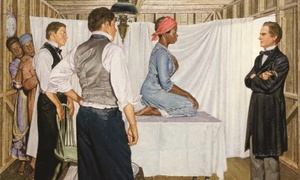

Do You Know Anarchy? I'll Tell You!
Anarchy was a black teenage girl, enslaved in Alabama. She became one of the most exper...
462 views
9 upvotes
16 comments


My Greatest fear
My Greatest FearMy greatest fear isn’t death ,it’s the inability to write.I have a wild...
323 views
17 upvotes
15 comments


Those Automated Hands..... These Outd...
I know I should have just ignored and focus on doing myself GOOD, but curiosity got the...
254 views
18 upvotes
15 comments


OMO AWORI😌📿
Yoruba Culture has always been deeper than selective storytelling.It stands as a voice,...
254 views
14 upvotes
15 comments

LET'S TALK ABOUT YOUR COUSINS
Family has always been the foundation of social relations.the ↗ very first people you c...
504 views
19 upvotes
14 comments






























Comments