Score |
333







The Certificate Illusion

<h4><strong><em>~ Why Nigeria’s Youth Are Learning for Years but Struggling to Create Value</em></strong></h4><p><br/></p><p><strong>By Emmanuel Daniji</strong></p><p><br/></p><p>A quiet contradiction is unfolding across Nigeria.</p><p><br/></p><p>Every year, millions of young people dedicate the better part of their lives to education. They spend six years in primary school, another six in secondary school, several more in universities and polytechnics, and complete a mandatory year of national service.</p><p><br/></p><p>For many, the journey lasts nearly two decades.</p><p><br/></p><p>It is a path paved with sacrifice, tuition fees, sleepless nights, examinations and the hope that education will unlock a better future.</p><p><br/></p><p>Yet for an increasing number of graduates, reality presents an uncomfortable question upon completion:</p><p><br/></p><blockquote><em>"What problem can you solve?"</em></blockquote><p><br/></p><p>The answer is often more complicated than expected.</p><p><br/></p><p>This is not because Nigerian youths lack intelligence, ambition or determination. Rather, it raises a deeper concern about the relationship between education, employability and economic relevance in a rapidly changing world.</p><p><br/></p><p>For decades, society promoted academic certificates as the ultimate passport to success. Parents encouraged their children to pursue degrees, communities celebrated university admissions and graduation ceremonies became symbols of achievement and social mobility.</p><p><br/></p><p>But as the labour market evolves, many are beginning to question whether the country's educational system has focused too heavily on certification at the expense of practical competence.</p><p><br/></p><p>Across cities and towns, the evidence is becoming difficult to ignore.</p><p><br/></p><p>Jamiu, an electrician without a university degree can install and maintain the electrical infrastructure of a multi-million-naira building. Mr Ola, a skilled welder, can fabricate industrial equipment. Brother Leke, a technician, can diagnose and repair complex mechanical systems. Cyrus, a software developer, can build digital products used by thousands of people.</p><p><br/></p><p>Their expertise solves immediate problems.</p><p><br/></p><p>Their skills generate value.</p><p><br/></p><p>And increasingly, the market rewards them accordingly.</p><p><br/></p><p>This reality has sparked fresh conversations about the growing importance of technical skills, vocational training and entrepreneurship in Nigeria's economy.</p><p><br/></p><p>Many labour market analysts argue that while academic education remains important, practical skills have become equally critical in a world where employers and clients are increasingly interested in results rather than credentials alone.</p><p><br/></p><p>The challenge is particularly visible in the employment sector.</p><p><br/></p><p>Every year, thousands of graduates compete for a limited number of vacancies in both public and private institutions. Recruitment exercises often attract overwhelming numbers of applicants, highlighting the widening gap between the number of job seekers and available opportunities.</p><p><br/></p><p>For many young Nigerians, securing employment has become one of the most difficult transitions after graduation.</p><p><br/></p><p>The numbers tell a compelling story.</p><p><br/></p><p>When hundreds or even thousands of applicants compete for a handful of positions, disappointment becomes inevitable for many qualified candidates.</p><p><br/></p><p>The issue is not necessarily a shortage of intelligence or academic qualifications. Rather, it reflects a broader structural challenge involving job creation, economic diversification and workforce preparedness.</p><p><br/></p><p>Meanwhile, sectors requiring technical expertise continue to experience strong demand.</p><p><br/></p><p>Electricians, mechanics, plumbers, technicians, fabricators, artisans, software developers and other skilled professionals remain essential to the functioning of homes, businesses and industries.</p><p><br/></p><p>When electricity fails, machines break down or digital systems malfunction, practical competence becomes indispensable.</p><p><br/></p><p>These realities are prompting a gradual shift in societal attitudes.</p><p><br/></p><p>Professions that were once overlooked or undervalued are increasingly being recognised for their contribution to economic growth and wealth creation.</p><p><br/></p><p>Around the world, countries that have successfully built strong economies have often invested heavily in technical education, vocational training and innovation-driven industries.</p><p><br/></p><p>Rather than focusing solely on producing graduates, they have prioritised building a workforce capable of solving real-world problems and driving industrial development.</p><p><br/></p><p>The lesson is not that university education lacks value.</p><p><br/></p><p>Far from it.</p><p><br/></p><p>Doctors, engineers, lawyers, teachers, researchers and countless other professionals continue to play indispensable roles in society.</p><p><br/></p><p>The real issue lies in the false hierarchy that places certificates above competence and theory above practical application.</p><p><br/></p><p>A thriving economy requires both intellectual and technical expertise.</p><p><br/></p><p>It needs thinkers and builders.</p><p><br/></p><p>Researchers and innovators.</p><p><br/></p><p>Professionals and artisans.</p><p><br/></p><p>Each contributes differently to national development.</p><p><br/></p><p>The future of work is increasingly favouring individuals who can identify problems, develop solutions and create measurable value.</p><p><br/></p><p>Whether those skills are acquired in a university lecture hall, a technical college, an apprenticeship programme or through self-directed learning matters less than the ability to deliver results.</p><p><br/></p><p>For Nigeria, this may be one of the most important conversations of the decade.</p><p><br/></p><p>As the nation seeks to address unemployment, stimulate entrepreneurship and build a more productive economy, the focus may need to shift from simply counting graduates to developing capable problem-solvers.</p><p><br/></p><p>Because in the end, the marketplace operates on a simple principle.</p><p><br/></p><p>It does not reward effort alone.</p><p><br/></p><p>It rewards value.</p><p><br/></p><p>And value is determined not by the certificate hanging on a wall, but by the impact a person can create in the lives of others.</p><p><br/></p><p>For a generation searching for opportunity, that distinction could make all the difference.</p><p><br/></p>


 154
154






Other insights from Bigdan


Referral Earning

Points-to-Coupons

Insights for you.


Lab tested, Pride Approved
I live everyday, putting others firstMy body can break down at any moment,My eyes keep ...
497 views
94 upvotes
97 comments




Who Wants Shawarma?
I bought a shawarma yesterday.Not because I was hungry.Well...I was.But somewhere betwe...
178 views
31 upvotes
37 comments
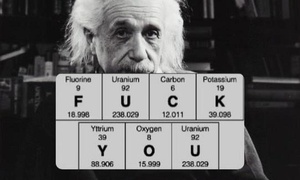
FUCK YOU: The Periodic Table of Petty
Albert Einstein spent his life proving that the universe obeys laws. The internet has s...
197 views
32 upvotes
33 comments

I'm A Helpless Romantic
A Spoken-Word Love Letter to SucreDear Sucre...Before you,I thought love was mathematic...
162 views
24 upvotes
27 comments


Can I Still Say "I Love You?"
There comes a time in every man's life when "I love you" stops being a confession and s...
139 views
20 upvotes
26 comments