Score |
246





Vladimir Putin: The Man who stayed.

<p>Putin is a man of interest.</p><p>Not necessarily because he is easy to admire, but because it is difficult to look at modern Russia without eventually looking at him.</p><p><br/></p><p><strong>Vladimir Vladimirovich Putin was born on 7 October 1952 in Leningrad, now Saint Petersburg.</strong></p><p>He wasn't born into some powerful political family.</p><p>His mother was a factory worker and his father served in the Soviet Navy before and during World War II. Putin was the youngest of three brothers, although the other two never survived childhood. One died as an infant, while another died during the Siege of Leningrad in 1942.</p><p><br/></p><p>Putin grew up in a communal apartment in post-war Leningrad, an environment he later described as rough and modest.</p><p>And there was something interesting about the boy he became.</p><p><br/></p><p>At 12, he started learning judo and sambo.</p><p>He was apparently fascinated by martial arts, and that interest stayed with him well into adulthood.</p><p>But Putin wasn't just throwing people around on a mat.</p><p>He was also interested in the Soviet intelligence services.</p><p><br/></p><p>He studied law at Leningrad State University and graduated in 1975.</p><p>That same year, he joined the KGB.</p><p>Eventually, he was sent to East Germany, where he worked in Dresden from 1985 to 1990.</p><p><br/></p><p>And this is where his story gets particularly interesting.</p><p><br/></p><p>In 1989, the Berlin Wall fell.</p><p>The Soviet Union was beginning to unravel.</p><p>Putin was still in Dresden, working as a KGB officer, when a crowd moved toward the KGB headquarters there.</p><p>According to accounts of the episode, Putin called Moscow for assistance and was told that no help was coming.</p><p>He later recalled the response with the words:</p><p>"Moscow is silent."</p><p><br/></p><p>The Soviet system he had served was collapsing right in front of him.</p><p>A few years later, the Soviet Union itself disappeared.</p><p>For Putin, this wasn't just a political event.</p><p>It was something he personally experienced.</p><p>And he has repeatedly described the collapse of the Soviet Union as a major historical tragedy.</p><p><br/></p><p>After returning to Russia, Putin moved into politics in Saint Petersburg.</p><p>This was where his relationship with Anatoly Sobchak became important.</p><p><br/></p><p>Sobchak, a law professor and later mayor of Saint Petersburg, had taught Putin at university and eventually employed him in the city administration.</p><p><br/></p><p>Putin's political career began moving quickly from there.</p><p>By 1998, he was heading the Federal Security Service, the FSB, which succeeded the KGB's main domestic security functions.</p><p>In 1999, Boris Yeltsin appointed him prime minister.</p><p><br/></p><p>Then, on 31 December 1999, Yeltsin unexpectedly resigned.</p><p>Putin became acting president.</p><p>Three months later, he won the presidential election.</p><p>And that was the beginning of something much bigger.</p><p><br/></p><p>Putin has remained at the centre of Russian power ever since.</p><p>He served as president from 2000 to 2008, then became prime minister while Dmitry Medvedev was president, before returning to the presidency in 2012.</p><p>He won another presidential election in 2018 and again in 2024.</p><p>The Kremlin's official biography lists him as the current president of Russia.</p><p>So technically, Putin has not been president continuously since 2000.</p><p><br/></p><p>Politically, however, he has been the dominant figure in Russia for more than two decades.</p><p><br/></p><p>And this is where I find him particularly interesting.</p><p><br/></p><p>Russia is not an easy country to govern.</p><p>It is enormous.</p><p><br/></p><p>It stretches across eleven time zones and has a population of more than 140 million people.</p><p><br/></p><p>It contains dozens of ethnic groups and hundreds of languages and dialects, while holding enormous reserves of oil, natural gas and other natural resources.</p><p><br/></p><p><br/></p><p>Keeping a state that large together requires an enormous concentration of political power.</p><p><br/></p><p>Putin has built exactly that.</p><p>His government has strengthened the central state, brought major strategic sectors of the economy under greater state influence and steadily concentrated political authority around the presidency.</p><p><br/></p><p>His leadership has also been deeply controversial.</p><p><br/></p><p>Russia under Putin has faced wars in Chechnya and Georgia, the annexation of Crimea in 2014, and the full-scale invasion of Ukraine in 2022.</p><p><br/></p><p>His government has also been accused by international organisations and foreign governments of suppressing political opposition, restricting independent media and weakening democratic institutions.</p><p><br/></p><p><br/></p><p>And then there is Russia's nuclear arsenal.</p><p><br/></p><p>One of the weapons developed under Putin's regime is the RS-28 Sarmat, a massive nuclear-capable intercontinental ballistic missile better known in the West as “Satan II.” It was designed to replace the Soviet-era SS-18 “Satan” and is intended to carry multiple nuclear warheads over intercontinental distances.</p><p><br/></p><p>Putin has repeatedly presented Sarmat as part of Russia's ability to penetrate even advanced missile-defence systems. The weapon has also had a troubled development history, including delays and reported test failures.</p><p><br/></p><p>And that's the frightening part about studying Putin's Russia: the man isn't just presiding over a country with nuclear weapons. He has spent years overseeing the modernization of one of the world's largest nuclear arsenals.</p><p><br/></p><p><br/></p><p>So when people talk about Putin, there are usually two very different conversations happening.</p><p>Some see a leader who restored Russian power and stability after the chaos of the 1990s.</p><p><br/></p><p>Others see an authoritarian leader who has concentrated power, restricted political freedoms and pursued an increasingly aggressive foreign policy.</p><p><br/></p><p>Both sides are part of understanding the man.</p><p><br/></p><p>But None of this happened by accident.</p><p><br/></p><p>Putin understands power.</p><p><br/></p><p>He understands symbolism.</p><p><br/></p><p>He understands the importance of controlling the image people see.</p><p><br/></p><p>And perhaps that's what makes him so fascinating to study.</p><p><br/></p><p>You don't have to admire Putin to study him.</p><p>In fact, you probably shouldn't.</p><p><br/></p><p>But if you want to understand how one man could remain at the centre of one of the world's most powerful states for more than two decades, you have to understand the environment that produced him.</p><p><br/></p><p>A boy from post-war Leningrad.</p><p>A young martial artist.</p><p>A KGB officer watching the Soviet system collapse from inside East Germany.</p><p>A political operative who climbed rapidly through post-Soviet Russia.</p><p>And eventually...</p><p><br/></p><p>The man who stayed.</p><p><img alt="" src="/media/inline_insight_image/IMG-20250509-WA0003.jpg"/></p>


 16
16


Other insights from Ealo


Referral Earning

Points-to-Coupons

Insights for you.

My Unpopular opinions of Social Media.
I Really Hate Social MediaWait, hear me out.I'm not saying this from a place of pride o...
128 views
25 upvotes
31 comments


They are amidst Us
I was having a conversation with a friend one day and he was all about arguing, arguing...
238 views
17 upvotes
22 comments
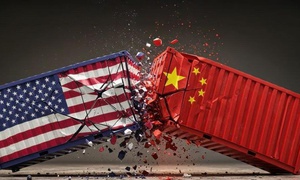

U.S. Hits with Tariffs. China Hits Ba...
Have you been on TikTok lately? The Chinese market is blooming, thanks to Trump’s tarif...
887 views
15 upvotes
14 comments
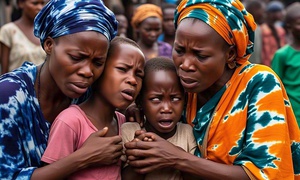

WHY BOKO HARAM IS BACK AND WHAT IT ME...
Let’s be honest — Nigeria has a habit of forgetting. We mourn today, move on tomorrow, ...
712 views
16 upvotes
14 comments
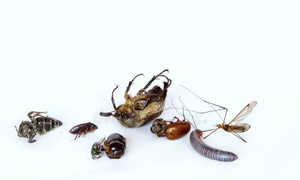

When the Mosquitoes Voted for the Spray
In the far corner of the Animal Kingdom, right behind a leaking bucket and a forgotten ...
286 views
17 upvotes
17 comments
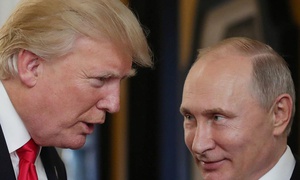

Analytical article about "Negotiation...
The Hidden Gems in Politics and NegotiationsPolitics and negotiations often focus on hi...
839 views
19 upvotes
22 comments

NO POLITICIAN CAN SAVE YOU
if you're in Cameroon right now , navigating the noise and the tension, here is my two...
329 views
19 upvotes
16 comments
OLD RULERS: HOW NIGERIA KEEPS RECYCLI...
I was going to write on how your vote doesn't count, but you all going to think I'm goi...
180 views
14 upvotes
13 comments

To each his own
Scrolling through my Instagram feed on Saturday, I came across the news of Nigerian pub...
1042 views
15 upvotes
12 comments