Score |
90




Creative Writer | History Student | I Love FOOD @ Lagos State University



"DAUGHTERS OF DEFIANCE" Funmilayo Ransome Kuti
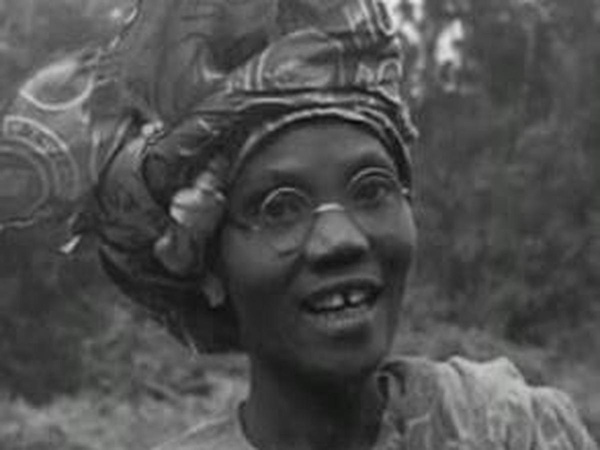
<p>There are women who arrive loudly, announced by history before they even begin. And then there are women who begin in quiet, watching, listening, understanding until the world they have studied too closely becomes impossible to accept. </p><p><br/></p><p>Funmilayo Ransom Kuti belonged to the latter. Not because she lacked fire, but because she understood something deeper, that power does not always have to shout to be felt, and that the most dangerous kind of resistance is often the one that gathers strength in silence before it moves.<img alt="" src="/media/inline_insight_image/IMG_20260220_191650_517.jpg" style="background-color: transparent;"/></p><p><br/></p><p>Before she became a name that unsettled authority, she was simply a woman observing the world around her in Abeokuta. A world arranged with careful intention, colonial rule sitting heavily at the top, traditional authority reinforcing it from within, and beneath both, women whose labour sustained entire communities but whose voices were treated as an afterthought. It was a system that functioned precisely because it was not questioned. And for a time, like many others, she watched it function.</p><p><br/></p><p>But observation has a way of sharpening into awareness, and awareness rarely remains passive. To see clearly is to begin to notice the imbalance in things, the way some are asked to endure more than others, the way decisions are made without those most affected by them, the way power justifies itself simply by existing.</p><p><br/></p><p><br/></p><p>For Funmilayo, this awareness did not arrive all at once. It built slowly, in moments that might have seemed ordinary to anyone else: conversations in markets, the quiet frustrations of women who worked tirelessly only to be taxed unfairly, the subtle but constant reminder that their place in society was to comply, not to question.</p><p><br/></p><p>And yet, she questioned.</p><p><br/></p><p>It is important to understand that her defiance did not begin as rebellion in the dramatic sense. It began as refusal, refusal to accept that things had to remain as they were, refusal to believe that women were meant to exist only within the boundaries drawn for them. But refusal alone is rarely enough. What made her different was what she did next.</p><p><br/></p><p>She "gathered."</p><p><br/></p><p>Not in grand halls or formal assemblies, but in spaces that already existed, markets, meeting points, everyday environments where women lived their lives. She did not impose leadership on them; she recognized the strength that was already there. The Abeokuta Women’s Union did not emerge as an abstract idea. It was built from lived experience, from shared frustrations that, once spoken aloud and heard collectively, became something harder to ignore.<img alt="" src="/media/inline_insight_image/IMG_20260220_191649_839.jpg" style="background-color: transparent;"/></p><p><br/></p><p>There is a quiet kind of power in turning “I am suffering” into “we are suffering,” and an even greater power in realizing that “we” can act.</p><p><br/></p><p>Under her influence, what had once been individual endurance became collective resistance. Women who had been overlooked began to organize, to question, to demand explanations from authorities who were not used to being challenged, least of all by them. </p><p><br/></p><p><br/></p><p>The taxation system that disproportionately affected women became a focal point, not just because it was unjust, but because it revealed something larger: a structure that depended on their compliance while denying them participation.</p><p><br/></p><p>And so they resisted. Not recklessly, not without thought, but with intention. They protested, they demanded, they refused to be dismissed. And in doing so, they did something that shifted the balance of power, even if only slightly they made themselves visible in a system that relied on their invisibility.</p><p><br/></p><p>But visibility comes at a cost.</p><p><br/></p><p>Power, when challenged, does not simply step aside. It responds. And often, it responds by attempting to reduce what it cannot control. Funmilayo was labeled in ways that were meant to diminish her influence called disruptive, difficult, a woman who had stepped too far beyond what was considered acceptable. </p><p><br/></p><p>These labels were not accidental, they were strategic. To question her was easier than to answer her.</p><p><br/></p><p>Yet, she continued.....</p><p><br/></p><p>And perhaps what is most striking is not just that she resisted, but that she endured the weight of that resistance. Because beyond the public actions, the protests, the organizing, the visible defiance, there is always something quieter that history does not fully capture the personal cost of standing firm. The moments of doubt that must have come, the isolation that often accompanies those who refuse to conform, the awareness that there is no easy return to normal once you have chosen to challenge it.</p><p><br/></p><p>Still, she did not retreat.</p><p><br/></p><p>There is a particular kind of strength in choosing to continue when the outcome is uncertain. Not when victory is guaranteed, not when support is overwhelming, but when the path ahead is unclear and the resistance against you is firm. That was the kind of strength she carried, not loud, not performative, but steady.</p><p><br/></p><p>What she left behind is not just a record of protest, but a redefinition of possibility. Before her, the idea of women particularly market women, acting as a unified political force was not widely recognized. After her, it could no longer be ignored. She did not simply confront power; she altered who was seen as capable of confronting it.</p><p><br/></p><p>And that shift matters.</p><p><br/></p><p>Because today, it is easy to speak of women’s participation in politics, activism, and public life as though it were always meant to be this way. As though the space was simply waiting to be occupied. But spaces like that are rarely given. </p><p><br/></p><p>They are created often slowly, often painfully by those willing to stand where they are not expected to and remain there long enough for the ground to change beneath them.</p><p><br/></p><p>Her legacy lives in ways that are not always immediately visible. It lives in the assumption that women can organize, can lead, can challenge authority without apology. It lives in the language of resistance that has become more accessible, more collective. It lives in the understanding that power, no matter how established, is not beyond question.</p><p><br/></p><p>And perhaps most importantly, it lives in the quiet recognition that defiance does not always look like noise. Sometimes, it looks like a woman paying attention. A woman asking questions. A woman deciding, at some point, that silence is no longer something she is willing to offer.</p><p><br/></p><p>She did not need to be the loudest voice in the room to change it.</p><p>She only needed to refuse the role that required her not to speak at all.</p>


 29
29


Other insights from Quietly Loud












Referral Earning

Points-to-Coupons

Insights for you.









THE OSU CASTE SYSTEM
You might have heard of the Osu caste system in Igbo land. In case you haven't, this is...
1454 views
2 upvotes
2 comments

































Comments