Score |
11






LAGOS: THE ORIGIN OF A NIGERIAN ARCHITECTURE?
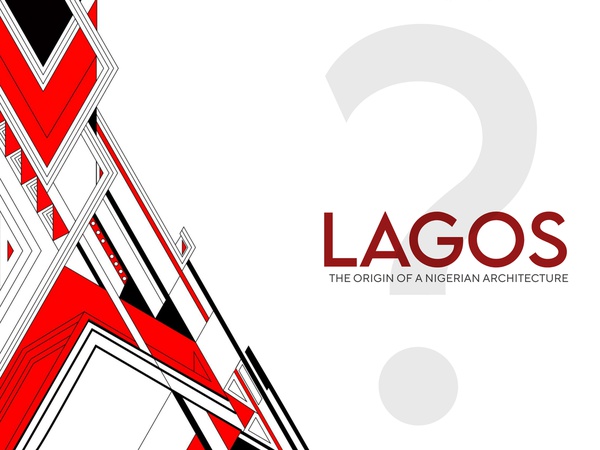
<p style="text-align: justify; ">An Industry Deep Dive in the field of Architecture that addresses the need for a Nigerian Architecture as a way to foster unity for sustainable design.</p><p>I hope this abstract can serve as a focal point for the development of a body of work that can revive the creative touch in the built environment and the eventual realization of the dream of a Nigerian Architecture through the eyes of Lagos’ past.</p><p style="text-align: justify; "><br/></p><p>--------------------------------------</p><p><br/></p><p>As a physical expression, form is a thing that is seen, and the visual sense is a channel to the soul. That which is seen should be as beautiful as man can make it. Therefore, the technical solutions to functional problems of spaces created by, and forms constructed with concrete, must be fused with aesthetic feeling. In the power and creativity of native sculpture, which must include sculptural forms of mud built huts and pots, one can detect a traditional feeling for the handling of volumes. To a casual glance, native sculptures may suggest a chaotic confusion of unrestrained stylistic inventiveness but on closer study, one begins to see the beauty in the compositions.</p><p><br/></p><p>Forms from the Nok and Ife, both of which are found in Nigeria, represent some of the boldest and most original African art. In them one sees the illustration of three geometric forms – the sphere, the cylinder, and the cone which (Césanne claims one must use to master all forms in nature)</p><p><br/></p><p>Many architects face the problem of arranging volumes of different heights and forms in mutual relationships. This is perhaps due to the fact that interior space had been regarded as architecture's supreme task for so long.</p><p><br/></p><p>Today in Lagos, one sees concrete structures illustrating the successes and failures of solutions to this problem. A synthesis of rational geometric forms and organic ones often found in African sculpture is also found in some Lagos concrete structures. There is rarely clear cut separations resulting in the purely organic and the purely geometric.</p><p><br/></p><p>A truly Nigerian architecture can be created by taking advantage of the revolution and the structural competence of concrete. It<a class="tc-blue external-link external-link external-link external-link" href="https://concrete.It" rel="noopener noreferrer" target="_blank"> </a>will require a lot of effort to create a Nigerian architecture because of the varying climatic and cultural influences affecting the different parts of the country.</p><p><br/></p><p>Lagos is the largest urban conglomeration of people and cultures, each of them having an equal share of importance and contribution. It is a settlement which incorporates several ethnic entities, and is also (being the country’s commercial capital and major port city); therefore it is a truly national melting pot. Therefore, it will provide an ideal place where the merging of cultural needs can occur. Such a development is a complex process. It must first look into the past (culture) to select forms and values which must influence design one way or another,to serve as a useful dictionary of forms from which one can select forms and shapes.</p><p><br/></p><p>Urbanization of Lagos has resulted in an alarming rate of population growth which in turn has created an ever-increasing demand for shelter. With the speed of development very little thought is given to aesthetics. Aesthetic quality has been reduced to stereotypical rectangular build with minimal materials.</p><p><br/></p><p>The building materials are mainly sandcrete blocks covered with plaster and roofed with zinc roofing sheets or aluminium sheets supported by timber frames with reinforced concrete platforms. Concrete is too expensive to be used in the construction of mass housing and in some areas it deteriorates. </p><p><br/></p><p>With the present standard of living in Lagos, one sees a lot of burnt bricks held together and rendered with minimal cement. If one tries to look into the past of Lagos and renders a development with values drawn from the past, one sees built forms visible motifs on window sills, flanking entrance doors; corner pieces and so on.</p><p><br/></p><p>Lagos is the ideal place where the merging of cultural needs can occur. A Nigerian architecture may evolve around this development. Lagos-based architects must take the lead in creating a truly Nigerian architecture not merely borrowed from abroad. One hopes however, that the creative impulse for this development will come now, inspired by world famous architectural achievement in concrete which is similar in its plasticity to the traditional material — mud. The revolution of industrial products to favour plastics coupled with the abilities of concrete one hopes will serve as a channel for the exploration of other traditional forms yet undeveloped.</p><p><br/></p><p>It is time to make a strong effort to free ourselves of external influences and reinvolve ourselves with our past. Time to reach out into a future that we can call our own.</p>


 11
11


Other insights from Olowe Ayorinde




Referral Earning

Points-to-Coupons

Insights for you.




































Comments