Score |
89


Student @ Adekunle Ajasin University,Akungba Akoko Ondo State.Nigeria.



"MY INHERITANCE."PT 2
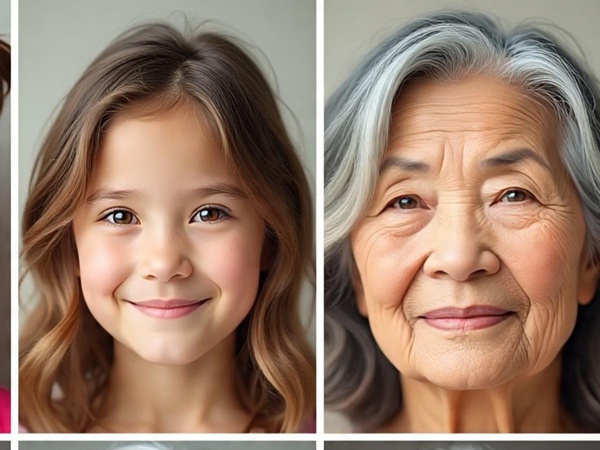
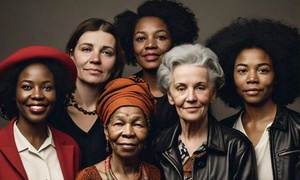
<p>A woman's inheritance is rarely written wills, yet it is passed down with frightening consistency. It does not come in property,money,or family titles. Instead,it comes as expectations, silence, endurance, and emotional weight that often follows her to her deathbed.</p><p> In many African, particularly Nigerian, societies, a woman’s inheritance begins long before she understands what inheritance means. It starts in girlhood, in the subtle and direct lessons about who she is expected to become and how much of herself she is expected to give away along the way.</p><p>As a girl, she quickly learns that her behavior represents more than just herself. She is told not to sit a certain way, not to speak too loudly, not to laugh too freely, because “you are a girl.” Her body becomes something to guard, her voice something to control, and her freedom something to negotiate. While her brothers may be corrected, she is often cautioned — prepared early for a world that will judge her more harshly and forgive her less easily.</p><p>She grows up with chores tied not just to responsibility, but to preparation. She is not simply helping at home; she is “learning for her husband’s house.” Her worth slowly becomes linked to how well she can cook, clean, endure, respect, and adjust. Education may be encouraged, but rarely at the expense of these expectations. Achievement is welcomed, but character — often defined as quietness, tolerance, and obedience — is emphasized even more.</p><p>Alongside these lessons, she inherits silence. When she is hurt, she is told not to bring shame to the family. When she is uncomfortable, she is told to endure. When something feels unfair, she is reminded that “this is how life is.” She learns to carry emotional pain quietly, because speaking up can be seen as disrespect, rebellion, or a bad upbringing.</p><p>As she enters womanhood, the pressure shifts but does not reduce. Now her value becomes closely tied to marriage. Questions begin: “When are we coming to eat rice?” — a joking way of asking when she will wed. If she is unmarried past a certain age, concern turns into whispers. Her achievements, career, and personal growth can suddenly seem secondary to her marital status.</p><p>Marriage itself often comes with another inheritance: the expectation of adjustment without limit. She is told that a woman builds the home, keeps the peace, and preserves the marriage at all costs. If there are problems, she is advised to pray more, try harder, be more patient, more respectful, more understanding. Rarely is the same weight of responsibility placed on her partner.</p><p>In many homes, she becomes the emotional and practical backbone. She cares for children, often balances work, tends to extended family, and manages the home — sometimes with little recognition and even less rest. If she struggles, she may be reminded of other women who “endured worse.” Her pain is compared, minimized, or spiritualized, instead of being acknowledged and supported.</p><p>There is also the cultural expectation of loyalty to family on all sides. She must not disrespect her husband’s family. She must not neglect her own. She must show strength in public, even when things are falling apart in private. Divorce or separation, even in harmful situations, can bring stigma that makes many women stay and suffer in silence.</p><p>Motherhood adds another layer. A good mother is expected to be selfless to the point of disappearance. Her body, time, sleep, and ambitions are stretched thin. If she succeeds, it is her duty. If she struggles, it is her failure. Very few people ask who is taking care of her while she takes care of everyone else.</p><p>By old age, many Nigerian women carry decades of swallowed words, postponed dreams, and normalized pain. They are praised as “strong African women,” celebrated for their endurance, their sacrifice, and their ability to hold families together. But rarely does anyone pause to ask what that strength cost them. How many opportunities did they forgo? How much disrespect did they tolerate? How many times did they cry where no one could see?</p><p>The tragedy of this inheritance is that it is passed down with love. Mothers teach daughters to endure not because they want them to suffer, but because they want them to survive in the same system that shaped them. Pain becomes tradition. Silence becomes wisdom. Endurance becomes pride.</p><p>Yet, within this story, there is also quiet change. More women are questioning, speaking, choosing differently, and teaching their daughters that womanhood does not have to mean lifelong suffering. They are redefining respect, partnership, and strength — not as silent endurance, but as mutual care, voice, and dignity.</p><p>Still, for many women today, the inheritance remains heavy: a life of carrying others emotionally, physically, and socially, often without the same support in return. A life where love is proven through sacrifice, and pain is hidden behind capability.</p><p>And so, from girlhood to marriage and beyond, many African women carry an invisible load — one built from culture, expectation, and survival — a load they were never formally given, yet somehow always expected to bear.</p><p><br/></p><p>And yet, I inherit something powerful that no system has managed to erase: the ability to nurture life, ideas, and change. I inherit emotional intelligence sharpened by years of being told to “understand.” I inherit the skill of building connections, of holding families and friendships together like invisible thread.</p><p>I inherit pain, but I also inherit persistence.</p><p>Every time a woman before me was told “you can’t” and did it anyway, she left me a piece of courage. Every boundary she pushed widened the space I now stand in. I walk on paths carved by women who were never given credit for the roads they built.</p><p>Still, inheritance is not only about receiving — it is about deciding what to pass on.</p><p>I did not choose to inherit fear, but I can choose not to pass it to my daughter. I did not choose to inherit silence, but I can choose to pass down a voice. I did not choose a world that questions women’s worth, but I can choose to raise children — sons and daughters — who do not.</p><p>What I inherit as a woman is a mixture of chains and keys.</p><p>Some were placed on me.</p><p>Some were hidden in my hands all along.</p><p>And with every step I take, every boundary I challenge, every dream I dare to hold without apology, I decide which part of my inheritance will end with me… and which part will grow stronger in the women who come after.</p>


 25
25


Other insights from Abisolina











Referral Earning

Points-to-Coupons

Insights for you.
















439 views
9 upvotes
6 comments
































Comments