Score |
111






MY MOTHER TOUGUE: The pride of Ibibio voice
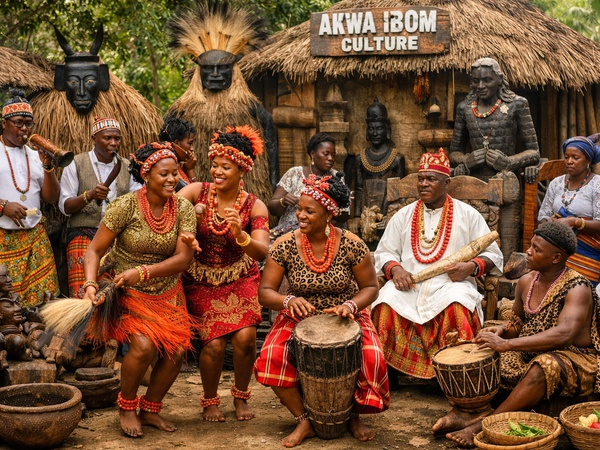
<p>The mother tougue is the first language of the heart.</p><p><span style="background-color: transparent;">So I'm writing to</span><span style="background-color: transparent;">day with a heart full of pride and a voice rooted in heritage.</span></p><p><span style="background-color: transparent;">Not just to speak…</span></p><p><span style="background-color: transparent;">But to unapologetically showcase my tribe.</span></p><p><span style="background-color: transparent;">I am Ibibio.</span></p><p><span style="background-color: transparent;">From the warm soils of Akwa Ibom State.</span></p><p><span style="background-color: transparent;">And my mother tongue is not merely a language — it is my inheritance, my identity, and my cultural crown.</span></p><p><span style="background-color: transparent;">Before I ever spoke English…</span></p><p><span style="background-color: transparent;">Before I ever wrote an essay…</span></p><p><span style="background-color: transparent;">I heard the gentle rhythm of Ibibio in lullabies, in morning greetings, in the wise proverbs of my elders.</span></p><p><span style="background-color: transparent;">That was my first connection to the world.</span></p><p><span style="background-color: transparent;">You see, the Ibibio mother tongue is powerful.</span></p><p><span style="background-color: transparent;">It is a language that does not just speak — it paints, it sings, it commands respect.</span></p><p><span style="background-color: transparent;">When an Ibibio elder says, “<strong>Ukod anam ke edem idem,”</strong></span></p><p><span style="background-color: transparent;">they are not merely talking —</span></p><p><span style="background-color: transparent;">they are passing down generations of wisdom wrapped in just a few words .</span></p><p><span style="background-color: transparent;">Another powerful expression says....</span></p><p><span style="background-color: transparent;">“<strong>Mme ọwọñ̄ ọwọñ̄ ikpaha idem</strong>.” — “Little by little, the body becomes strong.”</span></p><p><span style="background-color: transparent;">It is a gentle reminder that growth — whether cultural, intellectual, or personal — is a gradual process.</span></p><p><span style="background-color: transparent;">The Ibibio culture is one of the oldest in Nigeria and West Africa, with roots going back thousands of years. While exact dates are hard to pin down because much of the early history was oral, historians and anthropologists agree t</span><span style="background-color: transparent;">hat the Ibibio people have lived in what is now Akwa Ibom State and its surrounding areas for at least 4,000–5,000 years.</span></p><p>The Ibibio language carries our history — from moonlight folktales to traditional marriage rites, from market songs to royal greetings. If we allow it to fade, we are not just losing words…</p><p>We are losing memories.</p><p>We are losing identity.</p><p>We are losing ourselves.</p><p><br/></p><p>My name is Emem and I'm ibibio by tribe.</p>
Competition entry
|
International Mother Language Day


 16
16


Other insights from Peter Laurina










Referral Earning

Points-to-Coupons

Insights for you.





THE MEETING
Sometimes it takes one meeting for our lives to change forever. It was never Femi'...
1206 views
12 upvotes
12 comments



OMÓ ÉSAN
They say the apple does not fall far from the tree, but I was the exception, or I was s...
1146 views
13 upvotes
5 comments


































Comments