Score |
76



Architect @ James Cubitt Architects



What's in a Story
<p>And so the kingdom is likened unto a short parable, and in five minutes, a teller can pass on thousands of years' worth of theological discussion compacted into an unforgettable narrative. This is the power of even fictional stories. Here is an essay about what to read or watch next and why, if you’re pressed for time, it should probably be fiction.
</p><p><br/></p><p><sub><img alt="" src="/media/inline_insight_image/Bloch-SermonOnTheMount.jpg.webp"/></sub></p><p><em><sub>Sermon on the Mount - Carl Bloch</sub></em></p><p><em><sub><br/></sub></em></p><p>On the scale of the cosmos, we live remarkably short lives. "We are like butterflies who flutter for a day and think it is forever." We also have the uncomfortable itch of imagining what comes next. We plan, rehearse, and speculate on outcomes; in any human mind, there is the longing for tomorrow; the past also clutches at our heels, reminding us where we’ve been. The problem in this context is that we have so much to learn. One could say everyone born faces two primary concerns: what is in the world I have come into? And how do I behave in the world I have come into?
</p><p>Readers of this century will usually be persuaded to answer that first question in objective terms. For example, I am a biological organism who lives in a concrete house made up of atoms and other tiny particles. I am in a housing estate, in a country with a particular type of economy and government; I sleep in a wooden-framed bed, and when things happen in my environment, I regulate my emotions accordingly. This is a brief, objective, even scientific observation of what is in the world. In this age, there is a premium placed on being as accurate as possible in the description of the world we have come into.
</p><p>It’s important to remember, however, that accuracy isn’t always paramount in answering the second question. We have existed for centuries with sometimes very flawed pictures of the world. It takes us a very long time to experiment, evaluate and picture things accurately in a scientific sense. Even after great and expensive efforts, we can still be wrong. We have to answer, however, “how do I behave in the world I have come into?”
</p><p>This is where human beings flex all their creative genius; we became creatures of metaphor. One of the things that sets human beings apart from inventions such as Artificial intelligence is that we create things regardless of the amount of information available to us. AI chatbots might start to sound very impressive after you fill them with massive data sets, but people can write paragraphs in the first century that have much to teach astrophysicists today based on a hunch of what is happening in the night sky. One of the best ways we do this is via metaphors — especially when used in narratives.
</p><p>For example, in deciding what to do (or not do) when you are possessed by feelings of lust or love, it is quicker to read about what a mythical or fictional hero did in a story and apply it to one’s life. It doesn’t matter much if love is described as an affliction of Aphrodite, a love potion or magic, or if it is boiled down to the biological descriptions of hormones and evolutionary biology. Rather than investigating the relevance of romance short-lived in a blunt article, you could watch Aragorn in The Lord of the Rings tell Arwen :
</p><p><br/></p><p><em>"I would rather share one lifetime with you than face all the ages of this world alone".
</em></p><p><em><br/></em></p><p><sub><img alt="" src="/media/inline_insight_image/AragornArwenROTK3.webp"/></sub></p><p><em><sub>Aragon and Arwen - Middle-earth saga fandom</sub></em></p><p><em><sub><br/></sub></em></p><p>We can observe and take in the entire point through the dramatisation. This ability to put ourselves in the shoes of beings that aren’t even human in stories and live through their lessons is the magic of metaphorical narratives.
</p><p>The reason narratives of this format are so potent is that it allows people to experience stories of common human experiences even without partaking in them themselves. When you follow a character’s journey in a story, you can say to yourself in a similar scenario later on, “What would this character do?” or “This character did this, and it worked out badly”. Even when the protagonist or antagonist is an alien, robot or spiritual entity, we can project our humanity onto them and learn through their experiences without much risk.
</p><p>This sort of thinking is more practical for a typical person than devoting time to the exact nature of the world. In this light, fictional stories are shortcuts to very dense lessons of self-conduct in the world. They may come in the form of parables, folktales, mythical texts, or anything in between. Non-fictional media, on the other hand, are direct explorations of very specific parts of the world. Using non-fiction, I can speak very directly to a more objective description of the world and then update the stories we had created beforehand. This is the sort of thing Jordan Peterson partly explores in his book, Maps of Meaning. We learn how to act in the world before we know what is in the world, and we update that map as the world gets clearer.
</p><p>Scrolling through this non-fictional piece, you might be asking if this is inferior to fictional narratives or why we don’t simply stick to myths, stories and imagined dramatisations. We must remember that we still have the first primary question to answer: “What is in the world ?” In very specific ways, direct speech, documentaries, plain prose, and explanations expand our map of the world around us. With the efforts of creating a joint objective understanding of the world, we can know what sort of biologies exist, what sorts of governments we contend with, the types of books and media we might want to consume, etc. The directness of this sort of medium allows us to update the world and then inform new stories or older ones. Because we are always learning about what is in the world, we are always able to make new narratives and stories that then inform our behaviours as we go about our lives
</p><p>These two broad media inform each other. Without a constant interest in the objective world, we wil l be unable to tell the limits of fictional narratives. Without the kinds of explorations that fictional narratives and mythology have the power to do, we might fall short of asking about the value of anything we investigate.
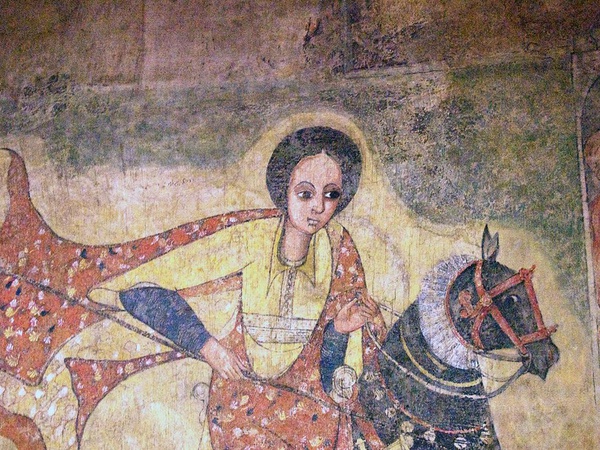
</p><p>So, what should you read next? Consider this story of a man who finds himself on the brink of leaving a dark cave. He sees the streaks of light piercing the surrounding darkness and starts to see the mouth to the world beyond. As he nears the exit, he notices two scrolls side by side with titles he can comprehend. One is thick and bound up with the inscription: The nature of the world beyond the cave: a guide and map. The other is a small scroll titled: The legend of the lady that escaped. The man means to see what the first paragraph is, but cannot stop himself from reading it in one go; the tale is so well told. Once a young girl left a similar cave after some years of bondage aided by a light spirit; she came to a stream to wash and drink. There she met the first of four adversaries — spirits of beastly shapes. She ran and called out for her guiding light, but after much scrambling through the forest, she found only a hut where a wizard waited. He informed her of the dangers in the region and the fear of the spirits; for that time, though, she was safe in his care. In time, the girl grew and studied all the scrolls in the wizard’s library. On her 18th birthday, armed with studied magic and the resolve of some training, she went in search of the spirits. This is how her legend came to be.
</p><p>Reading this, the man thinks: “Maybe this girl’s escape is not unlike mine. In the world to come, there will be danger, but there might also be friends. I will read where the huts might be and the places avoided by any settlements in the area.’
</p><p><br/></p><p><sub><img alt="" src="/media/inline_insight_image/p047xv92.jpg"/></sub></p><p><em><sub>Medieval Manuscripts - BBC UK</sub></em></p><p><em><sub><br/></sub></em></p><p>The man finds courage and some direction in the legendary tale and now dives into the map for the journey ahead. I personally read one fictional book alongside a non-fictional book at all times, or I alternate the sequence, trying to leave proverbial caves of ignorance each time. Stories help me orient myself, and once armed with inspiration and values, I dive deep into objective reality. I find that the legends are in the textbooks, and the direct texts help me make a deeper sense of the legends in return.
</p><p><br/></p><p>
</p><p>
</p><p>
</p><p>
</p><p>
</p><p>
</p><p>
</p><p>
</p><p>
</p><p>
</p><p>
</p><p>
</p>


 65
65


Other insights from Joshua Omoijiade




Referral Earning

Points-to-Coupons

Insights for you.



Eren Yeagar and Freedom's cage
Warning: this article contains spoilers for Attack on TitanWhat becomes of the humanity...
1789 views
11 upvotes
7 comments




THE MEETING
Sometimes it takes one meeting for our lives to change forever. It was never Femi'...
1232 views
12 upvotes
12 comments



OMÓ ÉSAN
They say the apple does not fall far from the tree, but I was the exception, or I was s...
1161 views
13 upvotes
5 comments

























Comments