March Essay Competition
March 9 — March 22, 2026,

Prompt
The average man, regardless of creed, family background, religion, personal convictions, or social, economic, or marital status, will always feel threatened or intimidated by a successful, strong, independent woman.
Competition Home Page
Essay
Score
The Doorway
March 14, 2026
· 598 words
· 3 min read

🥉 3rd Place
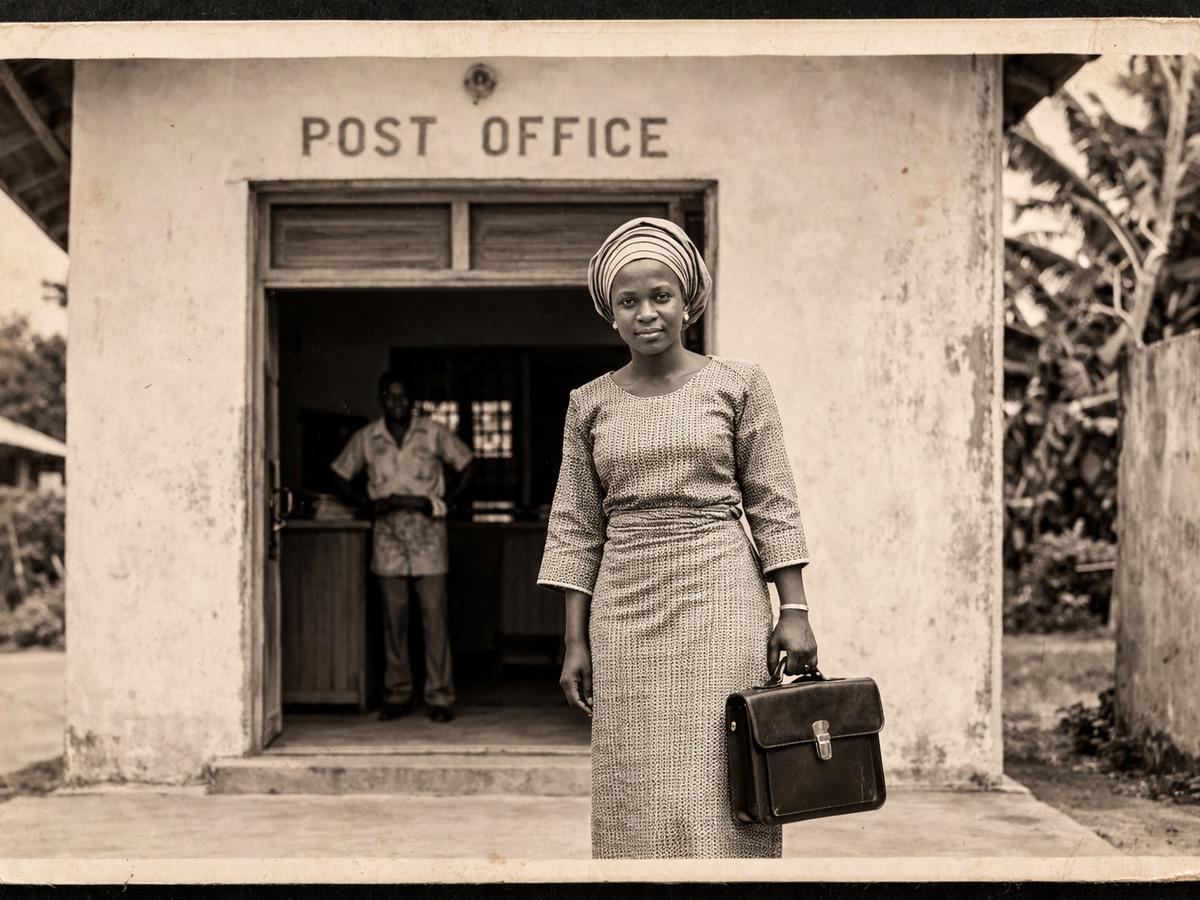
<p>There’s a photograph in our family album. My grandmother, young and smiling, standing in front of an office building on her first day of work. She’s holding a briefcase, a ridiculous overpriced thing she bought to look serious.</p><p><br></p><p><br></p><p>Behind her, half-ridden, is my grandfather. He’s smiling too. But his arms are crossed. And his smile doesn’t quite reach his eyes.</p><p><br></p><p><br></p><p>I’ve looked at that photograph a hundred times. Only recently did I understand that he was not in the doorway by accident. He was placing himself at the entrance of her new life. Not blocking it, just present. Just visible. Just there enough that she’d never forget he existed, even as she walked into a world that had nothing to do with him. </p><p><br></p><p><br></p><p>That photograph taught me more about men and successful women than any essay prompt ever could. </p><p><br></p><p><br></p><p>Because my grandfather wasn’t angry. He wasn’t stopping her. He was just there. Inserting himself into the frame of her achievement. Reminding her, without a single word, that she didn’t exist alone.</p><p><br></p><p><br></p><p>She went to work anyway. She succeeded anyway. But she carried him with her. His crossed arms, his eyes that couldn’t quite smile, his silent claim on a moment that should have been fully hers. </p><p><br></p><p><br></p><p>I’ve never met my great-grandfather. But I’ve heard stories. A man who never stood in photographs but somehow filled every room my great-grandmother entered. His presence was everywhere. In the way she lowered her voice, in the pauses she left before answering, in the dreams she mentioned only after checking over her shoulder. He didn’t need doorways. He was the walls themselves. </p><p><br></p><p><br></p><p>My grand father was different. He stood in doorways. Not inside the room, not outside it either but just at the threshold. Present but not quite entering. Visible but not quite participating. An improvement maybe. But still a presence she had to carry. </p><p><br></p><p><br></p><p>And then there’s my father.</p><p><br></p><p><br></p><p>Last week, I showed him the prompt. I watched him read it, waiting for his reaction. He got to the end, looked up, and shook his head. </p><p><br></p><p><br></p><p>“This would have described my father,” he said quietly. “And his father before him. But me? I don’t recognize myself here.”</p><p><br></p><p><br></p><p>He wasn’t being defensive. He wasn’t proving a point. He was stating a fact. One he’s spent his whole adult life making true. </p><p><br></p><p><br></p><p><br></p><p>I sat there looking at my father. This man who steps out of photographs, who celebrates my mother’s achievements without inserting himself, who looked at his own father in that doorway and decided to walk through it into something else. </p><p><br></p><p><br></p><p><br></p><p>I don’t know about the average man. </p><p>Statistics can tell you about averages.</p><p>They can’t tell you about doorways.</p><p><br></p><p><br></p><p><br></p><p>But I know about my great-grandfather, who filled every room. I know about my grandfather, who stood in every doorway with arms crossed and a smile that didn’t quite reach his eyes. And I know about my father. </p><p><br></p><p><br></p><p>The prompt asks if the average man will always feel threatened. I don’t know about averages. I don’t know about always. But I know about my father. And I know that the man who steps out of photographs, who celebrates without claiming space, who looked at his father in that doorway and chose differently, that man is not described here. Which means the prompt, for all its confidence, doesn’t describe everyone. </p><p><br></p><p><br></p><p>My father isn’t the exception. He’s the evidence. </p><p><br></p><p><br></p><p>Evidence that men can change.</p><p>Evidence that cycles can break.</p><p>Evidence that the doorway doesn’t have to be occupied forever. </p><p><br></p><p><br></p><p>This is the story of three generations.</p><p>And this is what I’ve learned by watching. From the man who filled every room, to the man who stood in every doorway, to the man who finally, finally stepped aside.</p><p><br></p>

 26
26


Final score
Average from 2 judges
84.3%
Judge 1 — 90.0%
Judge 2 — 78.5%
Average — 84.3%



































Comments