March Essay Competition
March 9 — March 22, 2026,

Prompt
The average man, regardless of creed, family background, religion, personal convictions, or social, economic, or marital status, will always feel threatened or intimidated by a successful, strong, independent woman.
Competition Home Page
Essay
Score
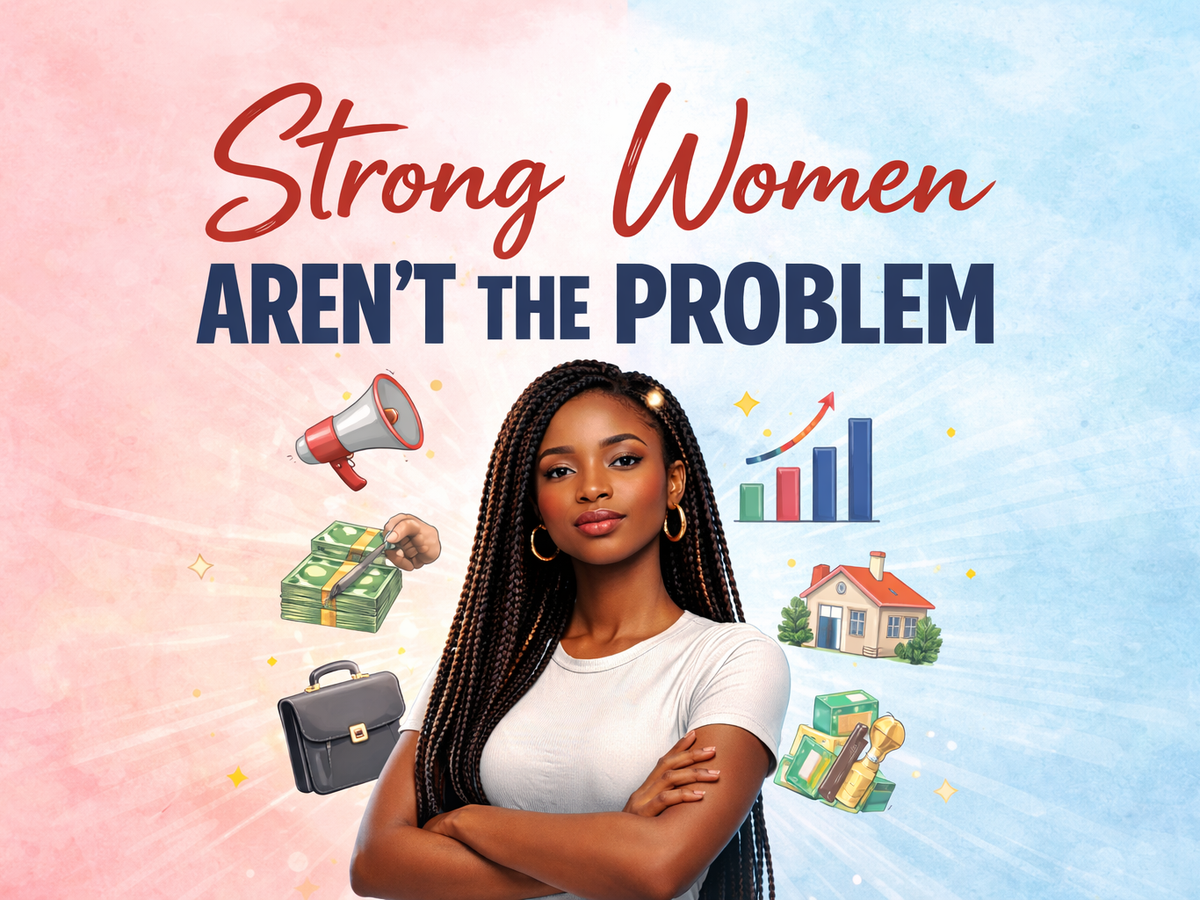
Strong Women, Fragile Egos: Why Female Success Intimidates Some Men
March 15, 2026
· 840 words
· 5 min read

<p>It was one of those calm evenings when nothing serious was happening. No school stress, no assignments staring at me like unpaid debts, just me lying on my bed and doing what most of us do when we’re bored: <em>scrolling through TikTok.</em></p><p>Video after video passed by—comedy skits, fashion edits, random street interviews. Then one particular clip stopped my thumb mid-scroll.</p><p>A woman held a microphone to a man during one of those typical street interviews and asked a simple question:</p><p>“<em>Would you marry a woman who earns more than you?</em>”</p><p>Without hesitation he replied, “<strong>No. I will neverrr do such a thing.”</strong></p><p>I paused the video.</p><p>I admit the way he said it was ridiculously funny, which is probably why the video went viral. But I genuinely didn’t understand one thing.</p><p><em>Why is that even a problem? Why would a woman earning more money feel like a threat? Why would success make someone less desirable as a partner?</em></p><p><br></p><p>After thinking about it for a while, I realized that moment wasn’t just about one man giving a funny answer. <strong>It reflected something deeper.</strong> For some men, a woman earning more money doesn’t just mean financial success; <strong>it feels like a challenge to the role they believe they are supposed to play.</strong></p><p>For decades, traditional gender roles have taught many men that their value lies in being the provider and authority figure in the household. When women achieve financial independence or public success, it disrupts those expectations, and some men respond with <strong>insecurity rather than adaptation.</strong></p><p>So when a woman becomes financially independent—or even more successful than them—the balance they are used to suddenly shifts. <strong>Some begin to fear something deeper: a bruised ego, a loss of respect or even a loss of control in the relationship.</strong></p><p><em>Instead of adjusting to that new reality, some react by rejecting the idea altogether.</em> Once I started noticing this pattern, I began to see it in other situations too.</p><p><br></p><p>One evening, while scrolling through Snapchat, I saw a woman proudly sharing something she had achieved. She had just purchased a piece of land in her own name and posted the Certificate of Occupancy on her story. <strong>It was clearly a moment worth celebrating.</strong></p><p>But instead of congratulations, a random male follower—someone who wasn’t even her friend—sent her a message telling her that she could show the whole world her land if she wanted but <strong>no one would marry her because she had tattoos.</strong></p><p><em>How? How do you think like that? How does that correlate? </em>A woman successfully buys property, yet the first thing someone thinks to say is that she won’t get married because of her lifestyle choices. Are you that threatened? Do you not believe she deserves that achievement? Do you not believe that a woman deserves the independence to own land? Or is that something only a man is supposed to do?</p><p><strong>Reactions like that reveal something important: </strong>the problem is not a woman’s success itself but the discomfort some people feel when women achieve things that society traditionally expected only from men.</p><p><br></p><p>The reaction of that man is not an isolated incident. A similar pattern shows up even in political spaces. When the Peoples Democratic Party tweeted about Natasha Akpoti-Uduaghan, saying she, a woman, could be the first female president of Nigeria, I read the replies and was honestly disappointed. <strong>Grown men were tweeting that it would be better for a goat (ewu) to rule Nigeria than for a woman to become president.</strong></p><p>One even argued that a woman shouldn’t lead because what if she was on her period and made “<em>emotional</em>” decisions?</p><p><em>How do you even arrive at that kind of reasoning biko?</em> Are we seriously reducing leadership to biological stereotypes? The idea that a woman’s natural body cycle somehow makes her incapable of rational decisions says more about the <em>insecurity</em> behind the arguement than it does about women themselves.</p><p><strong>Comments like these show how deeply gender stereotypes still shape perceptions of leadership in Nigeria and beyond.</strong></p><p><br></p><p>Looking at all these examples—the street interview, the Snapchat message, the reactions online—it becomes clear that the real issue isn’t women doing well. The issue is <strong>how some people react when women do.</strong></p><p>When a woman earns more, owns property or even aspires to lead a country, some men see it as a <strong>threat instead of an achievement.</strong></p><p>But the truth is, not all men feel that way. <strong>Men who are secure in themselves don’t see a woman’s independence as competition.</strong> They see it as partnership. A woman’s success doesn’t take anything away from them; it simply means two people are capable of building something stronger together.</p><p><br></p><p>And honestly, thinking back to that viral street interview, maybe the real question was never:</p><p>“<em>Would you marry a woman who earns more than you?</em>”</p><p>Maybe the real question is: <em>Why should that even be a problem in the first place?</em></p><p><strong>Strong, independent women are not the problem. Men’s insecurity is.</strong></p><p>As author John Gray once wrote:</p><p><em>“A man’s greatness is not diminished by a woman’s success; it is measured by his ability to support and celebrate it.”</em></p><p><strong>Recognizing this is the first step toward changing the story our society tells about success and gender.</strong></p>

 6
6




































Comments