Score |
189


Ayomide Samuel
 A student @ A student
A student @ A student



African parents: the love will understand later
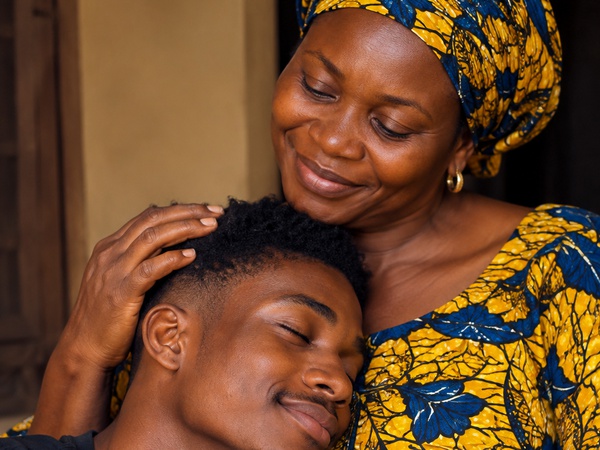
<p>Growing up with African parents can sometimes feel like living between two different worlds. There are moments when you wonder why they are so strict, why they ask so many questions, why every little mistake becomes a serious conversation, or why they seem to expect so much from you.</p><p>Sometimes you just want them to listen without judging. You want to explain yourself without hearing, “When I was your age…” You want them to understand that the world you are growing up in is not exactly the world they grew up in.</p><p>But as you grow older, you begin to realize that many African parents were raised differently. They grew up in times when survival required strength, discipline, sacrifice, and resilience. Many were taught that showing too much emotion could make a child weak, and that providing for the family was one of the strongest ways to show love.</p><p>So sometimes, their love doesn't come in the form of “I understand how you feel.”</p><p>Sometimes it sounds like, “Have you eaten?”</p><p>Sometimes it sounds like, “Be careful when you go out.”</p><p>Sometimes it sounds like, “Call me when you get there.”</p><p>And sometimes it sounds like, “As long as you are living under my roof, you will follow my rules.” 😂</p><p>Their methods may not always be perfect, but behind many of those words is fear, hope, sacrifice, and love.</p><p>They fear that life will hurt you.</p><p>They hope that you will have opportunities they never had.</p><p>They want you to become independent, even though sometimes they struggle to let you grow independently.</p><p>As children, we may notice the restrictions, the arguments, the rules, and the constant advice. But as we grow older, we sometimes begin to notice something else: the sacrifices behind those rules.</p><p>There are parents who wake up early every morning and return home exhausted, yet still ask whether their children have eaten. There are mothers and fathers who quietly put their children's needs before their own. They may not talk about everything they have given up, because to them, providing for their family is simply what they are supposed to do.</p><p>That doesn't mean every parenting decision is automatically right. African parents, like every other parent, can make mistakes. Sometimes children need conversations instead of punishment. Sometimes young people need guidance without feeling like their feelings don't matter.</p><p>Parents need to understand that their children are growing up in a changing world. Children also need to understand that their parents are human beings who are learning too.</p><p>Maybe the goal isn't for children to become exactly like their parents.</p><p>Maybe the goal is for each generation to take the good from the previous one, learn from its mistakes, and create something better for the next.</p><p>One day, you may understand why your mother worried when you came home late.</p><p>One day, you may understand why your father kept reminding you about your future.</p><p>One day, you may realize that some of the things you once considered unnecessary were actually their way of preparing you for life.</p><p>And maybe one day, you will look back and realize that while they didn't always say “I love you,” they showed it in many other ways.</p><p>In the food they made.</p><p>In the school fees they struggled to pay.</p><p>In the advice they repeated a hundred times.</p><p>In the prayers they said when you weren't listening.</p><p>In the sacrifices they made without announcing them.</p><p>In the way they worried about your future even when you were only thinking about today.</p><p>African parents may not always speak the language of love that younger generations understand immediately.</p><p>But sometimes, love has an accent.</p><p>Sometimes it sounds like your mother calling your full name from the other room.</p><p>Sometimes it sounds like your father asking, “Have you started preparing for your future?”</p><p>Sometimes it sounds like an argument.</p><p>Sometimes it sounds like advice you've heard too many times.</p><p>And sometimes, after all the noise is gone, you realize that underneath it all was one simple message:</p><p>“I want you to be okay. I want you to become somebody. I want life to be kind to you, even if life was not always kind to me.”</p><p>That may be one of the deepest things about African parenting.</p><p>The love isn't always perfect.</p><p>The communication isn't always perfect.</p><p>The understanding isn't always perfect.</p><p>But behind many of the sacrifices is a parent who simply wants their child to have a better life.</p><p>And perhaps as the younger generation, our responsibility is not only to criticize what our parents got wrong, but also to appreciate what they got right—and to build something healthier from both.</p><p>Because someday, we may look back at our childhood and realize:</p><p>They were learning how to be parents while we were learning how to become ourselves.</p><p>And somewhere between their fears and our dreams, they were simply trying, in the only ways they knew, to love us. ❤️</p>


 64
64


Other insights from Ayomide Samuel




Contributor Points

Points-to-Coupons

Referral Earning

Insights for you.

Dear African Parents,
Every "African parent" disapproves of suicide. "Why take his life over something so lit...
380 views
70 upvotes
75 comments

SOMETHING MUST KILL A MAN
Something must kill a man! That's what Emeka thought to himself that afternoon, outside...
240 views
39 upvotes
35 comments


BREAST IRONING
Ever heard of the breast ironing practice? well, I am from Cameroon and we have strong ...
1934 views
35 upvotes
41 comments


UNTAMED WORDS
They came with fire, but feared our flame,taught us silence, then gave it a name.Stole ...
403 views
33 upvotes
27 comments


My Greatest fear
My Greatest FearMy greatest fear isn’t death ,it’s the inability to write.I have a wild...
418 views
28 upvotes
29 comments


BE CAREFUL OF WHAT YOU START
Work hard.Be consistent.Be patient.These are the songs we hear,the sermons we swallow.B...
224 views
23 upvotes
25 comments


Divide The National Moi Moi
While embarking on my beauty stroll this evening, I pondered what I would write about. ...
988 views
20 upvotes
20 comments

LET'S TALK ABOUT YOUR COUSINS
Family has always been the foundation of social relations.the ↗ very first people you c...
592 views
28 upvotes
25 comments


Hotel Rwanda 🇷🇼 part 1 Nomshu
Hotel Rwanda: Part 1 – How I Ended Up in the MadnessOkay, so you know how life sometime...
141 views
24 upvotes
24 comments

THE GIVE AND TAKE OF MASTURBATION
GBAM!Door closed.Shiiiiiiion!Window closed.The hand becomes the most useful and wonderf...
267 views
23 upvotes
28 comments