Score |
78


Nonso Obi
 Student @ Nnamdi Azikiwe University,Awka.
Student @ Nnamdi Azikiwe University,Awka.



AN IMAGE SHOT IN THE DARK.
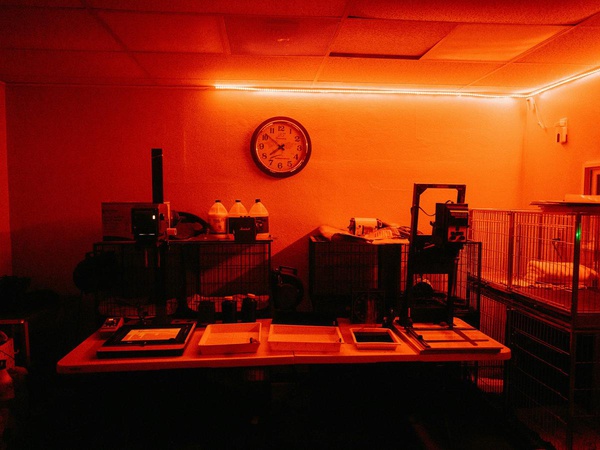
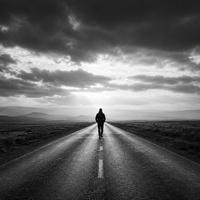
<p><span style="background-color: transparent;">Eli had a gift for light.</span></p><p><span style="background-color: transparent;">This is what people said about him at exhibitions, at galleries, at the small intimate shows he hosted twice a year in a rented space downtown, where the walls were white and the wine cheap and people stood in front of his photographs with their hands clasped behind their backs and their heads tilted slightly, the way people stand when they are trying to look like they understand.</span></p><p><span style="background-color: transparent;"><br/></span></p><p><span style="background-color: transparent;">He had a gift for light. He could find it anywhere. In the crease of an old man's elbow. In the half-second before a child's wonder turned ordinary. He pointed his camera at the world and the world gave him everything it had.</span></p><p><span style="background-color: transparent;"><br/></span></p><p><span style="background-color: transparent;">People trusted him with their faces. This was the thing about Eli that couldn't be taught and couldn't be explained. Strangers relaxed in front of his lens. Women who had spent decades at war with their own reflections looked at his photographs and said quietly, almost to themselves — is that really me. And he would say yes. And they would look again. And sometimes they would cry.</span></p><p><span style="background-color: transparent;">Eleven years. He had four hundred photographs of other people's most honest moments. He had no photographs of himself.</span></p><p><span style="background-color: transparent;">It started the way these things always start — which is to say, it didn't start. It was already there, patient and quiet.</span></p><p><span style="background-color: transparent;">He noticed first in the mornings. The particular quality of waking up and feeling nothing specific. He told himself it was the work. He had been shooting constantly — three weddings, two editorial projects, a portrait series he had promised a magazine by the end of the month. He was tired. Everyone got tired. He drank more coffee and scheduled less and kept shooting. His eye still found what needed finding. He couldn't feel it anymore.</span></p><p><span style="background-color: transparent;">The portrait series was called Witnesses. He had been working on it for eight months — strangers photographed in their own homes, in the spaces where they were most themselves.</span></p><p><span style="background-color: transparent;">He developed them himself in the darkroom he had built in his second bedroom — the room that was supposed to become something else, a guest room, a studio, something with more light, but had instead become this: a small red-lit space that smelled of chemicals, where images emerged from blank paper.</span></p><p><span style="background-color: transparent;">He loved the darkroom. Or he had loved it. Now he stood in it for hours, watching faces appear in the developer tray, and felt the same static he felt everywhere else.</span></p><p><span style="background-color: transparent;">One evening in November he was developing the last of the Witnesses prints when he found the photograph.</span></p><p><span style="background-color: transparent;">He didn't remember taking it.</span></p><p><span style="background-color: transparent;">It was at the end of a roll he had shot at a wedding three months ago — the last frame, which he must have taken by accident, or in a moment of distraction, or in some half-conscious impulse he couldn't account for. The image was dark. Underexposed. Shot without flash in a corridor, the camera angled slightly downward, the composition accidental and strange.</span></p><p><span style="background-color: transparent;">It took him a moment to understand what he was looking at. It was a mirror. A tall ornate mirror in the wedding venue corridor, and in it — half-visible, blurred at the edges, the exposure too long so that the image had smeared slightly into itself — was a man holding a camera.</span></p><p><span style="background-color: transparent;">He stood over the developing tray and looked at himself for the first time in eleven years of taking photographs. He looked like a photograph of a person rather than a person. He stood in the red light for a long time. He started looking after that. Not intentionally at first. He went back through his archives, months and then years of work, thousands of images, and he looked not at the subjects but at the edges.</span></p><p><span style="background-color: transparent;">He found himself in forty-three photographs spanning six years. In all forty-three he looked the same. Not the same age — he could see himself getting older, the slight changes in his face and his hair. But the expression never changed. Six years. No witness but his own camera.</span></p><p><span style="background-color: transparent;">He shot his last series in December. Nobody knew it was his last series. He didn't know it was his last series, or perhaps he did and the knowledge lived in a place below the level of language.</span></p><p><span style="background-color: transparent;">He called it "An Image Shot in the Dark." Forty photographs. Taken over three weeks, entirely at night, in the city without people. The photographs were extraordinary. Everyone said so. His gallerist called them his best work. A magazine ran six of them across a double spread with a piece about his evolution as an artist, his deepening interiority, his remarkable ability to find emotional truth in empty spaces.</span></p><p><span style="background-color: transparent;">He read the piece three times looking for himself. He found a name, a history, a technique. An artist with a vision and a body of work that would outlast him. He could not find Eli.</span></p><p><span style="background-color: transparent;">The last thing he photographed was the darkroom. He set up a tripod. Composed the frame carefully. He set the timer. Walked to the center of the frame.</span></p><p><span style="background-color: transparent;">The shutter clicked. He waited for the self-timer to count down. Then he took the camera off the tripod and developed the film one last time — standing in the red light, watching the image appear in the tray.</span></p><p><span style="background-color: transparent;">The center of the frame was empty. The timer hadn't malfunctioned. He hadn't moved. He was simply no longer visible — even to his own equipment. He looked at the empty center of the frame for a long time. Then he turned off the red light and everything else.</span></p><p><span style="background-color: transparent;"><br/></span></p><p><span style="background-color: transparent;">The "An Image Shot in the Dark" exhibition opened in February. People stood in front of the forty images with their hands clasped behind their backs and their heads tilted slightly.</span></p><p><span style="background-color: transparent;">Nobody asked where Eli was. He had always been better at disappearing than they had been at looking. The photographs stayed on the walls for three weeks. They were beautiful. They said nothing about him that he hadn't already known.</span></p>


 195
195





Other insights from Nonso Obi




Contributor Points

Points-to-Coupons

Referral Earning
Insights for you.

All that I gave
Oh, hey there!It's me... again...You know, There's so much I want to saySo much I want ...
531 views
91 upvotes
90 comments


The Manipulation.
"Mom started looking at me differently from that day.I remember it like the back of my ...
257 views
74 upvotes
90 comments

The Root of Evil.🌚
I like money.But they said it's the root of evil. 🙂Sorry, get your facts straight.The l...
246 views
74 upvotes
81 comments


The 3AM World.
My favourite time of every day is between 1 a.m. and 4a.m.That's when the world is the ...
226 views
66 upvotes
69 comments
Drowning.
I can't breathe.I tried again.Nothing.My lungs burned.The water surrounded me, cold and...
202 views
60 upvotes
68 comments

Eden.
I came to this house very young, with one other.We were accepted so warmly.Everyone lov...
187 views
54 upvotes
62 comments