1
I believe madness is a malady best preserved in disorder. When everyone acts riotously, sanity wanes, and it becomes harder to tell who is actually mad and who is simply acting.
I think this is why I love Lagos, the hub of otherworldly madness that so perfectly masks my own.
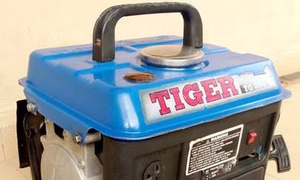
The rain poured outside my car. The neon green clock on my dashboard read 1:30 am. My peak hours. Lola or Lisa (I didn't care to record her name) lay in the trunk. All twelve pieces of her. I should have disposed of her sooner, but where was the fun in that? Dismembering a body takes mastery. Her body had begun to rot in the deep freezer behind my house because of a power outage. The transformer in my area had developed a fault a fortnight ago, and NEPA had refused to repair it.
“Na the fuse dey miss from the transformer. Be like say person don thief am,” Malam Kano, whose tea stand stood in front of my house, told me that morning as he poured the hot liquid between two cups. “NEPA say dem no go fix am unless we contribute money to buy new fuse.”
What I found funny was that only someone who knew the ins and outs of a transformer could remove a fuse, unless they wanted to be roasted to death (I could promise them a more befitting exit). Yet we were to believe a common street thief had made away with it.
Rounding the bend, I saw the landfill ahead. I parked beside a closed shop and dragged out the garbage bags containing Lisa's (no, Lola's) remains. My tattered clothes helped me blend in with the scavengers who would still be rummaging for something to sell. The landfill had been closed temporarily, but nothing ever stays closed in Lagos. It was pitch black, save for the street lamps and the full moon. I didn't need to go far, just deep enough not to be noticed.
The odour nearly made me stagger. After I dropped the bags, I turned back toward my car when something cold and moist wrapped itself around my ankle and held tight. I looked down to find Lola's dismembered arm gripping me. I stumbled backwards into a pile of rubbish.
“You will not leave me here.” A hollow voice came from the bag where her head was. I shook off the hand and ran to my car. I steadied my breath; that kind of blood pressure wasn't good for a man my age.
As I set the car to drive, I glanced at the rear-view mirror and Lola's dark brown eyes stared back. Her face was as pristine as the day I picked her up from the junction. She leaned forward till her lips nearly grazed my ear.
“Let's go home,” she whispered. She was part of them now. The souls of the people I killed never left. With them I would never be lonely like I was as a child.
2
“Fuel don finish oh.” The attendant in the faded orange uniform said it just as Imisi neared the front of the queue. The crowd began to grumble. Fuel scarcity had swept the nation, and three long queues had formed since early morning.
“We saw a fuel tanker come here this morning,” a young man in a sweaty polo said. “We won't leave until you bring out that fuel.” Some had already begun to leave, Imisi among them. She knew nothing would be done. A few meters away, black market sellers sat beside tall yellow jerrycans. Their prices were higher, but far more reliable.
Imisi was a few thousand short now because of the price increase, but she was determined to return with something. She handed the seller her jerrycan and the money. When he gave it back, the fuel barely reached half.
“I even added jara for you sef,” the seller hissed, and went back to his seat.
Passing the station, she saw a black Lexus Prado pull in. The attendants turned all smiles and began saluting the driver. Soon the same attendant who had said there was no fuel was pumping it into the Jeep while the man in the polo looked on in shock.
At home, Imisi heard her father praying in tongues from the front door. “He is at it again?” she asked her sister, Alade, who was turning a pot of stew in the kitchen.
“He asked me for money, and when I asked what it was for, he took offence. I told him I wasn't giving him shishi without an account of it. That was how he went inside and started praying that God will deal with stingy children like us.”
Imisi laughed. Their father had once been a pastor, with a loving family. Then he became so invested in church work that he decided neglecting his family was necessary for the church's growth, and things began to go bad.
He resigned from his job without telling his wife, who had been a housewife since they married. “How can a man of God neglect his own household? Is that what the Bible teaches?” she asked when she found out.
“What do you know about the things of God? One must make sacrifices for the kingdom.” Even God was probably surprised. The real reason was that he wanted to be a better candidate for promotion at the church. More hours at church meant better chances.
Soon there was no food in the house, the children were sent home from school in tears, and neighbours avoided them for fear of becoming their creditors. One day he woke to find his wife and children gone. She couldn't forgive a man who had made her stop working on the notion that it was a man's duty to provide, only to abandon that duty. He never got the promotion. Years later his wife died of a heart-related issue, and grief threw him into depression. It took the intervention of his family and the church before he went to bring his children back home.
“I hope the fuel you bought was enough?” Alade asked, coming out of the kitchen. Imisi thought of the half-filled jerrycan by the door. “Yes,” she lied.
Their father walked in. “You children don't have anything useful to do?” Imisi was the only one who still held a respectful conversation with him. Alade had given up long ago.
“This government will be the death of us,” Alade said, glancing at him. “I have to work overtime just to afford the ingredients for this stew.” Her father's face twisted in disgust. He didn't approve of what his twenty-one-year-old daughter did to put food on the table; stripping at a club was as good as prostitution. But she was the sole breadwinner. When the church found out (the Pastor's son had hosted his birthday at that very club), they stripped him of every title and exiled him from the community of believers.
He reclined in an armchair. “Your generation doesn't know a good thing even if it hits you in the face. This government is doing better than the past five administrations put together.”
“Yet here you are, jobless and emaciated,” Alade said. He responded with a loud Yoruba rebuke about her mouth filling with soldier ants. Alade hissed and went back to the kitchen.
Imisi sat opposite him, palms folded, a timid nineteen-year-old still seeking her father's affection. He picked up a newspaper. “Nigeria has ranked first globally in extreme poverty,” she read from the headline. “I think a good administration wouldn't receive such an embarrassing report.”
“Propaganda,” he said, throwing the paper aside. “The White people who carried out such investigations don't know the right things to look for.” Imisi stared. It was his favourite newspaper, discarded because it didn't say what he wanted to hear.
Alade emerged. “You support this government because you think you have an affinity with the President. Your generation is so used to suffering that when we clamour for better living, you call us greedy.”
“It is only in Nigeria that an alleged drug baron becomes President and priests defend him so fiercely,” Imisi added quickly. “Then we wonder why society is so morally bankrupt, forgetting we are the leaders we chose.” Her father turned to her with disbelief and disappointment, and she recoiled.
“Exactly!” Alade said. “Nigeria has just been ranked lowest in life expectancy in the world. Not Congo, not Sudan, with all their wars. Peaceful, democratic Nigeria. I don't know how we snatched that award from more legitimate winners.”
Fed up, he took his worn cap from the TV stand and walked out. The door slammed. “I think you got him angry,” Imisi mumbled.
“We got him angry, abi didn't you talk too?” Alade scoffed. “I don't know why you still try to win his affection.”
3.
By six o'clock the smoke had settled over the landfill like a second sky. Bashir walked the slopes with his hooked stick, past boys sorting plastic and women bagging tins. They came early, before the police chased them away. No one was meant to be there.
Among the rubbish he noticed garbage bags piled on one another. What caught his eye was a silver watch sticking out of one, along with a discoloured wrist. Flies were already perching on the skin. The watch was still ticking, so it hadn't been there long. He could take it and go. But he couldn't. Something evil had happened here, he could feel it.
He hurried down to Baba Bashim's shack. Baba Bashim, the oldest scavenger, was their elder. He ran the sorting yard and took a cut of everything gotten from the landfill. Bashir found him listening to a transistor radio. “There is something I need you to see, Baba,” he blurted out between breaths. Baba Bashim put on his rubber boots and followed.
He frowned deeply. One by one they opened the other bags, suppressing the urge to vomit as they found the decaying remains of a woman. Baba Bashim opened the bag containing her head, and stopped. “What sort of animal does something like this?”
“Whoever this woman was, she didn't deserve to be discarded like this. Run and get me my shovel.” When Bashir returned, he asked, “What will you do to her?”
“Bury her.” He found a spot and began to dig. “Soil or shit, there isn't any difference when it comes to concealing something.”
He whistled a mournful tune from an old work song as he dug. Together they lowered the bags into the hole. Before the last one, with the hand, Baba Bashim removed the watch and gave it to Bashir. “This can get you money that you and your family will need. This woman no longer needs it.” Bashir looked at it a moment before taking it.
Baba Bashim shovelled the dirt back. “This world is a horrible place and we all must do our best to survive.”
4.
Every time I closed my eyes to sleep, after the grotesque faces of the people I have killed, my mind conjured images of my mother. I don't remember much about her now that my memory is failing, but I remember the smell of the market, where I went after school to help at her stall of beauty creams and beads.
It was only ever me and my mother. She told me my father had died, but my agemates still jeered at me, calling me a bastard and the son of a prostitute. They were wrong about my mother. She was tall and beautiful, with light skin and tribal marks running across her cheeks like a cat's whiskers. Her walk was graceful, and her long legs caught the eyes of many men as we walked to and from the market.
She was a loving mother, although I got on her nerves. Whenever I returned from school scruffy from fighting the bullies who said they would soon be old enough to visit my mother and I would have to call them daddy, she beat me and forced me into the small dry well behind our compound, filled with sand almost to the top. I had to hold my knees to my chest to fit. She could leave me there for long periods, but only because she loved me.
A man visited our house on occasion. His skin shone like polished black leather, and his tribal marks ran vertically across his cheeks. When he laughed the whole house shook. When he left he gave my mother money, then secretly squeezed some into my hand for sweets.
One day, as my mother prepared for his visit, I asked if he was my father. We had the same skin colour, and I could swear his pinky toe was shaped just like mine. She slapped me. “What makes you think he is your father, you stupid boy? I told you your father died. Don't you know what death is?” She wept as she beat me, then dragged me to the well, threw me in, and covered it. I pleaded and cried, but she didn't let me out.
I woke in the cramped well to darkness. That was when I started hearing voices, whispering. No, laughing. “Stupid boy. You are all alone.” I covered my ears, but they continued to mock me.
“Ibitoye, where is the boy?” I heard a deep voice say my mother's name, and then the cover was lifted. Cold air rushed into my face. The man stood over me, my mother behind him.
“How could you leave him here so long?” he asked her. “A little longer and he would have suffocated. I am taking this boy to the city, where he will be raised in a proper home.”
“No!” my mother yelled, fiercer than I had ever seen her. “I will not let you take my son to be a slave to your wife and children in the city. He is the only one I have in this world.” She dragged me by the hand, but his grip was firmer.
“ENOUGH!” He forced her hand from mine and led me toward the house, leaving her behind weeping. As we neared the front of the house, a glint of moonlight caught my eye. In a split second, I saw my mother raise the sharpened axe we used for cutting firewood and send it deep into the man's head.
His blood splashed everywhere that cool evening. It was warm. He fell to his knees, then collapsed. My mother pulled me to her chest. “You are all I have in this world,” she whispered.
*****
There were consequences for killing a man, especially a well-known businessman in the city and the village. She was arrested, convicted of murder, and sentenced to death. I was placed in the care of a distant uncle. Many labelled my mother a witch in her final days. I never got to say goodbye, and never knew where she was buried. She died in the reality she feared the most: alone.
My uncle was an old civil servant, too frail to curb a growing boy. I was left to my own devices, and the voices came and went as they pleased, until one day they returned permanently.
I remember that day vividly. I had grown into a young man in the 80s, working as a driver for a big man through my uncle's influence. On my way to pick up my oga, I came across the aftermath of a ghastly accident. A fellow road user told me what had happened. A fuel tanker had fallen and leaked petroleum over the road. People came with buckets and barrels. Then thugs and “sons of the land” forced them to stop, claiming the fuel had poured on their land and was theirs alone. In the commotion the police arrived with their own agenda, asking people to scoop fuel for them instead of warning them of the danger. When a spark from a thug's cigarette met the petroleum-soaked road, the tanker burst into flames, setting everything around it on fire, human beings included.
The smell of burning flesh and rubber sat at the back of my throat. I didn't know how burnt flesh smelt until that moment, but I have relished it ever since. That was the day I realized I had a calling.
The voices returned, inspiring me. What good was it for people to die without coming to terms with death? Like my mother, or that man from my childhood. In my control they would accept it more readily. It was their right, after all. From then on, I made sure my prey were constantly reminded of their approaching deaths. I watched their will to live ebb from their eyes long before their hearts stopped beating, and it gave me so much joy.
But I was still a young man with no sense of direction. After that day I went on a business trip to Ibadan for my ailing uncle. There I hired a prostitute. We agreed on a price, which I paid up front, and went into my guest house room. She was young, no more than twenty, with scars across her back. In bed with her, the voices returned. “Do it.”
I moved my hands to her throat and gripped firmly. She choked and squirmed and hit my face with her puny hands. Her resistance unnerved me, so I began punching her anywhere I could. Why couldn't she just stay still and accept death? I must have loosened my grip, because she began to yell.
Soon there was banging on the door. “What is going on inside there?” a deep male voice asked.
I opened the door to a small group of people and greeted them calmly, asking if there was a problem. “Someone was yelling from this room yet you ask us that? Who else is here with you?” I fell silent, too afraid to think of a lie. Before I could speak, the girl emerged, dressed, bleeding from her nose, her face already swelling.
“Is that not Adunni, Abiodun's daughter?” someone asked.
She ran towards the crowd. “Please help me, this man tried to kill me. Look at what he did to me.” She pointed to her face and her bruised neck.
“But that was what we agreed on, was it not?” I said. She looked at me in shock. “We agreed on a night and I paid you in full. You agreed readily.” The crowd turned to stare at her.
“What were you even doing out at night, Adunni?” a man asked.
“We never agreed to such. All he said was sex,” she said, her voice breaking.
“You accepted his money, didn't you?” The crowd mumbled in consensus. A middle-aged woman held my hand. “On behalf of our daughter, we apologise. She is not used to such behaviour.”
She had a broken nose, yet she had been turned into the monster and I into the victim. What was the word of a prostitute they all knew against that of a stranger?
Before she left, I had the brilliant idea to milk the moment. I told the crowd, who were raining curses on her parents, to stop. Then I brought out three thousand naira. Three thousand naira, that was all she was ever worth. I offered it as a token of apology for scarring her beyond what we had agreed on (we had, in fact, never agreed on such acts). The people murmured at how kind and generous I was to such a vile human being. How ironic.
I saw desperation, shame and fear in the girl's good eye; the other had begun to swell (I guess I got carried away). If she refused the money, they would call her ungrateful. If she took it, shameless and a liar. Whichever she chose, she lost, and only she and I knew it. The fierce anger in her look drew the corners of my mouth into a smile.
I let my gaze speak. “Take the money, it's all you are really good for.”
After that night, a dark truth dawned on me. The system meant to punish offenders like me would favour me. There would always be excuses to exploit in this society, and I would use them. I was untouchable.
And so that was when it started.
*********
- Uncle Jakunde
- Folasade
- Titilayo
- Morenike
- Damilola
- Yetunde
- Adebimpe
- Ifeoma
- Nneka
- Adaeze
- Obiageli
- Uchenna
- Chidinma
- Amarachi
- Ebele
- Hauwa
- Zainab
- Maryam
- Chukwuemeka
- Ibrahim
- Tunde
- Obinna
- Musa
- Emeka
- Linda
- Rose
- Claire
- Princess
- Nancy
- Bimbo
- Lola
31 people in the last 30 years. I wrote down their names so that I wouldn't forget. Now I had 31 souls keeping an old man like me company. I wasn't going to die alone like my mother. I was fulfilling my purpose. The more voices I had in my head, the less I heard from the voices of my traumatising childhood.
I have become this country's retribution, especially this city's, the penalty for all their sins and apathy.
It isn't easy to get people like I did in my prime. This generation is more guarded, and I relish a good challenge. That is why I prowl the night for whom to devour like the devil himself.
It was on this particular night that I saw her, standing at the side of the road in the pouring rain, stranded and shivering, clutching her soaked bag to her chest. When I parked in front of her and rolled down the window, relief flashed over her drenched face. I'm sure she thought, This is just a sweet old man trying to help me.
“You shouldn't be out in the rain like this. Your parents will be worried,” I said. The bait had been set.
“I was trying to get home when the rain started and my phone is dead,” she replied, coming closer to the window.
“Let me drop you off. I hope your house is not too far?” She agreed eagerly and thanked me profusely. She entered the car with no fear in her mind, and we began our journey.
“What is your name?” I asked. “My name is Imisi, sir.”
Up ahead was a police checkpoint. The officers stationed there waved me through immediately.
After all, who would suspect an old man?



 1