- Fuel Subsidy: Most Tinubu supporters believe that fuel subsidy was a step in the right direction and was needed to end the unending debt from international creditors. There is no gainsaying that the issue of subsidy has increased corruption in Nigeria and the removal of subsidy is a relatively good option. However, the borrowing culture under this regime is worse than previous regimes, even after the removal of subisdy. This government is known to have borrowed over 11 billion dollars. Secondly, fuel subsidy is an integral part of Nigeria’s economy. The government did not place this into consideration and create an environment where Nigerians could thrive to an extent without fuel subsidy. It shows that no plan was put into place for such an important decision. For instance, purchasing power is the same. Minimum wage is 70 thousand naira. How does that make sense for a country that sells one litre of fuel for 1, 400 or 1,500 in some states. Fuel and diesel are key elements to a country’s economy. If powers transportation. If the price of fuel is high, the price of transportation will also rise (with the same level of purchasing power of citizens)
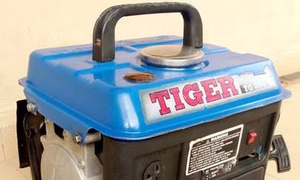
Also, fuel powers generators for businesses also. Electricity has become a luxury in Nigeria. Tinubu in one of his campaigns in 2023 said that if he doesn't provide stable electricity, Nigerians should not vote him, for a second term. Nigeria generates about 5,403 megawatts out of a possible 12,000 megawatts. Generation companies are constantly complaining on how they are not paid. There was a 3.3 Trillion budget, under the Presidential Power Sector Debt Reduction Programme to solve this issue. However, the issues concerned with electricity has persisted and gotten worse and the GenCos are still complaining on the lack of funds. Mind you, this was not the first 3.3 trillion that was approved under President Tinubu's administration for the same purpose. In May 2024, the minister of power stated that President Tinubu had approved 3.3 trillion for the payment of electricity debt. In April 2026, the same amount for the same purpose was approved again. Talk about the corruption in this country.
- Macro Economics: What President Tiunbu supporters fail to understand is that there's a difference between economic growth and development. Economic growth stems from all the statistics, which in most cases are accurate. However, it doesn't reflect the reality of Nigeria. For instance, Nigeria is currently ranked 19th in the Purchasing Power Parity(PPP) global index. A country’s purchasing power parity is calculated by comparing other countries' PPP. For instance, if Nigeria sells a product for 3 dollars and USA sells the same product for 10 dollars, it influences the rank of Nigeria’s PPP. This is a comparison between a developing and a developed country who are at different phases as a country. So, because things are cheaper in Nigeria when compared to the US, does not entail that Nigerians are in a better spot economically than Americans. Other determinants should also be placed into consideration. Like, the minimum wage, the value of the countries' currency, standard of living among others. Furthermore, Nigeria’s population contributes significantly to this ranking. A country with a higher population produces more but it doesn't translate to the citizens being wealthier. So these rankings, in this case, the PPP global index doesn't tell the whole truth.
It is evident that there's absence of economic development in Nigeria. Employment opportunities is absent, basic amenities are luxury, healthcare is close to non existent, (there are multiple stories online of persons who died solely as a result of the incompetence in this country’s healthcare) minimum wage is lesser than the price of rent per month. Let's not even talk about the rise of insecurity.
On the other side of macro economies, the economic system of Nigeria have being structured in a way that only the benefits those at the top of the pyramid. For instance, some people were glamouring over the presence of GP Morgan in Nigeria and how it shows that the country is moving forward and attracting foreign investment. While there may be a bit of truth in this, how does this positively affect an 'average citizen'. Most Nigerians operate in an informal economy, for example, traders. How are these investments going to change the trajectory of their business.
Another argument these guys could bring up is that, foreign companies can provide employment opportunities. Well... According to the CEO OF Moniepoint, many young Nigerians are struggling with employability due to skills and quality gap. In short, most Nigeria graduates are not good enough. This boils down to the faulty educational system in Nigeria. I want you to think for a moment, 'Why would foreign companies want to hire people that are considered incompetent'.
- NELFUND: This is the policy they brag about the most. But what is the use of NELFUND, if the educational system is lacking. What is the assurance that a Nigerian graduate will get a job after school to be able to pay off his or her debt. Secondly, was it not this government that removed subsidy in the educational system. Someone will say that, the removal of subsidy was needed to cut cost. Have we truly cut cost under this government?
Also, we as citizens deserve to enjoy subsidy in certain sectors. It is not a privilege but a necessity. After schooling, you are not only left with the uncertainty of getting a job, you are also in debt. This statement sums up the NELFUND programme.
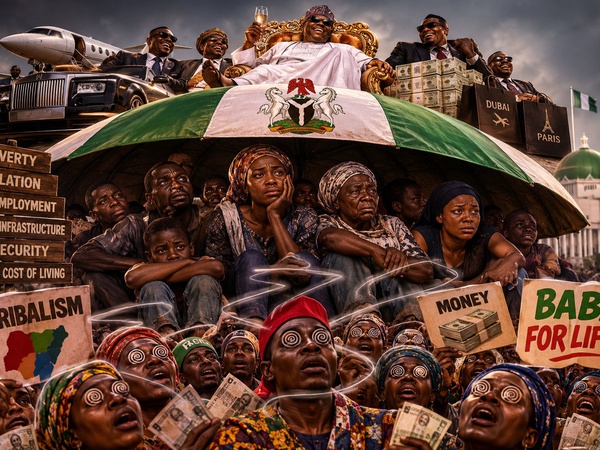
May Nigeria not happen to us. They live extravagant lifestyles and tell you to persevere. 2027 is close, vote with your mind and not your tribalistic sentiments. The next four years is crucial to you and I as Nigerians. If you ask me, its pretty obvious who you should be voting for. The track records are there in the open.


 9