Score |
58




Content Writer @ Dan Worldwide



For all the Wrong Reasons.
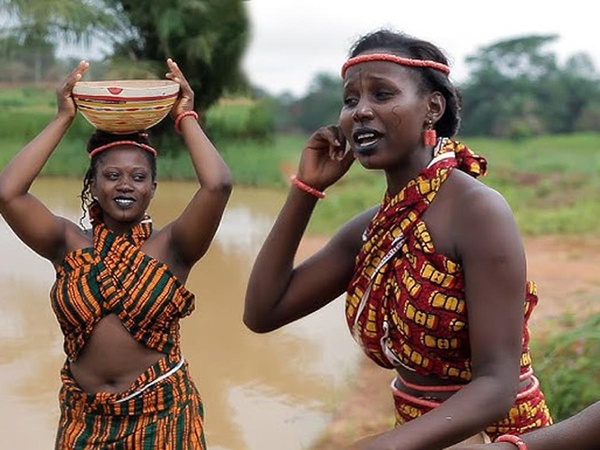
<p>In the ancient village of Idundun TwoCents, tucked somewhere between the restless Cross River and a forest that swallowed secrets whole, love was not something you announced. It was something you proved. The palm trees knew it. The river knew it. Even the red earth knew it. Only human beings liked to complicate it.</p><p><br/></p><p>That year, harmattan arrived softly, like a shy visitor. The air carried the scent of drying fish and ripe plantain, and with it came the anticipation of the Festival of Red Palm—the village’s own version of what distant cities might call Valentine. But in Idundun, there were no roses wrapped in plastic and no poems copied from strangers. There was only camwood paste, steady hands, and the courage to leave a mark on a mud wall before sunrise.</p><p><br/></p><p>Faye had been smiling too much that week.</p><p><br/></p><p>Not the ordinary smile she gave when greeting elders or bargaining for crayfish. This one was softer, slower, full of expectation. The women noticed. The goats noticed. Even Tavi noticed—and Tavi noticed everything.</p><p><br/></p><p>Tavi, the self-appointed analyst of all human emotion, had positioned himself under the udala tree three evenings in a row, sipping palm wine like a man preparing commentary for an unfolding drama. “If John does not press his palm on Faye’s hut this year,” he declared loudly, “then I will personally escort him to the river to explain himself to the ancestors.”</p><p><br/></p><p>The young girls giggled. The elders grunted approval. Faye tried to look uninterested, but her ears had turned into full-time employees.</p><p><br/></p><p>John, son of the fisherman whose nets never returned empty, had been moving differently. He walked like a man carrying a thought too heavy to drop. He had bought fresh camwood from the market. Extra bright. Extra red. The kind that said, “This is not rehearsal.”</p><p><br/></p><p>And so the village decided for him.</p><p><br/></p><p>It did not matter that he had not spoken publicly. It did not matter that he had not promised anyone anything. The air itself had begun planning their union.</p><p><br/></p><p>Only one person did not join the silent festive preparations.</p><p><br/></p><p>Dolapo.</p><p><br/></p><p>Dolapo of the observant silence. Dolapo whose eyes missed nothing and announced even less. She had watched John and Faye from a distance—not with jealousy, not with suspicion—but with the calm of someone who understood how easily expectation could outrun intention.</p><p><br/></p><p>On the eve of the festival, when the moon was rehearsing its full brightness and excitement vibrated through the huts, Dolapo spoke.</p><p><br/></p><p>They were gathered near the central fire. Tavi was mid-sentence, describing how he would narrate John’s romantic bravery to future generations, when Dolapo interrupted gently.</p><p><br/></p><p>“Do not dance before the drum begins,” she said.</p><p><br/></p><p>It was not loud. But it landed.</p><p><br/></p><p>Tavi squinted at her. “Why do you always speak like you are hiding a proverb inside another proverb?”</p><p><br/></p><p>Dolapo did not smile. “For all the wrong reasons,” she continued calmly, “someone will be right tomorrow.”</p><p><br/></p><p>The fire cracked.</p><p><br/></p><p>Faye’s laughter paused, just slightly. “You think he won’t come?” she asked, attempting casualness.</p><p><br/></p><p>“I think,” Dolapo replied, “that pressure can make a man move before his heart has caught up.”</p><p><br/></p><p>The air shifted.</p><p><br/></p><p>Some women exchanged looks. A few men frowned. It was easy to misunderstand Dolapo. She was not dramatic. She did not swoon at the mention of romance. In a village where love was celebrated with drums and public markings, her restraint felt suspicious.</p><p><br/></p><p>“Maybe she does not believe in love,” someone whispered.</p><p><br/></p><p>Dolapo heard it.</p><p><br/></p><p>She simply went home.</p><p><br/></p><p>Night arrived thick and watchful. The moon hung over Idundun like an elder refusing to sleep before witnessing history. One by one, young men dipped their palms into red camwood, each step toward a woman’s hut echoing like destiny approaching.</p><p><br/></p><p>John stood outside his father’s compound holding the bowl.</p><p><br/></p><p>His hand trembled slightly—not from fear of rejection, but from something heavier. He looked toward Faye’s hut. He imagined her smile. He imagined the cheers. He imagined the relief in Tavi’s voice.</p><p><br/></p><p>Then he imagined something else.</p><p><br/></p><p>A lifetime.</p><p><br/></p><p>And in that lifetime, he searched for certainty.</p><p><br/></p><p>He began walking.</p><p><br/></p><p>The village pretended to sleep, but behind woven curtains and cracked doors, eyes followed him.</p><p><br/></p><p>He reached Faye’s hut.</p><p><br/></p><p>The mud wall stood clean, patient.</p><p><br/></p><p>He lifted his hand.</p><p><br/></p><p>Paused.</p><p><br/></p><p>Lowered it.</p><p><br/></p><p>Somewhere behind a banana tree, Tavi nearly swallowed his own breath.</p><p><br/></p><p>“Do it,” he whispered urgently, as though John could hear his thoughts.</p><p><br/></p><p>But John turned.</p><p><br/></p><p>He did not run. He did not hesitate further. He walked through the narrow path between huts and stopped before Dolapo’s compound.</p><p><br/></p><p>A few silent observers shifted in confusion.</p><p><br/></p><p>John did not press his palm on her wall.</p><p><br/></p><p>Instead, he placed the bowl of camwood at her doorstep and bowed his head briefly.</p><p><br/></p><p>Then he left.</p><p><br/></p><p>Morning broke loudly.</p><p><br/></p><p>Roosters crowed like gossipers. Women emerged early under the pretense of sweeping but truly to inspect walls. The entire village gathered without admitting that they were gathering.</p><p><br/></p><p>Faye stepped out.</p><p><br/></p><p>Her wall was untouched.</p><p><br/></p><p>The red earth beneath it betrayed no midnight declaration.</p><p><br/></p><p>Her face held for a moment—then cracked, just slightly.</p><p><br/></p><p>Tavi scratched his head with such intensity one might think answers were buried in his scalp.</p><p><br/></p><p>Then Dolapo opened her door.</p><p><br/></p><p>There it was.</p><p><br/></p><p>The camwood bowl.</p><p><br/></p><p>Untouched.</p><p><br/></p><p>Resting at her feet like a question.</p><p><br/></p><p>Murmurs erupted.</p><p><br/></p><p>“What does this mean?”</p><p><br/></p><p>“Has he chosen her instead?”</p><p><br/></p><p>“Is this betrayal?”</p><p><br/></p><p>John stepped forward before speculation could grow teeth.</p><p><br/></p><p>“It means,” he said steadily, “that I will not love because a festival demands it.”</p><p><br/></p><p>The murmurs softened.</p><p><br/></p><p>He looked at Faye—not with dismissal, not with indifference—but with respect heavy enough to hurt.</p><p><br/></p><p>“You deserve a man who presses his palm because he is ready to carry what that mark means. Not because the village expects a spectacle.”</p><p><br/></p><p>Faye’s eyes filled.</p><p><br/></p><p>Not with humiliation.</p><p><br/></p><p>With the slow collapse of something she had already imagined as certain.</p><p><br/></p><p>Dolapo watched quietly.</p><p><br/></p><p>For all the wrong reasons, they had misunderstood her warning. They thought she doubted romance. They thought she envied Faye. They thought she wished to be chosen.</p><p><br/></p><p>But she had only feared that love, when rushed by witnesses, becomes performance.</p><p><br/></p><p>That evening, Faye sat by the river, staring at the way water reshaped itself without apology.</p><p><br/></p><p>Dolapo joined her without speaking.</p><p><br/></p><p>“I had already pictured it,” Faye confessed softly. “The wall. The red mark. The cheers.”</p><p><br/></p><p>Dolapo nodded. “Sometimes we fall in love with the moment we expect… not the truth we are given.”</p><p><br/></p><p>Faye wiped her tears and laughed faintly. “Tavi will talk about this for ten harvests.”</p><p><br/></p><p>As if summoned, Tavi’s voice drifted from a distance. “Love is not for the faint-hearted! Even masquerades fear commitment!”</p><p><br/></p><p>They both laughed.</p><p><br/></p><p>John approached slowly, careful not to intrude on something sacred.</p><p><br/></p><p>“No drums,” he said quietly to Faye. “No audience. When I press my palm one day, it will be because my heart is steady, not because the moon is watching.”</p><p><br/></p><p>It was not dramatic.</p><p><br/></p><p>It was not loud.</p><p><br/></p><p>But it was honest.</p><p><br/></p><p>And somehow, in that quiet honesty, there was more love than any red mark could have proven.</p><p><br/></p><p>In the days that followed, the village spoke less loudly about romance. The Festival of Red Palm continued in future seasons, but something had shifted. They began to understand that love was not measured by how publicly it was declared, but by how deliberately it was chosen.</p><p><br/></p><p>Dolapo walked through the village as she always had—calm, observant, unbothered by whispers.</p><p><br/></p><p>For all the wrong reasons, they had doubted her.</p><p><br/></p><p>For all the wrong reasons, they had called her skeptical.</p><p><br/></p><p>For all the wrong reasons, they had thought her cold.</p><p><br/></p><p>But she had been right.</p><p><br/></p><p>Because in Idundun TwoCents, beneath the palm trees and beside the patient river, love learned that night that timing is not romance’s enemy.</p><p><br/></p><p>Pressure is.</p><p><br/></p><p>And sometimes, the truest guardian of love is the one who refuses to rush it.</p><p><br/></p>


 13
13



Other insights from Emmanuel Daniji











Referral Earning

Points-to-Coupons

Insights for you.







































Comments