Dear Nigeria,
I have been meaning to write to you for some time, but I kept waiting for things to settle down. In hindsight, I should probably have known better. After all, waiting for things to settle down in Nigeria is beginning to sound like a long-term commitment.
I must commend your citizens, though. They are remarkably adaptable. They have learnt to plan their days around electricity, calculate their purchases with the precision of mathematicians and approach ordinary responsibilities with the strategic thinking of military generals. They have mastered the art of making something out of almost nothing, and somehow, even when there is nothing to laugh about, they find something to laugh about.
In fact, perhaps resilience should be included in the national curriculum. Although, at this point, I am beginning to wonder whether we are teaching resilience or simply outsourcing the responsibilities of a functioning society to its citizens.
But I digress.
You might think this is just another one of those letters from a frustrated citizen with an impressive collection of complaints. I assure you, I have come with evidence. And rather than bore you with a long list of statistics, I think we should take a little tour.
Let’s visit a few people, shall we?
Our first stop: The Adamu family.
In October 2024, BusinessDay reported the story of Shanono Adamu, a ten-year-old girl from Bunza Local Government Area of Kebbi State. She had never attended school. Not once.
In April 2023, insecurity had forced her family away from their farmland. By the time their story was reported, Shanono was living in Lagos with her mother and two sisters, begging for alms around Ketu.
Ten years old, Nigeria. An age when a child should be learning multiplication tables, making friends and worrying about homework. Shanono’s reality was considerably different.
And hers is not an isolated story. UNICEF estimated that 18.3 million Nigerian children were out of school in 2024.
Eighteen point three million.
Yet we continue to discuss the future of the nation as though the future is not currently sitting by a roadside, wondering where its next meal will come from.
Nigeria, are we still planning to build the future, or are we waiting for it to grow up and somehow build itself?
Let’s pay another person a visit.
Our next stop: Deborah Ayobakin.
Deborah is a woman in her forties living with a heart condition. In September 2024, she was admitted to a hospital. After just two days, her hospital bill had reached ₦112,000. Her monthly salary was ₦80,000.
Her doctor recommended that she remain admitted for another three days. That would bring her bill to approximately ₦305,000.
She could not afford it. So, she left.
Let that sink in for a moment. A woman who needed medical attention had to consider whether she could afford to remain in a hospital.
Perhaps we should introduce a new medical specialty: financial cardiology, where we study how to protect the heart from financial distress. Because in Nigeria, sometimes the hospital bill is more alarming than the diagnosis.
It is almost impressive how quickly a medical emergency can become a financial crisis.
And Deborah’s experience reflects a much wider problem. In 2023, out-of-pocket payments accounted for approximately 71.9% of Nigeria’s total healthcare expenditure. In other words, a significant proportion of the country’s healthcare costs was paid directly by individuals and families rather than through pooled funding or insurance arrangements.
Nigeria, I thought hospitals were meant to be places where people went to get better. Why does it sometimes feel as though one must first recover financially before being allowed to recover physically?
Now, I think it’s time we travelled a little further.
Meet: The Nigerian entrepreneur.
We have Chichi Eze, a frozen-food trader operating in Ojo, Lagos.
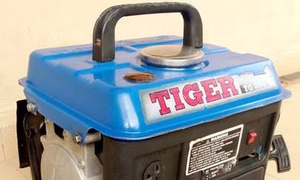
For someone in her line of business, electricity is not exactly a luxury. Her products need to remain frozen, and a prolonged power outage can turn an entire stock of goods into a financial loss.
Chichi told BusinessDay that her business could go one or two weeks without electricity. Before switching to solar, she spent between ₦7,000 and ₦10,000 daily on generator fuel. Eventually, she invested approximately ₦2.2 million in solar power.
Two point two million naira. On electricity.
And she is not alone. Another frozen-food trader, Ife Adeoye, described how frequent power outages caused some of her products to spoil before they could be sold.
Now, Nigeria, let’s think about this. A person starts a business, buys the equipment, finds a shop, gets stock and tries to attract customers. Then, somewhere along the way, they must find another substantial amount of money to provide the electricity needed to keep the business alive.
Perhaps we should add power generation to the list of requirements for registering a business.
We encourage entrepreneurship. We encourage young people to create jobs and contribute to the economy. All excellent ideas, of course. But one wonders whether the entrepreneur is also expected to generate electricity, maintain roads and stabilise the economy while they are at it.
At this rate, perhaps the next business idea should be a business that supplies the resources required to run other businesses.
Nigeria, is this entrepreneurship or an elaborate exercise in endurance?
And what’s a tour without a visit to the household?
Meet Adetola Adebayo, an Abuja-based mother of three.
In January 2025, BusinessDay reported her account of how the rising cost of food had affected her family. Two years earlier, ₦6,000 could comfortably feed her family for a day. By 2024, that same amount could buy only about a third of what they needed.
Then there is Halima Abubakar, a small-scale trader living in Ojo, Lagos. Her family’s eating habits had changed too. They used to have three meals a day. Now, she said, they had two, and sometimes just one.
It is almost as though the family budget has become less of a plan and more of a negotiation.
A parent goes to the market with a shopping list and returns with half the items, a few substitutions and a fresh understanding of the phrase, “Things are expensive these days.”
The children may ask why their favourite meals are appearing less frequently. The parents may explain that they are trying something different. Everyone understands. Nobody needs to say much.
And the numbers are not particularly comforting either. Nigeria’s food inflation rate reached 37.77% year-on-year in September 2024, according to the National Bureau of Statistics.
Yet people are still expected to save, invest, pay school fees, plan for emergencies and prepare for the future.
Nigeria, at what point does budgeting become an exercise in deciding which necessity can wait until next month?
Speaking of getting somewhere, let’s step outside.
I hear getting around these days is an experience of its own.
Our next encounter: Road users.
First, we meet Olatunde Jaiyesimi, an engineer who survived a road accident in Lagos.
In an interview with Punch in December 2024, he described concerns about the condition of Ikorodu Road, particularly the poor visibility and missing road markings along sections of the route. He explained that he was always cautious when travelling through the area, especially at night.
We also meet Arigbabu Samuel, a 29-year-old event coordinator who survived a fatal bus crash in Gbagada, Lagos, in October 2023. He had boarded a commercial bus travelling from Oshodi to Obalende. The driver was speeding when the bus lost control and rammed into a moving truck. Three people died in the crash.
Samuel survived.
And the numbers tell us that these are not isolated concerns. According to the Federal Road Safety Corps, 5,421 people lost their lives in road traffic-related incidents across Nigeria in 2024. That was a 7% increase from the previous year. The figure included 411 deaths associated with fuel scooping following tanker incidents.
Now, there is the everyday commuter who must calculate transport fares, endure traffic and navigate poorly maintained roads. And there is the passenger who boards a vehicle trusting that the journey will end at the intended destination.
Getting somewhere should not feel like a gamble.
Nigeria, must getting from one place to another really require this much planning?
Perhaps we should visit another familiar place. The classroom.
Meet Miracle Uche, a 24-year-old from Abia State who graduated with a first-class degree in Animal and Environmental Biology from the University of Port Harcourt.
Her academic journey began in 2019. She experienced the disruptions of the COVID-19 pandemic and two ASUU strikes. In an interview with Punch in August 2025, she described how the prolonged disruptions nearly made her abandon her university education.
But Miracle was not simply waiting for the academic calendar to cooperate. She ran small businesses while studying, selling oil perfumes and data subscriptions, and later taking on content-writing and data-analysis work.
Now, Nigeria, here is a young woman who wanted an education. She built small businesses around her studies and had to navigate challenges that had very little to do with the actual subjects she was studying.
And this is the curious part: we tell students that education is the key to success, but getting the education itself can become an obstacle course.
The student must attend lectures, write examinations, pay fees, buy materials, find accommodation, feed themselves and somehow remain academically excellent. Apparently, the ability to survive the entire process is also part of the curriculum.
But what happens after graduation?
Let’s visit someone who has crossed that bridge.
Meet Bashar Shehu, a 29-year-old Industrial Chemistry graduate of the Federal University of Birnin Kebbi.
He completed his degree in 2020. By September 2024, he was still struggling to secure stable employment. To support himself, he took on freelance tutoring and other odd jobs while continuing to search for work.
Four years after graduation, he was still waiting for the opportunity that his degree was supposed to help him find.
Then there is Gloria Agu, a first-class Computer Science graduate of Auchi Polytechnic. Despite her academic achievement, she struggled to find suitable employment and eventually took a security job reportedly paying ₦50,000 a month.
A first-class graduate working a job that does not reflect the qualifications she worked so hard to earn.
Now, there is absolutely nothing wrong with honest work. But there is something deeply concerning about a system in which academic achievement does not necessarily translate into meaningful employment or financial stability.
Imagine spending years studying, writing examinations and earning qualifications, only to discover that the job market has its own set of examinations. Experience required. Certifications preferred. Connections helpful. Entry-level position, but somehow, experience is still required.
Nigeria, after telling your young people to go to school, what exactly are they supposed to do when they graduate and discover that the opportunities they prepared for are difficult to find?
Perhaps we should visit someone who has begun looking beyond our borders.
Our final stop: The Nigerian dream.
Meet a Nigerian man who, after working in Nigeria for over sixteen years, eventually relocated to the United Kingdom in September 2023.
In an interview with Vanguard in April 2025, he explained that his monthly take-home pay in Nigeria had reached only ₦250,000. It was not enough to meet his family’s needs. His wife, who had worked as a private-school teacher in Nigeria earning ₦30,000 monthly, was reportedly earning around £400 a week in the UK.
He said leaving his family behind was difficult, but he needed better opportunities.
Then there is Daniel Yakubu, a Mathematics graduate of Ahmadu Bello University. After completing his NYSC, he sent out more than 50 job applications without receiving the opportunities he had hoped for. He later established Japa With Ease, a platform intended to help Nigerians navigate relocation.
It is interesting how the Nigerian dream has acquired a new vocabulary. We have Japa. We have relocation consultants. We have conversations about visa applications, foreign universities and work permits. Even the process of leaving has become an industry of its own.
Of course, wanting better opportunities is not a crime. People should be able to seek environments where their efforts have a fair chance of producing results. But there is something particularly troubling about a country whose people increasingly imagine their best futures elsewhere.
The difficult part is that leaving does not necessarily mean leaving everything behind. Families remain here. Friends remain here. Memories remain here. And even those who leave often carry a desire to see things improve.
So, Nigeria, when people love you enough to keep hoping for you but find it increasingly difficult to build their lives in you, what exactly are they supposed to do with that love?
And finally, Nigeria, about this resilience…
We have reached the end of our little tour.
We have met a child who has never attended school, a woman who could not afford to complete her hospital admission, an entrepreneur funding her own electricity, households negotiating with food prices, commuters navigating dangerous roads, students trying to obtain an education, graduates searching for opportunities and citizens who increasingly imagine their futures somewhere else.
Through it all, one thing remains remarkably consistent: the Nigerian ability to adapt.
We joke about our problems. We create solutions where there should already be systems. We find ways to keep businesses open, families fed, children educated and dreams alive. We make memes out of frustration and somehow find reasons to celebrate even when circumstances are less than favourable.
It is admirable. Truly.
But I cannot help wondering whether we have become so accustomed to praising resilience that we have forgotten to question why so much of it is required in the first place.
Because resilience should help people withstand difficult circumstances. It should not become a permanent substitute for the basic conditions that allow people to live, learn, work and thrive.
So, Nigeria, after everything we have seen, I have one final question:
Is this really the life we signed up for, or have we simply become so familiar with the wahala that we’ve forgotten it was never supposed to be normal?
References
1. Okojie, J., & Ogwo, C. (2024, October 7). How Nigeria’s 18.3m out-of-school children cripple economy. BusinessDay.
2. Ayetoto-Oladehinde, T. (2025, January 14). Healthcare costs push Nigerians into poverty. BusinessDay.
3. World Bank. (2026). Out-of-pocket expenditure (% of current health expenditure) – Nigeria. World Development Indicators. Data sourced from the WHO Global Health Expenditure Database.
4. Onuh, N. (2026, October 22). Power crisis, high petrol cost push frozen-food traders to solar. BusinessDay.
5. Michael, C., & Balogun, F. (2025, January 2). How fuel, food squeezed families in 2024. BusinessDay.
6. National Bureau of Statistics. (2024, September). Consumer Price Index: September 2024. NBS.
7. Olasupo, A. (2024, December 22). Deadly car crash taught me not to take life for granted – Septuagenarian. Punch Newspapers.
8. Adetunji, T. (2023, October 22). I appreciate life better after fatal Lagos auto crash – Survivor. Punch Newspapers.
9. Nwannekanma, B., & Ogune, M. (2025, January 28). Road crashes claim 5,421 lives in 2024, up by seven per cent. The Guardian.
10. Adetunji, T. (2025, August 23). ASUU strike almost ended my varsity education – UNIPORT first-class graduate. Punch Newspapers.
11. Ripples Nigeria. (2024, September 8). Feature: As graduates increase yearly and jobs dwindle, here’s one way to solve the problem.
12. Ayeni, V. (2026, February 15). From First-Class to Frustration: How First-Class Graduates Battle Unemployment in Nigeria. Sunday Punch.
13. Vanguard News. (2025, April 25). Japa: Leaving family behind was hard, but I had to go where things work – UK-based Nigerian.
14. Okoye, C. (2025, June 6). How we are redefining legal relocation for Nigerians — Daniel Yakubu. Vanguard News.



 1