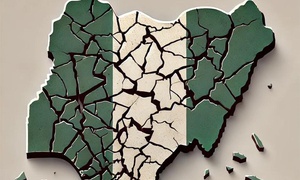
POVERTY, NOT ILLITERACY, IS THE BANE OF UNDERDEVELOPMENT IN NIGERIA.
A country can have educated people and still struggle to develop. Nigeria has graduates, professionals, skilled workers and people with brilliant ideas. Yet, many of these people struggle to find jobs, start businesses or even afford basic necessities. This brings us to an important question: what is the value of education when people do not have the opportunities or resources to put their knowledge into practice?
I support the motion that poverty, not illiteracy, is the greater bane of underdevelopment in Nigeria. This does not mean illiteracy is not a serious problem. Education is important to the growth of every society. However, poverty affects more areas of human life and can prevent people from getting the education they need in the first place. It affects what people eat, where they live, the healthcare they receive, the schools they attend and the opportunities available to them.
Poverty is not simply the absence of money. It also means being unable to meet basic needs and live a decent life. Illiteracy refers to the inability to read and write effectively, while underdevelopment describes a situation where a country has not made enough progress in its economic, social, political and technological life. Although these problems are connected, they do not affect society in exactly the same way. A person can have a university degree and still be poor. Someone without formal education may also have practical skills that can contribute to society. This shows that having education does not automatically mean having a good standard of living.
The National Bureau of Statistics, in its 2022 Multidimensional Poverty Index report, revealed that about 133 million Nigerians, representing 62.9 per cent of the population, were living in multidimensional poverty. The report also showed that poverty was higher in rural areas, where 72 per cent of the population were poor, compared with 42 per cent in urban areas. These figures are important because they show that poverty affects more than people's income. It also affects their access to education, healthcare, food, housing and other basic needs (National Bureau of Statistics, 2022).
One way poverty affects development is through education itself. Many parents understand the importance of sending their children to school, but understanding the importance of education is different from being able to afford it. Some children miss school because their parents cannot afford transportation, books, uniforms and other school expenses. In some homes, children have to help their parents earn money instead of concentrating on their studies.
This means that poverty can be one of the reasons people become illiterate. A child who cannot attend school because of financial difficulties is not necessarily lacking interest in education. The child may simply lack the opportunity. It is therefore difficult to fight illiteracy successfully without also addressing the economic conditions that keep children out of school.
As a Criminology and Security Studies student, I know that social problems cannot be properly understood without examining the theories behind them. Poverty is not just an economic issue; it also has social and behavioural consequences. The works of Karl Marx, Robert K. Merton and Amartya Sen help explain why poverty remains a serious obstacle to Nigeria's development.
Karl Marx's conflict perspective explains how the unequal distribution of wealth and resources creates differences between social classes. Marx examined the relationship between those who control economic resources and those who depend on them for survival. Looking at Nigeria, it is easy to see how financial differences affect people's access to opportunities.
For example, two graduates may finish from the same university with similar qualifications. One may have parents who can provide money to establish a business or support further education, while the other may struggle to afford transportation to job interviews. Both may have the same level of education, but they do not have the same opportunities. This is where economic inequality becomes a problem. The issue is not always that people lack knowledge; sometimes, they lack the resources to make use of that knowledge.
Robert K. Merton's Strain Theory also provides a useful explanation. Merton argued that society encourages people to pursue certain goals, such as wealth, success and social recognition, but not everyone has equal access to the accepted means of achieving them. When people are expected to succeed but face serious barriers to achieving those goals, strain may occur.
This can be seen among young Nigerians who work hard to secure good jobs but face unemployment, low wages and limited opportunities. Some start businesses but cannot get enough money to keep them running. Others spend years acquiring qualifications without finding employment that matches their training.
Merton's theory also helps us understand some of the social pressures that may arise from economic hardship. When legitimate opportunities are limited, some individuals may turn to illegitimate ways of making money. However, this does not mean that everyone who is poor will engage in crime. Many people experience poverty and still choose honest ways of making a living. The theory simply explains how the gap between societal expectations and available opportunities can create pressure that may contribute to deviant behaviour.
Another scholar whose work is relevant to this argument is Amartya Sen. Through his Capability Approach, Sen explains that development should not be measured only by how much money a country makes. It should also be measured by the opportunities people have to live healthy, educated and meaningful lives.
A person may have a university degree but still be unable to afford proper healthcare, decent accommodation or a reliable means of transportation. Such a person has received an education, but poverty still limits the choices available to them. Sen's argument helps us understand that real development should give people the freedom and opportunity to improve their lives. It is not enough for people to acquire knowledge; they must also have the conditions that allow them to benefit from it.
The problem of unemployment in Nigeria makes this argument even clearer. Every year, universities and other institutions produce graduates, but having a certificate does not guarantee employment. Some graduates remain unemployed for years, while others accept jobs that do not pay enough to meet their needs. There are also people with business ideas who cannot start because they lack capital.
In a 2024 article, the World Bank examined why many Nigerian workers remain poor despite being employed. The article explained that the type and quality of work people do matter more than simply whether they have a job. This is an important point because it shows that employment alone does not always remove poverty (Lain and Pape, 2024).
Nigeria also needs to consider the relationship between poverty and insecurity. From a criminological point of view, unemployment, inequality and social exclusion can create conditions that make some communities more vulnerable to crime. When people have limited access to legitimate opportunities, frustration and social pressure may increase. Merton's Strain Theory helps explain this situation.
However, poverty should not be treated as the only cause of crime. Factors such as weak institutions, corruption, poor policing, social influence and individual decisions also matter. Many poor Nigerians remain law-abiding citizens. The point is that widespread economic hardship can make existing social problems more difficult to control.
Insecurity also makes poverty worse. When farmers cannot safely work on their farms, agricultural production suffers. When businesses close because of insecurity, workers lose their sources of income. When children cannot attend school safely, their education is affected. Poverty and insecurity can therefore reinforce each other, making development more difficult.
Some people may argue that illiteracy is a greater problem because education gives people the knowledge needed to develop their society. They may also argue that educated citizens are more likely to understand their rights, participate in government, develop technology and make informed decisions. These are reasonable arguments, and I agree that education is necessary for development.
However, education alone cannot solve every problem facing Nigeria. A graduate who cannot find employment still faces economic hardship. A trained doctor who lacks the necessary medical equipment cannot provide the best possible service. An educated entrepreneur who cannot access capital may never be able to establish a business. These examples show that knowledge must be supported by opportunities and resources.
More importantly, poverty can prevent people from receiving the education that society expects them to have. This is why I consider poverty the greater problem. It affects people who are educated and those who are not. It can also be one of the reasons some people remain uneducated.
Nigeria must therefore take poverty reduction seriously if it wants to achieve meaningful development. Government should create an environment where businesses can grow and young people can find decent employment. Small business owners should have access to affordable financial support, while farmers need better facilities and support to improve agricultural production.
Education should also be made more affordable and accessible, especially for children from low-income families. Scholarships, better school facilities and practical skills training can help reduce the number of children who miss out on education because of poverty. Healthcare should be strengthened so that people do not have to choose between meeting their daily needs and receiving medical attention.
There must also be accountability in the management of public resources. Money meant for roads, schools, hospitals and other public services should be used for those purposes. Development cannot happen properly when public resources are not managed in the interest of the people.
Poverty and illiteracy are both serious problems in Nigeria, and neither should be ignored. However, their effects are not equal. Illiteracy limits access to knowledge, but poverty affects access to knowledge, healthcare, employment, security and other basic opportunities. It can also prevent people from developing their abilities, regardless of how intelligent or educated they are.
The arguments of Karl Marx, Robert K. Merton and Amartya Sen show that development involves more than education. It also involves fair access to resources, legitimate opportunities and the freedom to live a decent life.
Nigeria has people with knowledge, skills, talents and the willingness to contribute to national development. What many of them lack is the opportunity to put these abilities to use. A graduate should not have to remain helpless simply because there is no job. A child should not lose the chance to become educated because the family cannot afford school expenses.
Education gives people knowledge, but a decent economic environment gives them the opportunity to use it. Until Nigerians can turn their knowledge and abilities into better living conditions, the country will continue to struggle with the effects of underdevelopment. This is why I firmly support the motion that poverty, not illiteracy, is the greater bane of underdevelopment in Nigeria.


 16