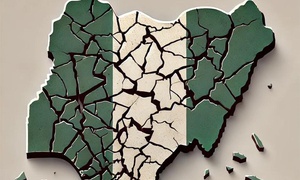
Growing up in Ikeja, Lagos, a busy city full of options and opportunities—I learned early on that personal growth does not depend on your background. As a graduate of Air Force Secondary School, Ikeja, widely known as one of the best secondary schools in Nigeria, and now a History and International Relations student at the Federal University Oye-Ekiti (FUOYE), I have met many people who do not speak English as fluently as I do or have my level of schooling. Yet, watching how people survive and succeed around me taught me a hard truth: poverty, not illiteracy, is the real reason Nigeria remains underdeveloped—because literacy is a gift, whereas poverty is a universal challenge every person must confront, and rising out of it is ultimately a choice driven by practical skills, hard work, and opportunity rather than paper certificates.
For years, people have blamed illiteracy for Nigeria’s slow growth. However, history and real life both prove that going to school alone does not guarantee success, and missing out on formal education does not mean a person must stay poor. From the very beginning, survival has always required effort—just as Adam and Eve had to work the garden and pluck fruit to feed themselves. Even our forefathers were not born into an era of scholars or blessed with modern school systems, yet they survived, built thriving communities, and sustained their families through practical skills like farming, blacksmithing, weaving, and trade. Literacy is certainly a valuable gift, but poverty is a reality every human being has to deal with. In Nigeria today, many of the richest and most successful people did not build their wealth through university degrees, but through practical skills, smart business moves, and hard work. Meanwhile, walk down any street in Lagos, Enugu, or Kano, and you will see university graduates riding commercial tricycles (Keke) while street hawkers and roadside traders hustle from morning till night just to eat. According to the National Bureau of Statistics (2022), 63% of Nigerians—roughly 133 million people—are multidimensionally poor, proving that deprivation affects millions across both educated and uneducated households.
Real-life Nigerian success stories prove beyond doubt that skill, talent, and capital matter far more than textbook fluency. Look at Peller, one of the biggest TikTokers and content creators in Nigeria today: he does not speak polished English, and whenever he comes across big grammar during his live streams, he openly calls on his partner, Jarvis, to help interpret it—yet his creativity and entertainment skill have made him a massive success. Similarly, consider Cosmas Maduka, founder of the Coscharis Group and sole distributor for BMW and Ford in Nigeria. After losing his father, he dropped out of primary school at age seven and learned practical trade and mechanical skills as an apprentice before building a multi-billion-naira empire. Folorunsho Alakija followed a similar path; starting her career in fashion design with a sewing machine as the founder of Supreme Stitches, she later expanded into the oil and gas sector with Famfa Oil to become one of Africa’s wealthiest women without a traditional university degree. Together, they show that practical skill and opportunity can lift anyone out of poverty.
This reality also reminds me of a lesson I picked up from Robert Kiyosaki’s book, Rich Dad Poor Dad. In the book, the "Poor Dad" believes that going to school and getting a good certificate is the only path to success, while the "Rich Dad" believes in smart work, financial sense, and building assets—knowing that wealth is rarely built on a degree alone (Kiyosaki & Lechter, 2000). In Nigeria today, we worship paper certificates and look down on handwork. Take global brands like Gucci: the shoes and clothes they sell for huge sums of money are made through tailoring and shoemaking—skills anyone can learn. A local farmer does not need a university degree to escape poverty; he needs good land, modern farming tools, and a market to sell his produce. When poor families cannot afford school fees, choosing to learn a skill is not failure—it is smart survival.
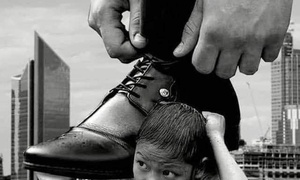
My own time working in a call center also showed me that practical skill matters more than textbook English. At that job, the best workers were not the ones trying to impress callers with big grammar. The best workers were those who spoke clearly and were willing to switch to a customer’s local language just to help them solve their problem. Often, overly book-smart people struggle to connect with everyday Nigerians, while practical, skilled workers get the job done. To fix underdevelopment, Nigeria must accept that "all fingers are not equal" and that every honest job keeps the country running: if teachers do not teach, how will children learn? If farmers do not farm, what will we eat? If tailors do not sew, what will we wear? And if cobblers do not make shoes, what will cover our feet? Judging every job by how much English someone speaks instead of what they can do with their hands is holding us back.
At the same time, escaping poverty also comes down to personal choice and mindset. Back in Ikeja, even before we finished secondary school, many of my focused friends were already looking for part-time jobs in companies to earn money and gain experience before getting admission into university. Meanwhile, others who chose laziness ended up in cybercrime and street thuggery. As the saying goes, "an idle man is the devil’s workshop," and in a system where people feel "monkey dey work, baboon dey chop," desperate youths turn to internet fraud, which ruins Nigeria’s image and slows down our progress.
Furthermore, poverty itself is the main reason many Nigerians remain illiterate and why corruption continues. Data from the United Nations Children's Fund (UNICEF, 2022) confirms that poverty is the single biggest barrier to school access in Nigeria, with millions of children out of school and over 43% forced into child labor to help their families survive. When a family cannot afford food, paying school fees becomes impossible, so that child is sent to hawk goods or learn a trade just to help the family survive. Even during elections, hunger pushes both educated and uneducated citizens to sell their votes for a bag of rice or a few thousand naira, keeping bad leaders in power. To end underdevelopment, the government and private companies must create more jobs, hire skilled workers even if they do not have university degrees, set up more skill training centers, and give grants to help artisans grow their businesses.
In the end, Nigeria cannot develop just by building more classrooms while leaving citizens without jobs, capital, or respect for handwork. Literacy is a gift, but poverty is a battle every person is born to face—and staying poor or rising out of it is a choice shaped by mindset, practical skill, and opportunity, just as our forefathers proved long before formal classrooms existed. Not every job requires a literate certificate; a nation thrives only when we value every finger equally—from the farmer and tailor to the content creator and mechanic. Once Nigeria starts rewarding practical skills alongside book knowledge, providing startup grants, and creating real opportunities, citizens—literate and non-literate alike—will choose productivity over idleness and build a truly developed nation.


 25