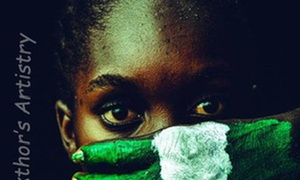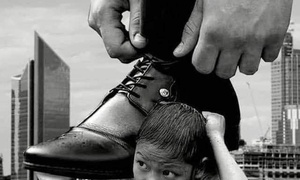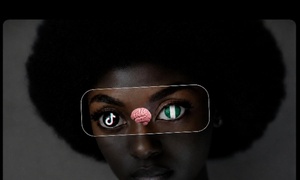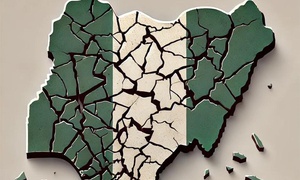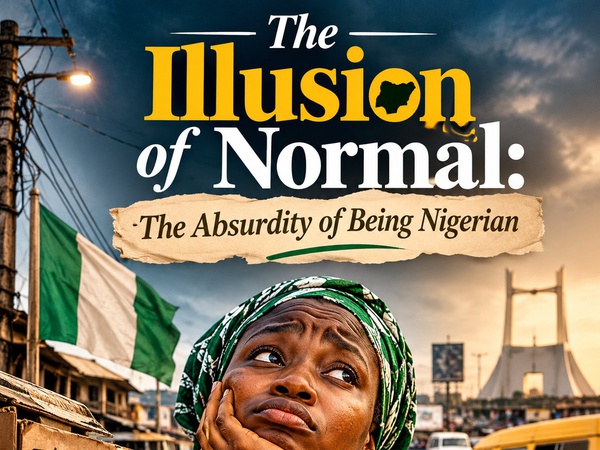
A line often attributed to Wole Soyinka once described Nigeria in a way that, with every passing year, seems less like an exaggeration and more like an unfortunate description of everyday life: “Nigeria is a nation for perpetual study, a society where the absurd is normal and the normal is an endangered species.” Years later, one cannot help wondering whether Nigeria has made any effort to disprove him.
Nigeria has been independent for over six decades, and our familiar saying, “All will be well”, has gone from a hymn to a conditioned reflex in seconds. The irony is that no one knows when, and no one knows how. All we do is fold our hands, hoping for the best, but still leaving them free enough to embrace the worst. Funny how we mistook our unrestricted adaptation to suffering for resilience.
Ever heard of the saying, “Chop life before life chop you”? Well, now you’ve heard it.
That’s the mantra of a typical Nigerian. Remember it. Repeat it. Digest it. Because you’re going to need it.
One sad story I learnt while growing up was that the current state of the country had been sung about by a woman back in the 90s. She didn’t predict it; no, she most definitely wasn’t psychic. She just thought like an average Nigerian would: if it’s a problem now, it will probably remain a problem forever.
What makes us Nigerian is not just the fact that we are citizens. It is the fact that, from the moment we are born, we seem to possess an extraordinary ability to adapt to everyday suffering. As Nigerians, we have adopted laughing at the ridiculousness of a situation as a way of stripping that situation of its power to break our spirits. Nigerians should actually be studied because the science behind us is beyond what has previously been identified. It is amusing how people laugh at their own problems.
Because jokes don’t hurt, right?
Making comedy skits out of national problems is typical Nigerian shenanigans. And it has been said that those who cannot survive times of strife simply aren't strong enough. In our words, they are oyinbos.
I think it’s legendary how we have perfectly incorporated suffering into the lifestyle of a Nigerian. It’s literally a Nigerian thing to suffer. It’s sad, but we have to live with it because we’re Nigerians.
The irony of scrolling through the internet, subtly expecting something disheartening to pop up whilst still praying for a better place, is just unpleasant. We have unknowingly normalised the worst-case scenarios. Even death, at this point, seems to have little power to shock Nigerians.
The everyday problems we go through... Hmmm, it reach to take a break and breathe in. It is just total nonsense when you see little children jump up in joy at the restoration of electricity after what seems like forever. Those children are the ones who grow up believing that electricity is a privilege rather than a basic necessity.
Imagine being so accustomed to its absence that its return becomes a reason for celebration.
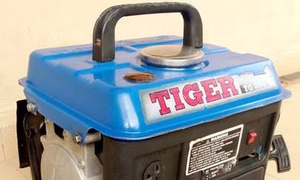
The constant noise of generators throughout the streets never gets old, and those who can afford it simply go for inverters because, obviously, the government ain’t gonna provide. Now, here’s the pattern: it happens, we complain, we fix it, and we keep on going until the next problem arises. It’s just the art of being Nigerian. We have developed an unusual relationship with electricity, one that requires long-suffering, sacrifice and an almost spiritual level of expectation. We don’t always know when it will arrive, how long it will stay or what might provoke its departure. Yet, every time the lights return, there is a brief, cheerful celebration, as though an old friend has finally remembered our address.
That’s just one of our problems. You see, transportation in our beloved country requires prayers that make it seem as though we are embarking on an intergalactic journey.
Let’s not even talk about the constant traffic congestion that turns an intended short journey into an expedition.
Nigerians constantly complain about their purchasing power, which seems to disappear faster than expected, yet still end up buying the same things once the previous ones are exhausted. Talk about adaptation! It is one thing to purchase data at an expensive price; it is another to not get the quality of service you paid for. Network providers choose the most inconvenient moments to disappoint. A single attempt to access the internet occasionally requires an intense level of patience, prayer and a strategic relocation to the nearest window. Not forgetting the pain of sending a message to a WhatsApp group, only for it not to deliver, and then realising that the conversation has continued without you. Speak about sad.
Even after all of this, we have still found ways to accommodate these inconveniences, laugh about them and move on. After all, what is a little circumstance to a people who have turned improvisation into an everyday skill?
The entire lifestyle of a Nigerian really baffles me. Like, have we genuinely mistaken the ability to endure hardship for the absence of a need to question it?
We are constantly expected to love and serve a country that constantly makes us question our citizenship. Our rights are beginning to seem like things we have to struggle to obtain. We are proud of our identity, but that is unfortunately becoming harder to reconcile with the situations we are constantly placed in, situations that sometimes make us want to change our names.
We carry Nigeria in our names, our accents, our languages and our memories, yet some of us spend our time searching for a place where we can finally feel at home.
Perhaps that is the greatest wahala of all: loving a country that gives us so many reasons to question it. We laugh, we pray and we adapt. But surely, we deserve more than a lifetime of managing. We deserve a country where survival is not an achievement and hope does not have to be renewed every morning. After all, it is Nigeria, right? But must things always end up like this?



 1