Score |
315


Hajjar. S

 Write/Blog @ Fictional Writer/ Blogger



The Psychology of Grief
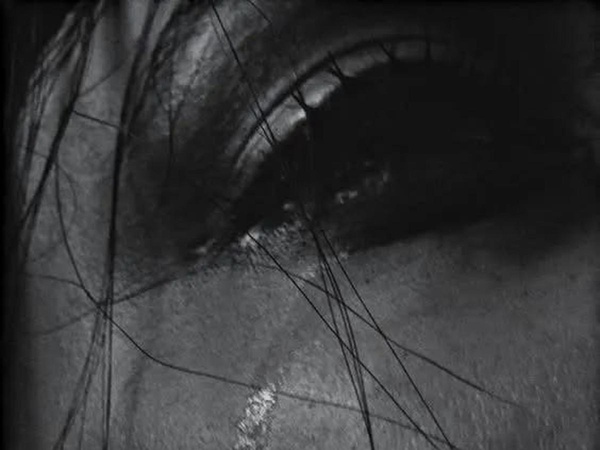
<p>The grandfather clock in the hallway chimed at precisely seven, but to Arthur, time had lost its meaning. For forty two years, that sound had been followed by the soft rustle of Sarah turning a page of the morning paper, the clink of a porcelain mug, and the scent of jasmine tea she drank every morning.</p><p>Now, there was only the silence.</p><p>Arthur sat at the edge of the kitchen table, staring at the empty chair opposite him. In the aftermath of Sarah’s death, his mind weaponized denial. It wasn’t a conscious refusal to believe the medical reports, it was a deeply ingrained biological habit he had unconsciously developed. His brain, wired by decades of shared routines, stubbornly expected her presence. When the front door creaked, his head automatically turned. When he made coffee, his hand reached for a second mug before freezing in mid air. This cognitive paralysis, which is a refusal of the psyche to instantly rewrite its internal map of reality is always the first, protective phase of any grieving mind.</p><p>As the weeks bled into months, the initial numbness gave way to a volatile emotional storm. Arthur found himself furious at the most mundane triggers. He felt a surge of irrational anger at the mail carrier for delivering letters Sarah would never read, and at the sun for shining so callously on a broken world. In the quiet, dark hours of the night, his mind spiraled into bargaining with a universe he no longer understood. Take ten years from my life, he whispered to the ceiling, just let me wake up from this he begged ever so often. </p><p>Psychologists once viewed these states as rigid, sequential steps on a staircase toward recovery. But Arthur’s experience was not a straight line. It was an erratic, exhausting pendulum, just the way nature had designed it to be. </p><p>Some days, he was entirely loss oriented. He would sit in Sarah’s closet, surrounded by the fading scent of her perfumes, weeping until his chest physically ached. His body felt heavy, his immune system depleted, and his mind shrouded in a thick, unyielding brain fog which is a somatic testament to the profound physical toll of experiencing a heartbreak. On these days, the depression felt absolute.</p><p>But on other days, a quiet survival instinct kicked in. Driven by what modern psychologists call the Dual Process Model, Arthur would unconsciously lean toward restoration. He would force himself to weed the overgrown garden, learn how to balance the household ledger books Sarah used to manage, or walk down to the local diner. For an hour or two, he wouldn’t cry. He would focus on the crisp autumn air or the taste of black coffee. Early theorists might have called this avoidance, but it was actually his psyche taking a necessary breath, a momentary intermission from a pain too intense to endure continuously.</p><p>The turning point did not arrive as a sudden epiphany, but as a subtle shift in how he carried her memory. He stopped trying to force himself to "move on" or sever his ties to the past. This was an outdated concept that historical psychology mistakenly deemed healthy. Instead, Arthur began to practice the art of continuing bonds.</p><p>He realized Sarah wasn’t truly absent from his life. In fact, she had simply changed form. She lived on in the way he tended to her favorite hydrangeas, the recipes he replicated, and the quiet internal dialogues he held with her while walking through the park. He relocated her from his physical world into his psychological framework.</p><p>One evening, nearly two years later, Arthur sat on the porch watching the sunset. The grief was still there, a permanent, heavy stone in his pocket pressing down in his chest like a heart attack waiting to happen. But something was different. The space around that stone had expanded. His life had grown larger to accommodate it. As he watched a neighbor wave from across the street, he felt a faint, unfamiliar warmth in his chest. He smiled back. He had not returned to the man he was before the loss, but he had discovered a new, deeper version of himself. This one was forged in the architecture of sorrow, possessing a quiet resilience and a profound appreciation for the fragile beauty of life.</p>


 30


Other insights from Hajjar. S













Contributor Points

Points-to-Coupons

Referral Earning

Insights for you.


All that I gave
Oh, hey there!It's me... again...You know, There's so much I want to saySo much I want ...
606 views
97 upvotes
95 comments




The Root of Evil.🌚
I like money.But they said it's the root of evil. 🙂Sorry, get your facts straight.The l...
321 views
78 upvotes
88 comments

The Manipulation.
"Mom started looking at me differently from that day.I remember it like the back of my ...
316 views
75 upvotes
91 comments




The 3AM World.
My favourite time of every day is between 1 a.m. and 4a.m.That's when the world is the ...
287 views
67 upvotes
72 comments

Drowning.
I can't breathe.I tried again.Nothing.My lungs burned.The water surrounded me, cold and...
300 views
61 upvotes
72 comments

Eden.
I came to this house very young, with one other.We were accepted so warmly.Everyone lov...
287 views
59 upvotes
71 comments

Think with Me?
A series of random thoughts flooded my mind yesterday, and I just decided to pour them ...
248 views
56 upvotes
58 comments































