Score |
13


AI Prompt Engineer @ National Open University of Nigeria



The Real Story: You're Not Failing Interviews... You're Failing Robots (and That's Okay—Most People Do)
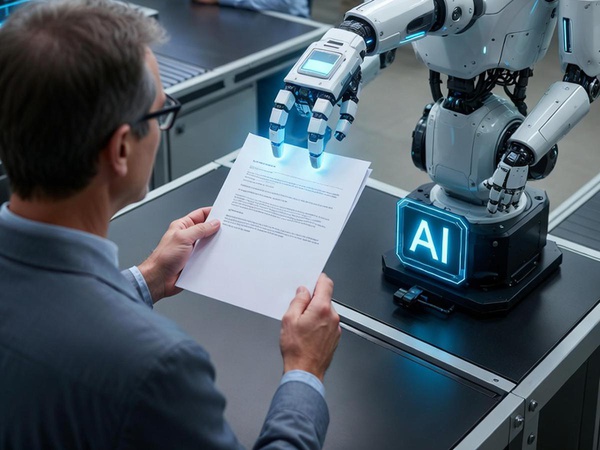
<p>Picture this: You spend hours tweaking your resume, quantifying achievements, making it look sharp. You hit "submit" feeling hopeful. Then... silence. No email, no "thanks but no thanks," nothing.</p><p>What happened? The ATS + AI combo ate it.</p><p>ATS (Applicant Tracking Systems like Workday, Greenhouse, or Taleo) is basically a giant digital filing cabinet that most companies (especially bigger ones) use to handle the flood of applications—often 100–300+ per role.</p><p>AI resume scanners layer on top now: they don't just match keywords anymore. They score your "fit" using machine learning—looking at experience depth, skill relevance, semantic meaning (e.g., understanding "paid search" is basically the same as "Google Ads"), tenure patterns, even predicting if you'd stick around based on past hire data.</p><p>The brutal numbers floating around in 2026 reports:</p><p>Up to 75% of resumes get filtered out automatically before a recruiter sees them (a figure repeated across Jobscan, Monster's surveys, and recruiter forums).</p><p>Some places claim 98% of Fortune 500 roles use ATS, and poor formatting or keyword misses can tank you instantly.</p><p>Only about 2–3% of online applications turn into interviews overall—most die in the black box.</p><p>77% of job seekers say they're anxious about getting auto-rejected. You're not alone in feeling like the system's rigged.</p><p>Why the Bots Are Winning (and Why Fancy Resumes Lose)</p><p>The biggest killers aren't your qualifications—they're these sneaky things:</p><p>Formatting disasters: Tables, columns, fancy icons, photos, graphics, headers/footers, weird fonts, or even Canva-style designs. ATS parsers read left-to-right, top-to-bottom like plain text. Anything that scrambles the flow → instant rejection or garbled data (your "Senior Software Engineer" might show up as gibberish).</p><p>Keyword blind spots: If the job says "Python, Django, AWS" and you wrote "experienced in backend development with cloud platforms," the AI might dock points—even if you're qualified.</p><p>Over-design backfire: Creative layouts look great to humans but break parsers. Some recruiters admit they still skim resumes in seconds—if you make it this far.</p><p>AI sniffing tricks: Stuffing white text keywords or overusing AI to rewrite everything? Some systems now flag "generic/AI-generated" vibes, and hiring managers reject them more often.</p><p>The flip side: companies love this tech because it saves insane time. Recruiters used to drown in resumes; now AI ranks the top matches so they only review the promising ones.<img alt="" src="/media/inline_insight_image/1000755855.jpg" style="background-color: transparent;"/></p><p>How to Actually Beat the System (Without Selling Your Soul)</p><p>You don't need to turn into a robot—just speak their language while staying human.</p><p>Tailor like crazy — Copy-paste key phrases from the job description (skills, tools, responsibilities) into your bullets naturally. Spell out acronyms first (e.g., "Search Engine Optimization (SEO)"). Aim for 75%+ match—free tools like Jobscan can score it.</p><p>Keep it stupid-simple —</p><p>One column only.</p><p>Standard headings: "Professional Experience," "Skills," "Education."</p><p>Basic fonts: Arial, Calibri, Times New Roman (10–12 pt).</p><p>No tables, no images, no colors, no headers/footers.</p><p>Bullets with plain • or -.</p><p>Save as .docx (safest) or clean PDF.</p><p>Write for both worlds —</p><p>Robots: Weave keywords into real sentences and achievements (quantify: "Boosted conversion rates 40% using Google Analytics and A/B testing").</p><p>Humans: Show impact, personality, and context—recruiters hate keyword-stuffed nonsense too.</p><p>Quick reality checks — Paste your resume into Notepad or plain text. If it still reads clean and logical, it's probably ATS-safe. Test with free ATS scanners online.</p><p>The Bottom Line (The Part That Actually Matters)</p><p>Your CV isn't just a history—it's a ticket past the gatekeeper. Write it first to survive the robots (clean, keyword-smart, boringly formatted), then polish it so a real person thinks, "This human seems capable and interesting."</p><p>Most people write for recruiters and hope the bots play nice. Flip it: optimize for the bots first, and the humans will follow.</p><p>So, honest question—is your resume built to charm a person... or survive a machine that's deciding your fate in seconds?</p><p>Fix that one thing, and you'll start seeing way more "we'd love to chat" emails. You've got the skills—now make sure the system knows it.</p>


 40
40


Other insights from Mishael Egbegi








Referral Earning

Points-to-Coupons

Insights for you.


This thing called ‘work esteem’
Yes, it is a real thing and even though it was something I made up that is yet to make ...
1199 views
7 upvotes
4 comments



I QUIT
I don't consider myself the best counselor regarding staying or quitting your job. E ge...
1143 views
4 upvotes
3 comments




The Salary Algorithm
Sincerely, sometimes when I look at my account balance, I hear a still, small voice say...
1002 views
4 upvotes
2 comments

Done is better than Perfect
‘Done is better than perfect’ I heard this first from my now mentor, Dr. Ada S. Peter w...
927 views
6 upvotes
3 comments



ERGONOMICS
Ergonomics is the science that deals with the fit between people and their work. It...
853 views
4 upvotes
2 comments

























Comments