A Country Where Nothing Works, Yet Somehow Everything Continues
There are certain things you must learn before you can confidently call yourself Nigerian.
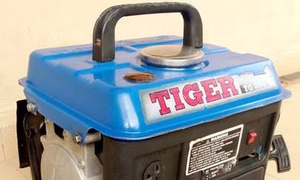
You must learn that when someone tells you, "There is light," it does not necessarily mean electricity has been restored. It could mean the generator has been switched on, the neighbour's generator is disturbing the entire street, or somebody has simply seen a flash outside.
You must also understand that "I am coming" is not a statement of distance. It is a declaration of intention, and the person saying it may not have even left their house.
Welcome to Nigeria, where words have their own meanings, time is negotiable, and survival is practically a compulsory course.
I sometimes wonder what it is like to be a Nigerian without having to be one. To look at this country from the outside and understand how people manage to live here without constantly asking questions.
How does a country manage to make ordinary things feel like achievements?
You wake up in the morning with a plan. You have calculated your transport fare, arranged your schedule and convinced yourself that today will be productive. Then Nigeria happens.
The road you travelled yesterday is suddenly under construction. The bus driver has decided that the agreed transport fare is no longer acceptable because "things are expensive now." Your phone battery is at 12 per cent, and the power supply has disappeared just when you need it most.
You have not even reached your destination, but you have already experienced three different forms of national policy.
And somehow, you are expected to remain calm.
Perhaps the most interesting thing about being Nigerian is how quickly we have learnt to adjust to things that should never have been normal in the first place.
We have mastered the art of checking whether there is electricity before deciding what to cook. We know how to preserve food because the power supply is unreliable. We charge our phones whenever electricity appears, even when we do not particularly need to charge them, because nobody knows when the next opportunity will come.
When the light finally comes, nobody asks questions. You simply become grateful.
Grateful for electricity.
Something that should be ordinary.
And that, perhaps, is one of Nigeria's greatest contradictions: we have become so accustomed to inconvenience that basic necessities sometimes feel like special privileges.
There is also the Nigerian talent for finding humour in situations that are anything but funny.
A person can lose almost everything and still find a way to make a joke about it. Fuel prices increase, and somebody creates a meme. The economy becomes difficult, and social media becomes a comedy club. People complain, laugh, repost, argue and eventually return to their daily activities.
Sometimes I think humour is our national emergency exit. When reality becomes too uncomfortable, we laugh because crying will not reduce the price of anything.
But beneath the jokes is a country full of people who are tired.
Students struggle to concentrate when they are worried about transport fares, school fees and feeding. Parents calculate expenses repeatedly, hoping that somehow the money will stretch a little further. Young graduates spend months searching for opportunities, wondering whether their qualifications will ever translate into the lives they imagined.
And yet, when someone asks how things are going, the familiar answer is, "We thank God."
There is nothing wrong with gratitude. In fact, there is something beautiful about a people who continue to find reasons to be thankful despite their circumstances.
But I sometimes wonder whether we have learnt to use gratitude as a way of making peace with things we should be demanding better from.
Why should having a functional hospital feel like good fortune? Why should a student have to worry about whether a university calendar will remain uninterrupted? Why should a young person have to think about leaving the country simply because they want a reasonable chance at a comfortable life?
We call it japa when people leave in search of better opportunities. We celebrate their achievements abroad, proudly announce their new countries of residence and sometimes joke that the only way to enjoy Nigeria is to enjoy it from another country.
Yet, when they leave, we ask who will build Nigeria.
It is a strange contradiction. We want people to stay and contribute to the country, but we cannot always provide the conditions that make staying worthwhile.
And still, Nigerians stay.
They open businesses. They attend classes. They fall in love, get married, raise children, start careers and make plans. They find ways to celebrate birthdays, even when the money for the celebration was not originally in the budget. They dress beautifully for occasions, even when getting there was an adventure of its own.
A Nigerian wedding can begin late, the generator can disappoint, the caterer can run out of food and the traffic can make guests question their life choices. But somehow, somebody will still be dancing.
There is a particular kind of determination in the Nigerian spirit. It is not always loud or inspirational. Sometimes it is simply a woman opening her shop again the morning after a difficult day. A student reading with a rechargeable lamp. A father trying to make an insufficient salary cover an entire household. A young person applying for another opportunity despite the previous ten rejections.
These are not extraordinary people doing extraordinary things. They are ordinary people trying to live ordinary lives in circumstances that are often anything but ordinary.
And perhaps that is what makes this country so difficult to explain.
Nigeria is not simply a country where things go wrong. It is a country where things go wrong and people are still expected to find a way forward. It is a place where we complain about the system while learning how to navigate it, where we criticise corruption while sometimes participating in the small compromises that keep the system alive.
We condemn dishonesty, yet somebody will proudly tell you that they know a person who can "settle" a problem. We complain about poor leadership, yet we sometimes excuse the same behaviour when it benefits someone close to us.
We want change, but change is not always convenient when it asks us to examine our own actions.
That is another uncomfortable part of being Nigerian. The absurdity is not always something happening to us. Sometimes, it is something we have become part of.
I love the things that make Nigeria feel like home. The noise, the food, the languages, the stubborn optimism, the familiar greetings and the way strangers can suddenly become involved in your business as though they have known you for years.
I love how a simple "Have you eaten?" can carry more concern than an entire speech. I love the creativity of people who can turn almost nothing into something. I love that even in difficult circumstances, there is still a sense of community that refuses to disappear completely.
But loving a country should not mean pretending that everything about it is acceptable.
I do not want a Nigeria where young people are praised simply for being able to survive. I want a Nigeria where survival is not the greatest achievement available to an ordinary person.
I want a country where the electricity stays on long enough for someone to finish what they started. Where a good education does not come with the uncertainty of whether the academic calendar will be respected. Where getting medical attention is not accompanied by the fear of how much it will cost. Where people do not have to become exceptionally resilient just to enjoy a decent standard of living.
Perhaps one day, being Nigerian will not require so much explanation.
Perhaps one day, when we say there is light, we will mean that the electricity is actually working. When a young person makes plans for the future, those plans will not automatically include leaving the country. And when we say we are doing well, it will not be because we have somehow managed to endure another difficult day.
Until then, we will continue to laugh, complain, improvise, celebrate and find our way around the latest national inconvenience.
We will probably still say "God when?" when somebody announces good news. We will still turn almost every national disappointment into a trending topic. And somebody, somewhere, will still say, "Nigeria will not finish us."
But I hope that one day, we stop having to prove just how much Nigeria cannot finish us.
Because a country should be more than a test of its
people's endurance.
And being Nigerian should mean more than knowing how to survive the wahala.



 1