An Untold Nigerian Reality
On a busy Monday morning, Bimpe, an unemployed Nigerian first-class graduate and chartered accountant, embarked on yet another quest in search of employment.
She wandered from one office to another, submitting her résumé and hoping for a positive response. Unfortunately, she kept hearing the same disappointing words: "Sorry, there's no vacancy."
After another exhausting day of searching, she returned home, once again disappointed.
Until one fateful Tuesday evening, her friend, Sayo, came running towards her with excitement.
Bimpe was sitting beneath the mango tree, lost in deep thought.
"ADEBIMPE! ADEBIMPE!" Sayo shouted.
Bimpe, who had been completely absorbed in her thoughts, suddenly snapped back to reality.
"God has done it for you!" Sayo exclaimed, struggling to catch her breath.
Bimpe pulled a chair closer and asked her friend to sit down while she regained her breath.
"Bimpe," Sayo began again, this time more calmly. "God has done it for you!"
"What exactly has God done for me?" Bimpe asked, looking both curious and confused.
"I overheard a group of people discussing an employment opportunity at Town Bank. They're conducting interviews for the position of a receptionist!"
Bimpe's expression immediately changed. Rather than excitement, she looked disappointed.
"What is it?" Sayo asked.
"How do you expect me to spend four years in university, graduate with a first-class degree, become a chartered accountant after passing my ICAN examinations, only to settle for a receptionist position? Is that what all my struggles were for?" Bimpe complained.
"I understand how you feel," Sayo replied. "But look at it this way. Once you get the job, you can demonstrate your abilities and possibly earn a promotion. Besides, the salary isn't bad."
"How much are they offering?" Bimpe asked.
"From what I heard, it's ₦100,000 monthly," Sayo responded.
Bimpe paused for a moment.
"Alright. I'll think about it."
With that, she stood up and walked away.
That night, at exactly midnight, Bimpe lay on her bed, staring at the ceiling. Sleep seemed to have abandoned her.
Should I go for this interview? How can I settle for a receptionist position after all the sacrifices I made to earn my degree?
She paused and thought about her younger sister.
But at least, the salary will help me pay my sister's school fees. I am the only family she has left. Perhaps I should give it a chance, if not for myself, then for her.
Having made up her mind, she reached for the phone on her bedside table and sent Sayo a message.
Bimpe: When is the interview?
To her surprise, Sayo replied almost immediately.
Sayo: Monday.
Monday finally arrived.
The bank's reception area was filled with applicants, all hoping to secure the available position. Bimpe sat quietly, her heart pounding with anxiety.
Fortunately, Sayo arrived just in time to encourage her.
"You've got this, Bimpe. Believe in yourself," she said.
Soon, Bimpe's name was called.
She walked into the interview room, greeted the panel and answered every question confidently. The interviewers appeared impressed by her qualifications and experience.
At the end of the interview, she was asked to wait behind.
Her heart leapt with excitement.
She soon discovered that she was not the only applicant asked to remain. A white South African woman was also waiting.
Bimpe noticed that the woman had graduated with a third-class degree. Considering her own first-class qualification and professional certification, she felt increasingly confident.
Surely, I stand a better chance, she thought.
A few minutes later, the interviewer returned with two other men dressed in suits.
"We would like to inform you both that only one candidate has been selected for the position," he announced.
He turned towards Bimpe.
"Miss Bimpe, unfortunately, we cannot offer you the job."
Bimpe froze.
"Your résumé is impressive. We noticed that you graduated with a first-class degree and are also a chartered accountant. In fact, we were particularly impressed by your qualifications," he continued.
"But after careful deliberation, we believe it would be more beneficial to the bank to have a white woman as our receptionist. Imagine a customer walking into the bank and being welcomed by a white woman. It would create a certain impression."
Bimpe struggled to process what she had just heard.
She had spent years studying, sacrificing and working towards a better future, yet she was being rejected for reasons that had nothing to do with her competence.
She gathered the courage to ask one final question.
"But sir, I noticed there is also a vacancy for a cleaner. Would I be considered for that position?"
The interviewer looked at her briefly.
"That position is still available."
"That's alright, sir. I understand," she replied quietly.
She gathered her belongings and walked out of the building, struggling to hold back her tears.
Outside, she could no longer contain her emotions.
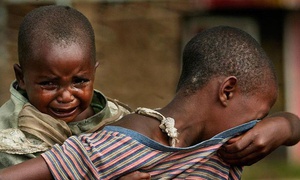
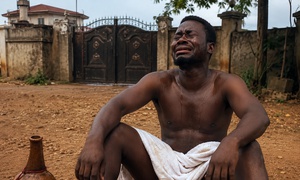
"Why me? Why does this keep happening to me?" she cried.
"How can someone with a third-class degree be considered more suitable than someone who has worked so hard to earn a first-class degree? Is my education worthless simply because I am Nigerian?"
The weight of repeated disappointments became overwhelming. In the midst of her despair, Bimpe experienced a personal crisis that tragically cost her life.
The news spread quickly.
Sayo was devastated.
Dara, Bimpe's younger sister, was inconsolable. She had lost the one person who had sacrificed everything to give her a better future.
Weeks later, Sayo stumbled upon a shocking revelation.
She discovered that the South African woman who had been offered the receptionist position was not selected because of her race or qualifications. She was related to the manager of Town Bank.
The position had been influenced by nepotism all along.
Sayo was left speechless.
Bimpe had not simply lost an employment opportunity; she had lost an opportunity to build the future she had worked so hard for.
And the most painful part?
Her qualifications had never been the problem.
This is the wahala of being a Nigerian, where qualifications are sometimes overlooked, hard work goes unrewarded, and opportunities are handed to those with the right connections rather than the right competence.
In a society where who you know can matter more than what you know, how many dreams must die before merit is finally given a chance?
That's the wahala of being a NigerianSayo sat silently recalling all the sleepless night bimpe had with the hope of becoming an accountant to fulfil her late father's dream
Everything gone down the drain
Now sayo is holding on the responsibility of taking care of her demise friend junior sister
Sayo sobbed silently
Then she got a call
Hi is this Miss olusayo Adekunle ,the caller spoke
Yes sayo replied, we are sorry ma your visa has been denied
Sayo sat up straight trying to process what she just heard
Please do you mind repeating what you just said again she said
Yes ma ,we are sorry but the visa as been cancelled
Devastated sayo discorved that the reason why they denied her bisa was because some rich people paid there way and use connections to get there
Well what can I do , she said, Nigeria will always be Nigeriashe said to herself and that's one of the wahala of being a Nigerian



 1