Sweat trickled from Mide's forehead and settled on her chin. She wiped it away with the back of her hand, then reached for the worn plastic hand fan beside her.
The electricity had vanished four hours ago, once again.
"Maami,Maami these NEPA people are wicked," she groaned, fanning herself furiously. "Daddy paid the bill last week. Yet we are still sitting in darkness?"
Mrs. Ajibode did not answer immediately. She was standing before the freezer as though staring at it long enough might keep it alive.
Inside were pots of soup cooked over several weekends. The family could not afford waste as it was their only hope .
Finally, she sighed.
"My daughter, let us just pray God touches their heart, If this light doesn't come back soon, all these soups will spoil."
She glanced at her phone.
"And this phone is about to die. I need to call your daddy. We need to refill the cooking gas too."
One problem slowly turned three.
Electricity,Food,Gas.
Mide shook her head.
"I have to wear a wrinkled uniform tomorrow."
She attended God's Own Secondary School, a school whose students talked more about electricity schedules than physics. She was in her final year and preparing for WAEC. Nobody had included it in the curriculum, but every Nigerian child eventually learned the same subject:
Advanced Survival.
As evening settled over the neighbourhood, darkness swallowed the street.
The familiar sounds began.
Generators disrupting sleep .
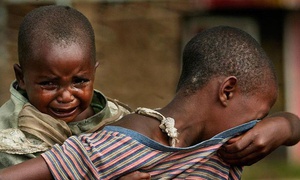
Children crying.
Neighbours shouted over fences.
Someone down the road started a prayer meeting loud enough for heaven and the next three streets to hear.
Mrs. Ajibode called her husband.
No network.
She tried again.
Nothing.
Again.
The call refused to connect.
By 9 p.m., her irritation had become worry.
By 10 p.m., worry had become fear.
Recent kidnapping stories on the news had left everyone on edge . Every delay carried possibilities nobody wanted to imagine.
Mide pretended to study using a rechargeable torch, but even the words in her textbook seemed nervous.
Ten-thirty ,Eleven.
No call.
No message.
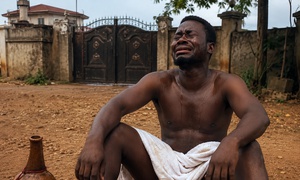
No husband.
The network kept failing up until the phone lost its last lives.
Then, a few minutes before midnight, the front door creaked open.
Mrs. Ajibode sprang to her feet.
"Okomi!"
Mr. Ajibode stepped inside looking as though the day had personally fought him.
His shirt was damp with sweat. Dust clung to his shoes.
"Thank God! Bawo ni okomi" his wife exclaimed. "Do you know how worried we've been?"
He collapsed into a chair.
"The traffic was terrible."
He laughed bitterly.
"I left work before six. I have been on the road for over five hours."
"Five hours?"
"Five hours."
Mide shook her head.
"Why didn't you call us?"
Mr. Ajibode raised his phone.
"The network was behaving like a government promise. It was there, but it wasn't there."
Ignoring how she felt , Mrs. Ajibode laughed.
The tension in the room eased a bit.
"What will you eat?" she asked.
He pointed at the kitchen.
"What is available?"
"Gas finished."
"Ah."
"No light either."
"Wonderful."
The family burst into laughter as there was nothing else to do.
Mrs. Ajibode poured water into a bowl, added garri, and handed it to him.
Mr. Ajibode accepted it like a king receiving a banquet.
As he ate, Mide remembered the latest neighbourhood news.
"Daddy, have you heard?"
"Heard what?"
"The Taiwos, our neighbors have relocated abroad."
Mr. Ajibode stopped stirring his garri.
"Really?"
"Yes. Canada."
Silence filled the room.
Not the sad kind,The thoughtful kind.
The kind Nigerians often fell into whenever somebody escaped.
Then he smiled.
"Good for them."
Mide caught something in that smile.
Pride.
Jealousy.
Admiration.
Longing.
All living together peacefully.
"At least they won't have to worry about light every day," he said.
"Or traffic," Mrs. Ajibode added.
"Or network."
"Or gas."
"Or generators."
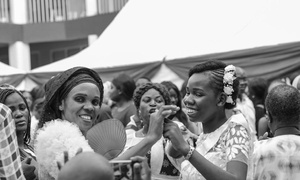
The room erupted into laughter once more.
For a moment, every complaint sounded ridiculous when arranged together like that.
Then Mr. Ajibode looked at his daughter.
His voice softened.
"Mide."
"Yes, Daddy?"
"You will study hard."
She nodded.
"You will pass your exams."
Another nod.
"And one day, you will take us anywhere you choose in this world."
The room became quiet.
Outside, the transformer remained dead.
The freezer was slowly surrendering its cold bit by bit
Tomorrow's school uniform still waited unpressed on a chair,wrinkled and cold.
The roads would still be congested in the morning.
Nothing had changed.
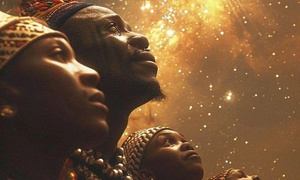
Yet somehow, sitting in darkness with a bowl of garri and a head full of worries, the Ajibodes found themselves discussing future holidays, foreign cities and impossible dreams.
It made no sense.
Perhaps that was the absurdity.
Not the darkness,Not the traffic,Not the failing network,Not even the daily inconveniences Nigerians had learned to wear like a school uniform .
The real absurdity was that after everything the country demanded, we still believed tomorrow might be better.
And somehow, against all logic, they refused to stop hoping.
That was Nigeria.



 1