Score |
249


Yemi And The Pen
 Writer | Educator | Student @ Lagos State University
Writer | Educator | Student @ Lagos State University



When Illness Becomes a Crime
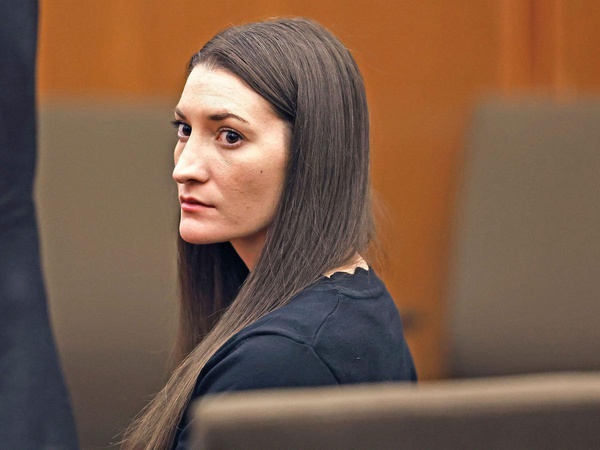
<p>Three children are dead.</p><p><br/></p><p>Cora was five. Dawson was three. Callan was eight months old.</p><p><br/></p><p>There is no sentence I can write that makes that fact any less horrifying.</p><p><br/></p><p>Lindsay Clancy killed her three children. She does not dispute that. The matter worthy of consideration is whether, at the time she did it, she actually understood what she was doing.</p><p><br/></p><p>That distinction matters.</p><p><br/></p><p>Postpartum psychosis is a psychiatric emergency. It can completely distort a person's sense of reality. In Clancy's case, the defence presented evidence of severe mental illness, psychiatric treatment, medication, suicidal thoughts and disturbing thoughts about harming her children. Her husband also testified that she had told him about thoughts of harming the children and that she had spent time in a psychiatric hospital earlier that month.</p><p><br/></p><p>So naturally, we get to the question: Should she be punished?</p><p><br/></p><p>But I keep coming back to another question: If we recognize postpartum psychosis as a genuine medical emergency, why do we suddenly treat the person experiencing it as though she possessed the same capacity for judgment as someone who was mentally well?</p><p><br/></p><p>We would not expect someone having a severe diabetic episode to simply tell their body to behave normally. We understand that a broken bone needs a cast. We understand that a failing heart needs medical attention. But when the illness is inside the mind, we too often expect the person to simply think their way out of it.</p><p><br/></p><p>Mental illness is illness. Sometimes, it changes the way a person sees the world so completely that what seems obvious to everyone else may not be obvious to them.</p><p><br/></p><p>That does not make what happened less tragic.</p><p><br/></p><p>If anything, it makes it more tragic.</p><p><br/></p><p>To me, one of the most frightening parts of this case is that a sick woman was surrounded by people who knew she was sick, but did not fully understand just how sick she was.</p><p><br/></p><p>Her family had seen her deteriorate. She had sought psychiatric treatment and had been hospitalized. She was taking medication!! And she was still expected to care for three very young children, one of them only a baby.</p><p><br/></p><p>Perhaps that is where we need to look beyond Lindsay herself and ask what we failed to see.</p><p><br/></p><p>We understand that a broken bone needs a cast. We understand that a failing heart needs medical attention. Yet when the illness is inside the mind, we too often expect the person to simply think their way out of it.</p><p><br/></p><p>A person experiencing severe psychosis cannot necessarily reason their way back to reality any more than someone with a physical illness can simply command their body to heal.</p><p><br/></p><p>The answer, however, cannot simply be that nothing should happen to Lindsay. Society has a right to demand that something be done when three children lose their lives.</p><p><br/></p><p>And there is something else we should not overlook: Lindsay tried to kill herself too. After killing her children, she cut herself and jumped from a second-storey window. She survived, but was left paralysed.</p><p><br/></p><p>It is another piece of the picture. She's a woman who killed her children and then attempted to end her own life. At the very least, it demands that we take her mental state seriously.</p><p><br/></p><p>The children deserve justice. At the same time, Lindsay's illness deserves recognition. And accountability matters too. These things do not require the same kind of response.</p><p><br/></p><p>Think about this. When severe mental illness destroys a person's ability to understand reality, punishment may satisfy our desire for accountability without actually achieving justice. There are circumstances in which a person can do something terrible while being so deeply unwell that their ability to understand what they are doing is profoundly impaired.</p><p><br/></p><p>I do not think she should be held criminally responsible. At the very least, I do not think she should be regarded in the same way as a textbook murderer who knowingly and deliberately takes innocent lives.</p><p>If any legal action is taken against Lindsay, I do not believe she should receive the same punishment we would give a person who committed the same act while mentally well and fully aware of what they were doing. I believe the response should be psychiatric rehabilitation and secure medical care, not simply a prison cell.</p><p><br/></p><p>However, if justice is going to be served, it should not only ask: What did she do?</p><p><br/></p><p>It should also ask: Who was she when she did it?</p><p><br/></p><p>And perhaps the hardest question of all: How did we allow a desperately unwell mother to reach that point?</p><p><br/></p><p>The dead cannot be brought back by a prison sentence. Making Lindsay criminally responsible cannot erase three lives. It cannot undo what happened.</p><p><br/></p><p>But maybe their deaths can force us to do something useful with this tragedy: learn to recognize the next mother in crisis before her illness becomes a catastrophe.</p><p><br/></p><p>Because most times, the greatest failure is realizing someone needed to be saved only after it was already too late.</p>



 70
70


Other insights from Yemi And The Pen










Contributor Points

Points-to-Coupons

Referral Earning

Insights for you.


All that I gave
Oh, hey there!It's me... again...You know, There's so much I want to saySo much I want ...
566 views
95 upvotes
95 comments




The Root of Evil.🌚
I like money.But they said it's the root of evil. 🙂Sorry, get your facts straight.The l...
286 views
77 upvotes
87 comments
The Manipulation.
"Mom started looking at me differently from that day.I remember it like the back of my ...
289 views
75 upvotes
90 comments




The 3AM World.
My favourite time of every day is between 1 a.m. and 4a.m.That's when the world is the ...
254 views
67 upvotes
72 comments

Drowning.
I can't breathe.I tried again.Nothing.My lungs burned.The water surrounded me, cold and...
257 views
61 upvotes
72 comments

Eden.
I came to this house very young, with one other.We were accepted so warmly.Everyone lov...
235 views
56 upvotes
66 comments