Score |
10


Writer. @ University of Ibadan.



When serious allegations go viral.
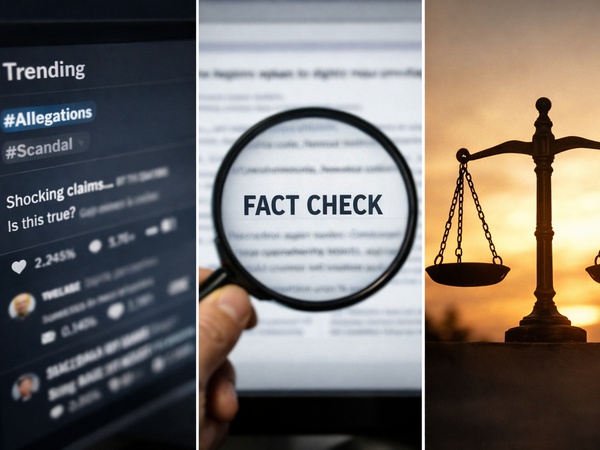
<p><img alt="" src="/media/inline_insight_image/file_00000000317872438fbfc1d1dadf0585.png"/></p><p>In today’s digital landscape, a single post can ignite global reaction before facts have time to emerge. A recent allegation circulating on social media illustrates how quickly serious claims can shape public opinion and how difficult it can be to separate verified information from speculation once it goes viral.</p><p><br/></p><p>A recent allegation shared on social media has generated intense public discussion, highlighting both the power and the risks of online platforms in shaping responses to sensitive claims.</p><p><br/></p><p>The situation began when a young woman publicly stated that she had been sexually assaulted. Her post quickly gained attention, prompting widespread sympathy, support, and calls for accountability. As the story circulated, however, some social media users began raising questions about elements of the evidence presented alongside the claim.</p><p><br/></p><p>This combination of support, doubt, and rapid public judgment reflects a broader pattern in the digital age, where serious allegations can spread globally within hours, often before independent verification is possible.</p><p><br/></p><p><br/></p><p>According to posts shared online, the individual described an experience of sexual assault and provided screenshots of messages that were presented as communication with the alleged perpetrator. The content generated strong emotional reactions, with many users expressing solidarity and emphasizing the importance of believing and supporting survivors of abuse.</p><p><br/></p><p>In online spaces, such responses are common when allegations of serious harm are made public, particularly when personal testimony is accompanied by visual material such as screenshots or message logs.</p><p><br/></p><p><br/></p><p>Following the initial wave of support, some users began scrutinizing the shared materials. Questions were raised about the authenticity of certain screenshots and about perceived inconsistencies in details circulating online. Others suggested that the evidence could not be independently confirmed based on publicly available information.</p><p><br/></p><p>These counter claims were widely shared alongside the original allegation, contributing to a divided online response. While some users continued to express support for the claimant, others called for caution and urged observers to avoid drawing conclusions without verified information.</p><p><br/></p><p>At the time of writing, the competing interpretations remain part of an ongoing public debate, with no official findings publicly confirming or disproving the claims.</p><p><br/></p><p><br/></p><p>The situation illustrates a recurring challenge in digital environments: social media allows rapid dissemination of information but offers limited tools for reliable verification. Screenshots, personal testimonies, and anonymous accounts can be difficult to authenticate, particularly when posts spread faster than facts checking efforts.</p><p><br/></p><p>In media literacy, online evidence should be treated cautiously when it cannot be independently confirmed through credible sources. At the same time, advocates for survivors of abuse note that public doubt can discourage individuals from coming forward about real experiences of harm.</p><p>Balancing these concerns remains a complex issue for online communities and observers.</p><p><br/></p><p><br/></p><p>Cases like this highlight the tension between two important principles: taking allegations of serious wrongdoing seriously, and ensuring that claims are evaluated responsibly and fairly.</p><p>False claims, if they occur, can damage public trust and harm individuals wrongly accused.</p><p><br/></p><p> Conversely, dismissing legitimate allegations without careful consideration can perpetuate stigma and discourage reporting of real abuse.</p><p>Social media platforms amplify both risks by enabling rapid emotional reactions, widespread sharing, and public judgment in the absence of formal investigative processes.</p><p><br/></p><p><br/></p><p>The ongoing discussion surrounding this allegation underscores the importance of caution, empathy, and verification in public discourse. Serious claims of harm require careful attention, but they also require responsible handling grounded in evidence rather than speculation.</p><p>As digital platforms continue to shape how information spreads, the challenge for the public is not only to respond with compassion, but also to remain mindful of the limits of what can be known in real time.</p><p>In fast moving digital spaces, public reaction often precedes confirmed facts, making responsible engagement essential. Ultimately, the challenge is not only to respond to claims of harm, but to do so in a way that protects truth, fairness, and public trust.</p><p><br/></p><p>~Eliza's pen.</p>


 8
8


Other insights from Eliza's Pen.










Referral Earning

Points-to-Coupons

Insights for you.


Who is a news reporter?
Last time, we discussed the role and stakes of journalism in our everyday life. This ti...
1109 views
8 upvotes
6 comments


THE FISH HOUSE
One morning, I went with my mum to the … should I say fish house or fish market or fish...
1056 views
32 upvotes
15 comments

Role and Stakes of Journalism
Journalism is a profession that entails collecting, processing, and broadcasting inform...
931 views
4 upvotes
3 comments





What Makes a Good Journalist?
Journalism is a complex yet interesting job. One has to be passionate about it in order...
589 views
2 upvotes
2 comments



Is Your Policy My Policy?
In our present day society which is fast paced and diverse, certain things remain uncha...
257 views
6 upvotes
5 comments































Comments