Score |
301


𝓢𝓪𝓶𝓾𝓮𝓵 𝕻𝖗𝖆𝖎𝖘𝖊
 Student @ Lafia state polytechnic
Student @ Lafia state polytechnic



When someone mind break does their responsibilities break with it
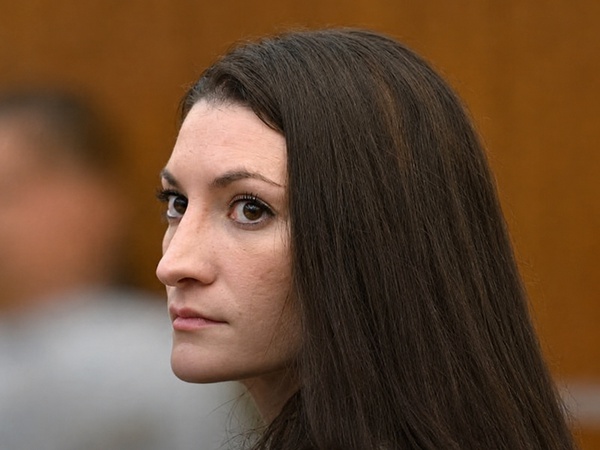
<p>*When Minds Break: What Does Justice Demand?*</p><p><br/></p><p>I don’t know what to say, but I will start somewhere.</p><p><br/></p><p>I won’t lie, this case is loaded. Argumentative. Uncomfortable. Complicated.</p><p><br/></p><p>When I first came across the Lindsay Clancy case, my first thought was simple:</p><p><br/></p><p>Damn. I need to do my research before I say anything.</p><p><br/></p><p>Because this isn’t just a story about murder.</p><p><br/></p><p>It is about motherhood.</p><p>Mental illness.</p><p>Postpartum depression.</p><p>Postpartum psychosis.</p><p><br/></p><p>And one uncomfortable question:</p><p><br/></p><p>When someone’s mind breaks, does their responsibility break with it?</p><p><br/></p><p>My answer is no.</p><p><br/></p><p>Lindsay Clancy was accused of killing her three children in their Massachusetts home in January 2023. Her defence argued that she was suffering from postpartum psychosis and was therefore not criminally responsible. The prosecution, however, argued that the circumstances surrounding the killings showed purposeful behaviour and that she understood what she was doing.</p><p><br/></p><p>And this is where I stand:</p><p><br/></p><p>I believe Lindsay should be held criminally responsible and sent to prison.</p><p><br/></p><p>Not because I believe postpartum mental illness is imaginary.</p><p><br/></p><p>Not because I believe she was perfectly healthy.</p><p><br/></p><p>And certainly not because I think someone suffering psychologically deserves no compassion.</p><p><br/></p><p>I believe she should be held accountable because compassion and accountability are not mutually exclusive.</p><p><br/></p><p>A person can be hurting and still hurt others.</p><p><br/></p><p>A mind can be sick and a life can still be lost.</p><p><br/></p><p>One truth does not have to bury another.</p><p><br/></p><p>I Believe the Illness Was Real</p><p><br/></p><p>Postpartum depression is real.</p><p><br/></p><p>Postpartum psychosis is real.</p><p><br/></p><p>The psychological deterioration that can follow childbirth is not something we should minimize or dismiss as a woman simply being overwhelmed.</p><p><br/></p><p>A person can be desperately unwell and still deserve treatment.</p><p><br/></p><p>But acknowledging illness does not automatically answer the question of criminal responsibility.</p><p><br/></p><p>A diagnosis is not a verdict.</p><p><br/></p><p>And that is where I struggle with this case.</p><p><br/></p><p>Because somewhere between the medical diagnosis and the courtroom verdict lies a question that cannot be answered by emotion alone:</p><p><br/></p><p>What did she understand?</p><p><br/></p><p>What did she know?</p><p><br/></p><p>And how much control did she have?</p><p><br/></p><p>Then What Happened That Day?</p><p><br/></p><p>According to the prosecution’s case, Lindsay’s behaviour that morning matters.</p><p><br/></p><p>She reportedly told her husband that she had slept well and was feeling good. She became concerned about one of her daughter’s stomach problems and participated in activities with the children.</p><p><br/></p><p>Then her husband left the house to get takeout and medicine.</p><p><br/></p><p>And while he was gone, the three children were killed.</p><p><br/></p><p>That sequence bothers me.</p><p><br/></p><p>Not because someone experiencing psychosis cannot appear normal.</p><p><br/></p><p>They can.</p><p><br/></p><p>Not because building a snowman or doing an art project proves someone is mentally healthy.</p><p><br/></p><p>It doesn’t.</p><p><br/></p><p>What bothers me is the larger question of purposeful behaviour.</p><p><br/></p><p>The prosecution argued that Lindsay’s actions created an opportunity for the killings and that the events involved a series of choices. Prosecutors’ psychiatric witnesses also argued that she understood the wrongfulness of killing her children.</p><p><br/></p><p>Her husband reportedly called while he was away.</p><p><br/></p><p>She did not answer immediately.</p><p><br/></p><p>Minutes later, she called him back.</p><p><br/></p><p>The call lasted only seconds.</p><p><br/></p><p>Perhaps that means nothing.</p><p><br/></p><p>Perhaps it means everything.</p><p><br/></p><p>And that is the problem with this case.</p><p><br/></p><p>Every ordinary action becomes evidence.</p><p><br/></p><p>Every silence becomes suspicious.</p><p><br/></p><p>Every phone call becomes a question.</p><p><br/></p><p>Every minute becomes a piece of a puzzle that people are desperately trying to complete.</p><p><br/></p><p>And Then There Was the Basement</p><p><br/></p><p>Her husband returned to an unusually quiet house.</p><p><br/></p><p>Quiet.</p><p><br/></p><p>The kind of quiet that should have been ordinary in a home with children.</p><p><br/></p><p>But this silence carried something terrible.</p><p><br/></p><p>He found blood and Lindsay injured after an apparent suicide attempt.</p><p><br/></p><p>In the basement were the three children.</p><p><br/></p><p>Three children who would never leave that house alive.</p><p><br/></p><p>Three lives that had barely begun.</p><p><br/></p><p>Three voices that would never grow old enough to tell their own story.</p><p><br/></p><p>That is the part I cannot make disappear simply because the person responsible may have been mentally ill.</p><p><br/></p><p>Somewhere in all the discussions about postpartum psychosis, medication, hallucinations and criminal responsibility, there are three children whose lives ended.</p><p><br/></p><p>They cannot speak.</p><p><br/></p><p>They cannot explain what happened.</p><p><br/></p><p>They cannot tell us what their mother believed she was doing.</p><p><br/></p><p>So someone has to speak about them too.</p><p><br/></p><p>The Voice</p><p><br/></p><p>One of the most difficult parts of Lindsay’s account is the alleged commanding voice.</p><p><br/></p><p>She said she heard a voice telling her to kill her children.</p><p><br/></p><p>If that was truly what she experienced, then we are dealing with something horrifying.</p><p><br/></p><p>Imagine being trapped inside a mind that no longer accurately reflects reality.</p><p><br/></p><p>Imagine hearing a voice and believing it.</p><p><br/></p><p>Imagine being unable to tell whether the thought came from you or from somewhere beyond you.</p><p><br/></p><p>That deserves compassion.</p><p><br/></p><p>But prosecutors’ psychiatric witnesses challenged that account. One prosecution expert testified that the reported voice did not fit his clinical experience with command hallucinations and pointed to aspects of the account that raised doubts.</p><p><br/></p><p>That does not, by itself, prove that the voice was fabricated.</p><p><br/></p><p>But it raises a serious question:</p><p><br/></p><p>If the voice controlled her actions, how much control did she actually lose?</p><p><br/></p><p>And if the evidence shows that she retained enough control to communicate, create an opportunity and carry out the killings, where does illness end and responsibility begin?</p><p><br/></p><p>That is the line this case keeps forcing us to look at.</p><p><br/></p><p>A thin line.</p><p><br/></p><p>A painful line.</p><p><br/></p><p>But a line the law must examine.</p><p><br/></p><p>The Evidence That Made Me Question</p><p><br/></p><p>Then there is the wine tumbler reportedly found near the bloodied knife, containing white residue.</p><p><br/></p><p>If that residue was potentially relevant to questions about medication or what Lindsay had consumed, why wasn’t it tested in a laboratory?</p><p><br/></p><p>I don’t know.</p><p><br/></p><p>And I won’t pretend to know.</p><p><br/></p><p>But when someone’s mental state is the central issue of a murder trial, unanswered questions about physical evidence matter.</p><p><br/></p><p>They should be investigated.</p><p>They should be examined.</p><p>They should not simply disappear into the silence.</p><p><br/></p><p>Because justice is not built from the evidence we like.</p><p><br/></p><p>It is built from the evidence that survives scrutiny.</p><p><br/></p><p>But Here Is Where I Draw My Line</p><p>I can believe Lindsay was depressed.</p><p>I can believe she was struggling after childbirth.</p><p><br/></p><p>I can believe postpartum psychosis was a genuine possibility.</p><p><br/></p><p>I can believe that her mind was not functioning the way a healthy mind should.</p><p><br/></p><p>And still believe she should go to prison.</p><p><br/></p><p>Because understanding why someone committed an act is not the same as saying the act has no consequences.</p><p><br/></p><p>Mental illness does not fit neatly into two boxes:</p><p><br/></p><p>Victim or villain.</p><p><br/></p><p>Someone can be suffering and still cause irreversible harm.</p><p><br/></p><p>Someone can need psychiatric treatment and still be accountable.</p><p><br/></p><p>Someone can be mentally unwell and still have victims.</p><p><br/></p><p>The existence of one truth does not erase the other.</p><p><br/></p><p>What About Compassion?</p><p><br/></p><p>I understand the argument that prison is cruel.</p><p><br/></p><p>I understand the argument that sending a mentally ill woman to prison could ignore the condition that contributed to what happened.</p><p><br/></p><p>But then I ask:</p><p><br/></p><p>What does justice look like for the children?</p><p><br/></p><p>Where is the compassion for three lives that were not given the opportunity to grow older?</p><p><br/></p><p>To make mistakes?</p><p>To fall in love?</p><p>To graduate?</p><p>To complain about school?</p><p>To laugh with friends?</p><p>To simply wake up the next morning?</p><p><br/></p><p>Where is their tomorrow?</p><p><br/></p><p>There is none.</p><p><br/></p><p>Their lives ended.</p><p><br/></p><p>And I don’t believe mental illness should become a word that automatically makes accountability disappear.</p><p><br/></p><p>Perhaps Lindsay needed help.</p><p><br/></p><p>Perhaps she needed psychiatric intervention long before that day.</p><p><br/></p><p>Those possibilities deserve their own conversation.</p><p><br/></p><p>But they do not make three children less dead.</p><p><br/></p><p>Justice Is Not Revenge</p><p><br/></p><p>I am not arguing that Lindsay should be imprisoned because I want her to suffer.</p><p><br/></p><p>I am arguing for accountability.</p><p><br/></p><p>If the evidence establishes that she remained criminally responsible for her actions, then I believe the law should recognize that responsibility.</p><p><br/></p><p>Prison does not mean we stop acknowledging mental illness.</p><p><br/></p><p>It means we acknowledge that illness and responsibility can exist in the same conversation.</p><p><br/></p><p>Perhaps psychiatric treatment should be part of her punishment.</p><p><br/></p><p>Perhaps mental healthcare should follow her wherever the law places her.</p><p><br/></p><p>But I cannot accept the idea that because a person’s mind was suffering, the law must therefore pretend the consequences never happened.</p><p><br/></p><p>Justice is not revenge.</p><p><br/></p><p>Justice is the difficult attempt to hold together what tragedy has torn apart.</p><p><br/></p><p>The Side I Chose</p><p><br/></p><p>The first trial ended in a mistrial after the jury could not reach a unanimous verdict on criminal responsibility. The case therefore remains unresolved.</p><p><br/></p><p>But if you ask me where I stand, I have chosen my side.</p><p><br/></p><p>I believe Lindsay Clancy should be held criminally responsible and sent to prison.</p><p><br/></p><p>I believe postpartum depression and postpartum psychosis deserve understanding, research, treatment and compassion.</p><p><br/></p><p>But I do not believe they should automatically erase accountability.</p><p><br/></p><p>Because mental illness may explain a person’s actions.</p><p><br/></p><p>It may complicate the question of intent.</p><p><br/></p><p>It may force us to look deeper than the crime itself.</p><p><br/></p><p>But explanation is not always exoneration.</p><p><br/></p><p>A mind can break.</p><p><br/></p><p>A person can suffer.</p><p><br/></p><p>A mother can be sick.</p><p><br/></p><p>And three children can still deserve justice.</p><p><br/></p><p>So I return to the question I started with:</p><p><br/></p><p>When minds break, what does justice demand?</p><p><br/></p><p>For me, it demands compassion for the illness and accountability for the dead.</p>



 75
75


Other insights from 𝓢𝓪𝓶𝓾𝓮𝓵 𝕻𝖗𝖆𝖎𝖘𝖊







Contributor Points

Points-to-Coupons

Referral Earning

Insights for you.












ROSES
Roses are redLike our eyesAnd skiesBirds without feathersNor fathersWe're flocklessFlyi...
219 views
16 upvotes
12 comments


Pharaohs and Medicine
Imhotep and Hippocrates: A Look at Ancient Egyptian and Greek MedicineAncient Egyp...
1779 views
13 upvotes
10 comments