Score |
110


Joab

 Writer. Poet. Essayist. @ Federal University of Agriculture, Abeokuta.



A Short Manifesto on Nudity
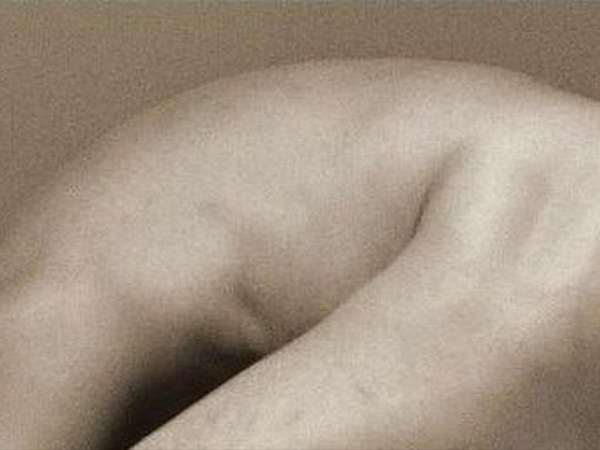
<p style="text-align: justify; ">In the English language, a subject is described as the doer of an action and an object as the thing receiving that action, and that simple definition can easily be related to the mechanics or language of sexual objectification. The act of lusting requires transforming a person to an object in the mind—an image or phantasm if you will—that is unable to be willing or unwilling of anything. That image lacks free will, agency, and cannot act on its own volition—they become a nude: an object of sexual desire and source of sexual gratification.</p><p style="text-align: justify; "><br/></p><p style="text-align: justify; ">Art historian Kenneth Clark mentions that the human body becomes a "nude" when the artist idealizes and perfects its depiction, rather than simply reproducing it as seen in life<sup>1</sup>.The subject/the luster is representative of the “artist” who idealises for the sake of personal satisfaction. While anyone can actively and consciously facilitate their own objectification (for example sex workers “dressed to kill”), it is the onlooker, the paid subscriber, the client, or the audience, that does the objectification, no matter what actions or displays the nude performer is doing<sup>2</sup>. And yet, the mere act of going naked is…a bit complicated.</p><p style="text-align: justify; "><br/></p><p style="text-align: justify; ">To be clear, sexual objectification can happen to one regardless of what one wears, but putting on a suit says something different from wearing, say, a bikini or unbuttoned silk shirt. Though nudity is not necessarily an invitation to sex, it bears its seeds, and tracking it back to ancient civilizations, Abrahamic societies have been recorded to primarily associate nakedness with sin<sup>3</sup> (in Paul's letter to the church in Rome—Romans 14:21— he says, “It is good neither to eat flesh, nor to drink wine, nor any thing whereby thy brother stumbleth, or is offended, or is made weak.”)</p><p style="text-align: justify; "><br/></p><p style="text-align: justify; ">Nakedness has meant different things to different cultures over the course of history. For example, it was a religious practice of the ancient Olympians as an appreciation of the body's form in activity and dance,<sup>4 </sup>while in China, nakedness has historically only been depicted in pornography.<sup>5 </sup>Due to more and more sexualisation of nakedness globally, the distinction between it and nudity is blurrier than ever so much that in Africa, revealing the breasts to breastfeed a child is now done more discreetly than it was in the past<sup>6</sup>. In the post-modern world, the culture of nakedness has become tied to sex.<sup>7</sup></p><p style="text-align: justify; "><br/></p><p style="text-align: justify; ">Clark stated, “no nude, however abstract, should fail to arouse in the spectator some vestige of erotic feeling, even though it be only the faintest shadow—and if it does not do so it is bad art and false morals,” which means nakedness in and of itself is neutral, but nudity is not. Nudity, unlike nakedness, has more cultural connotations.<sup>8</sup>(Though both terms are often used interchangeably, their distinctions are integral to the accurate reading of this text).</p><p style="text-align: justify; "><br/></p><p style="text-align: justify; ">The existence of a subject is what separates nakedness from nudity. The eye of the beholder is what converts the body into a means to an end. Naturists know this quite well, adhering to practices that suppress sexual behaviour while practicing social nudity,<sup>9</sup> for example, refraining from touching and staring. To stare at a naked body is to invite yourself to lust on it. The invitation can be declined with enough practice, of course, but it is an invitation nonetheless.</p><p style="text-align: justify; "><br/></p><p style="text-align: justify; ">In the 21st century, the act of being nude (or presenting oneself publicly in the interest of personal or external gratification), is a universal language of sex, regardless of intent. Sex workers, i.e., people who benefit financially from sexual objectification, are well versed in this truism. To show more skin is to appeal to your sexuality. Flash it so the clients know that they're the real deal. The body becomes an invitation, clothes a social courtesy. Pole dancers have more leeway through gyration and even more nudity. Though a naked pole dancer practicing in her room is just a naked pole dancer, she is nude when she presents herself to be seen. This is another clear marker of what people respond to: display. Nakedness in the shower is just nakedness, but if a selfie is taken of said nakedness and sent to a third party, that becomes a nude. Nudity is political, nakedness is not. And because of the sexual nature of the former, clothing is as well political and potentially sexual.</p><p style="text-align: justify; "><br/></p><p style="text-align: justify; ">To dress in a socially unacceptable manner is to make a political statement whether you like it or not. Several months ago I came across a conversation online about a female speaker dressed in a tight, pink suit with a short skirt and fishnets at a conference. There was no conversation about her actual speech—it all got swallowed up by commentary on the inappropriateness versus appropriateness of her attire. Effectually, the speaker made a sacrifice: her speech for her political statement, though I doubt that she set out to make a statement in the first place. To be nude or partly nude in a corporate setting is to be an activist. And it's not that the world has gone mad because social norms exist, it's that you come in knowing this rather than act befuddled by it.</p><p style="text-align: justify; "><br/></p><p style="text-align: justify; ">Maybe it's the pornification of fashion that's to blame for the confusion when an outfit that celebrates sexuality is met with sexual remarks. It's a dystopia for regular women but a field day for sex workers because what works for the goose works for the gander at the end of the day. Not to say that anyone should tolerate the discomfort of unsolicited attention, but said attention should be expected since it's a formula that works all the time and will likely not end soon (or ever). Summarily, some people hate the attention, some people love it. But the underlying truth is that less clothing means more attention, and to say that things shouldn't be that way is one thing, but to pretend that it isn't is naïvete. Expressing sexuality through nudity or even partial nudity will elicit a predictable response, and there will be no change of the status quo as long as this puts food on the table of others.</p><p><br/></p><p style="text-align: center; ">REFERENCES</p><p><br/></p><p>1</p><p>Clark, Kenneth (1956). The Nude: A Study in Ideal Form. Princeton University Press. ISBN 0-691-01788-3</p><p><br/></p><p>2</p><p>Smith, Glenn; King, Michael (June 2009). "Naturism and sexuality: Broadening our approach to sexual wellbeing". Health & Place. 15 (2): 439–446. doi:10.1016/<a class="tc-blue" href="https://j.healthplace" rel="noopener noreferrer" target="_blank">j.healthplace </a>.2008.08.002. PMID 18926761.</p><p><br/></p><p>3</p><p>Berner, Christoph; Schäfer, Manuel; Schott, Martin; Schulz, Sarah; Weingärtner, Martina (27 June 2019). Clothing and Nudity in the Hebrew Bible. Bloomsbury Publishing. ISBN 978-0-567-67848-5.</p><p><br/></p><p>4</p><p>Clark, Kenneth (1956). The Nude: A Study in Ideal Form. Princeton University Press. ISBN 0-691-01788-3</p><p><br/></p><p>5</p><p>al-Qaradawi, Yusuf (11 October 2013). The Lawful and the Prohibited in Islam: الحلال والحرام في الإسلام. The Other Press. ISBN 978-967-0526-00-3.</p><p><br/></p><p>6</p><p>Karega, Munene (2004). "Dress as a Medium of Cultural Expression". WAJIBU. 19 (1). Retrieved 25 October 2023.</p><p><br/></p><p>7</p><p>Jirasek, Ivo; Kohe, Geoffery Zain; Hurych, Emanuel (2013). "Reimagining Athletic Nudity: The Sexualization of Sport as a Sign of a 'Porno-Ization' of Culture" (PDF). Sport in Society. 16 (6): 721–734. doi:10.1080/17430437.2012.753525</p><p><br/></p><p>8</p><p>Carr-Gomm, Philip (2010). A Brief History of Nakedness. London, United Kingdom: Reaktion Books, Limited. ISBN 978-1-86189-729-9. Retrieved 1 August 2019.</p><p><br/></p><p>9</p><p>Smith, Glenn; King, Michael (June 2009). "Naturism and sexuality: Broadening our approach to sexual wellbeing". Health & Place. 15 (2): 439–446. doi:10.1016/<a class="tc-blue" href="https://j.healthplace" rel="noopener noreferrer" target="_blank">j.healthplace </a>.2008.08.002. PMID 18926761.</p><p><br/></p><p>Feature image by Sarah Marie Jones via Wikimedia Commons (CC0 1.0)</p><p><br/></p>


 10


Other insights from Joab


Contributor Points

Points-to-Coupons

Referral Earning

Insights for you.

The death of death.
Death begins its silent journey towards us from the moment we begin to live.It has neve...
214 views
55 upvotes
49 comments


IS HEAVEN AND HELL REAL?
I woke up this morning, possessed by my favorite Spirit, the spirit of wonranwonran.Sti...
226 views
39 upvotes
50 comments

KARMA
They say Karma is real. I smile The idea is that what goes around will surely come arou...
80 views
41 upvotes
45 comments

FUCK YOU: The Periodic Table of Petty
Albert Einstein spent his life proving that the universe obeys laws. The internet has s...
328 views
34 upvotes
35 comments

Who’s Running This?
I was reading a book about Python the other day. I know basically nothing about coding,...
154 views
29 upvotes
40 comments

KEEP WALKING
Failure is not the end of the world, yet we have been taught to treat it like it is. Fr...
242 views
29 upvotes
32 comments


YOU ALL ARE MONSTERS
You All Are Monsters.Yes. I'm talking to you, oh and of course, me too.Why are you shoc...
384 views
27 upvotes
31 comments


Why We Romanticize Pain in Art
We say pain is poetic. We call heartbreak art. We write sadness into songs, paint it on...
788 views
25 upvotes
24 comments


Eren Yeagar and Freedom's cage
Warning: this article contains spoilers for Attack on TitanWhat becomes of the humanity...
2627 views
23 upvotes
15 comments

The Mirror Statement
The Day Mirrors Went on StrikeOne Monday morning, the world woke up to a strange announ...
202 views
19 upvotes
21 comments
































