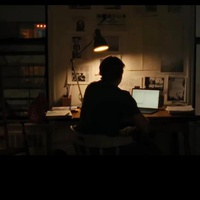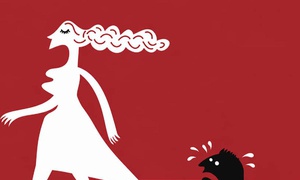
How experience quietly becomes belief.
There are so many things we believe that we have never stopped to question.
We rarely sit with ourselves long enough to ask:
Why do I feel this way?
Why do I think this way?
Where did this belief come from?
Is this truly my conviction, or is it something I learned from what happened to me?
I started thinking about this while sitting in church.
I had always told myself I would never join the choir.
Not because I had anything against the choir. Not because I couldn't sing. Of course, I'm trying.
I simply knew I wasn't going to be a chorister again.
Then, almost like a flash, the thought came.
It felt as though my brain had opened a thousand files at once.
I travelled down memory lane and suddenly understood where my certainty had come from.
I had been a chorister in secondary school.
At the time, I was struggling deeply with low self-esteem. Holding a microphone made me uncomfortable. Whenever I sang, I felt exposed. I felt humiliated. I wanted to quit.
But I couldn't.
So I waited.
I waited for secondary school to end because I saw leaving as my escape route.
And when I finally left, I made a decision:
Never again.
Years later, sitting in church, I realized something.
The choir was never really the problem.
I had built a fence around myself because of an experience, and somewhere along the way, I had forgotten why the fence was there.
I simply started calling it who I am.
And perhaps we do this more often than we realize.
When Experience Becomes Belief
An experience happens to us.
We interpret it.
Then we form a conclusion.
We repeat that conclusion until it becomes a belief.
Eventually, we stop remembering that it was a conclusion at all.
It becomes truth.
Someone hurts us, and we conclude that people cannot be trusted.
We experience rejection, and we decide we don't need anyone.
We fail at something, and we conclude that we are incapable.
We grow up around fear, and eventually mistake fear for wisdom.
We experience betrayal, and suspicion becomes our default language.
The experience may have been real.
The pain may have been genuine.
But does that automatically make every conclusion we drew from it true?
That is the question we don't always ask.
Romans 12:2 says:
“Be transformed by the renewing of your mind.”
Sometimes transformation requires more than leaving a situation.
It requires examining the way the situation taught us to think.
You can leave the room that hurt you and still carry its walls in your mind.
You can forgive the person who hurt you and still live according to what the experience taught you about yourself.
You can heal from the wound and still preserve the ideology the wound created.
“That's Just Me”
There are things we have lived with for so long that we no longer recognize them as things that can change.
We say:
That's just me.
That's how I am.
I don't trust people.
I don't like being vulnerable.
I don't speak in public.
I don't need anyone.
But sometimes I wonder:
Is that really who we are?
Or is it simply who we became while trying to survive something?
There is a difference between personality and protection.
There is a difference between discernment and suspicion.
There is a difference between wisdom and fear.
There is a difference between a healthy boundary and a wall built from an old wound.
And because the reasons behind our reactions may be genuine, we rarely question the conclusions attached to them.
Something can be understandable and still need to be examined.
Proverbs 14:12 says:
“There is a way which seemeth right unto a man, but the end thereof are the ways of death."
Not everything that feels right is necessarily right.
Sometimes our strongest convictions need the gentlest questions.
Perhaps that is the uncomfortable part.
We don't only need to question the things we disagree with.
Sometimes, we need to question the things we are absolutely certain about.
Because certainty does not always mean truth.
Sometimes, it simply means we have never looked closely enough.
And perhaps this is where the anatomy of an assumption begins:
with an experience,
followed by an interpretation,
followed by a conclusion,
followed by repetition,
until the conclusion quietly becomes an identity.
But what happens when we live behind these walls for so long that we forget they were built?
Perhaps that is where the real problem begins.
To be continued.


 128