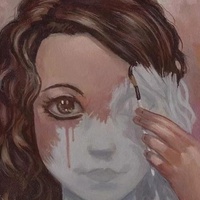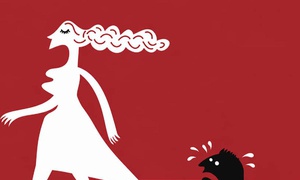
I became good at swallowing words.
Not food.
Words.
Questions. Explanations. Defences. Anything that might sound too loud, too questioning, too much.
I learned to keep them tucked behind my teeth.
I remember sitting among the adults while they spoke. Someone said something about me, and I felt a sentence rise before I could stop it. I was ready to explain myself.
Then came the warning.
“When your elders are speaking, don't talk.”
The sentence disappeared.
I swallowed it.
Someone would say something about me, and I would sit right there, listening to a version of myself I didn't recognize. I had the words. I knew exactly what I wanted to say. But I knew better than to say them. I had already learned what happened when I did.
Sometimes it was the look.
Sometimes the raised voice.
Sometimes the rod.
And sometimes, before anyone had to do anything, I silenced myself.
I remember standing there with so much to say, feeling like my mouth belonged to somebody else. Like I had been given a voice but not permission to use it.
So I stayed quiet.
But the words didn't disappear.
They followed me home.
They waited until the room was quiet, then came back.
I should have said this.
Why couldn't I explain myself?
Why was a question treated like disrespect?
The older I got, the harder it became to swallow everything. I began noticing things I couldn't unsee. Things that didn't become right simply because someone older had said they were.
That frightened me.
Not because I had nothing to say.
Because I had too much.
I had spent so many years keeping words behind my teeth that I no longer knew what would happen when I finally let them out.
Still, I spoke.
I remember the first time. The hesitation. That small pause where an old warning rose in my head.
Should I really say this?
I said it anyway.
Nothing dramatic happened.
The room was still there.
The people were still there.
And so was I.
But something had shifted.
I had crossed a line I'd spent years being afraid of, and once I crossed it, I couldn't pretend the line was as powerful as I'd believed.
There is a boy I keep coming back to—the one sitting with his hands in his lap, a whole sentence sitting behind his teeth, watching the adults decide what was true.
If I could sit beside him now, I wouldn't tell him to be brave.
I'd just say it for him.
Whatever it was.
I don't even need to know.
I'd let him watch someone say it and survive it.
That's all he needed.
Not permission.
Proof.
I am still learning when a word needs to leave my mouth and when silence is enough. But I know what it cost me to keep swallowing every sentence.
I don't want to pay that price again.
So if the words come, I will let them come.
If the story is mine, I will tell it.
And this time, I won't leave the ending behind my teeth.


 156