Score |
480


Coward Pen
 Student @ University of Ibadan
Student @ University of Ibadan



Black history
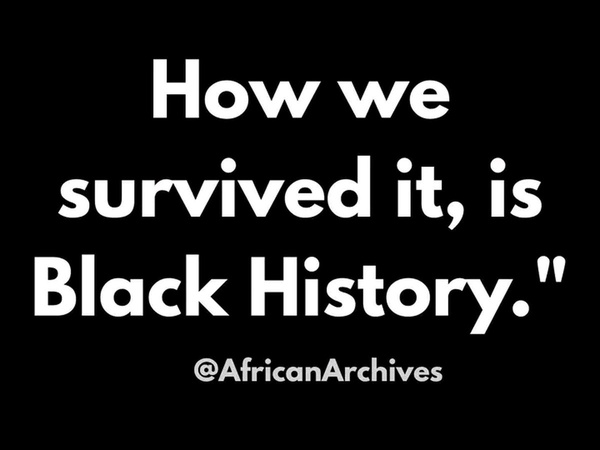
<p>“Slavery is white history. How we survived it is Black history.” The words make an important distinction about how the history of slavery is often taught. Enslavement was not something Black people created or chose for themselves. It was a system built, enforced and profited from by people and institutions that turned human beings into property and made racial inequality part of law and society.</p><p><br/></p><p>But Black history cannot be reduced to what slavery did to Black people. It also includes what enslaved Africans and their descendants did in spite of it. They preserved families and traditions, created new cultures, practiced their faith, learned and taught one another, resisted their enslavers and built communities under conditions designed to deny them control over almost every part of their lives.</p><p><br/></p><p>Resistance took many forms. Some escaped slavery through networks of assistance or created independent Maroon communities. Others organized revolts, secretly learned to read, preserved African traditions, negotiated for greater control over their lives or simply refused to allow slavery to completely determine who they were. Survival itself required extraordinary adaptation across generations.</p><p><br/></p><p>That distinction matters because Black history is much larger than suffering. The history of slavery must be remembered in all its brutality, but so must the people who survived it, resisted it and created lives beyond it. Their story is not only about what was done to them. It is also about what they built, protected and passed down despite everything that was done to prevent them from doing so.</p>


 43
43


Other insights from Coward Pen



Coward Pen
 Ebute Ikorodu, Nigeria
Ebute Ikorodu, Nigeria

Coward Pen
Ebute Ikorodu, Nigeria
Ebute Ikorodu, Nigeria

Coward Pen
Ebute Ikorodu, Nigeria
Ebute Ikorodu, Nigeria

Coward Pen
Ebute Ikorodu, Nigeria
Ebute Ikorodu, Nigeria

Coward Pen
Ebute Ikorodu, Nigeria
Ebute Ikorodu, Nigeria

Coward Pen
Ebute Ikorodu, Nigeria
Ebute Ikorodu, Nigeria
Coward Pen
Ebute Ikorodu, Nigeria
Ebute Ikorodu, Nigeria



Contributor Points
Points-to-Coupons

Referral Earning
Insights for you.

Dear African Parents,
Every "African parent" disapproves of suicide. "Why take his life over something so lit...
384 views
70 upvotes
75 comments

SOMETHING MUST KILL A MAN
Something must kill a man! That's what Emeka thought to himself that afternoon, outside...
248 views
41 upvotes
38 comments


BREAST IRONING
Ever heard of the breast ironing practice? well, I am from Cameroon and we have strong ...
1941 views
37 upvotes
43 comments

UNTAMED WORDS
They came with fire, but feared our flame,taught us silence, then gave it a name.Stole ...
409 views
33 upvotes
27 comments

My Greatest fear
My Greatest FearMy greatest fear isn’t death ,it’s the inability to write.I have a wild...
421 views
28 upvotes
29 comments


Divide The National Moi Moi
While embarking on my beauty stroll this evening, I pondered what I would write about. ...
998 views
21 upvotes
24 comments

Whose culture?
When it's time to speak English We speak it better than the best As if we're never mixe...
117 views
25 upvotes
31 comments

BE CAREFUL OF WHAT YOU START
Work hard.Be consistent.Be patient.These are the songs we hear,the sermons we swallow.B...
225 views
23 upvotes
25 comments

LET'S TALK ABOUT YOUR COUSINS
Family has always been the foundation of social relations.the ↗ very first people you c...
596 views
28 upvotes
25 comments

Hotel Rwanda 🇷🇼 part 1 Nomshu
Hotel Rwanda: Part 1 – How I Ended Up in the MadnessOkay, so you know how life sometime...
143 views
24 upvotes
24 comments