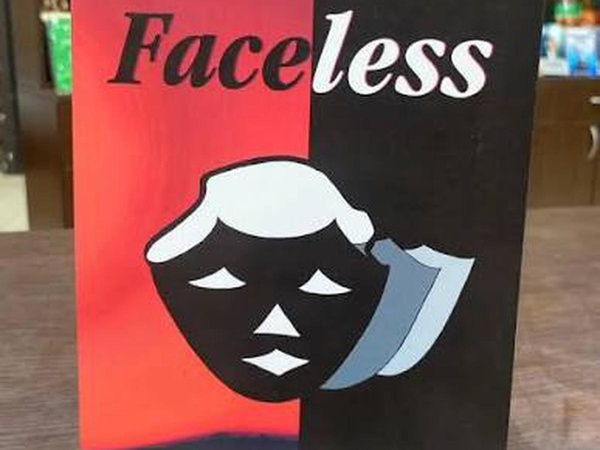
Yesterday, I left Faceless at the point where the streets were beginning to feel less like a setting and more like a character.
Now, the people begin to speak.
Amma Darko's Faceless is about 236 pages in the Sub-Saharan Publishers edition, spread across 25 chapters.
But the number of pages doesn't really prepare you for how much life is packed into them.
There is Fofo.
There is Baby T.
There is Maa Tsuru.
There is Kabria.
And then there are the countless children whose names barely matter to the people passing them on the street.
One moment that stayed with me is the conversation surrounding Baby T's death. Fofo struggles to understand how everything could have reached that point, asking:
“So Baby T is dead?”
It is such a simple question.
But sometimes a simple question carries an entire world inside it.
Because behind that question is a sister trying to understand how someone she knew could suddenly become a body people were talking about.
And that is where Faceless begins to hurt differently.
The book is not only asking us to look at street children.
It is asking us to look at what happens before a child reaches the street.
The home.
The parents.
The choices.
The neglect.
The people who knew something was wrong.
The people who could have intervened.
And perhaps the people who thought someone else would.
Even the police response to the discovery of bodies carries a disturbing coldness. In one scene, the attitude is reduced to the words:
“Bodies are found at all kinds of places…”
A sentence like that can pass quickly while reading.
But pause there.
What happens to a society when a dead person's identity becomes less important than the fact that another body has simply been found?
Maybe this is why the title Faceless feels bigger than one person.
A face gives someone identity.
A face makes you stop.
A face makes a stranger become somebody.
And when that face is destroyed, forgotten, ignored or never properly seen in the first place, perhaps the person becomes easier for society to overlook.
I am still reading.
And there is still much more behind Fofo's story than what I have said here.
Maybe the next part should finally ask the uncomfortable question:
What really happened to Baby T?
And more importantly...
Who was responsible?


 85