Score |
255


Mu Chen
 Student @ University of Abuja
Student @ University of Abuja



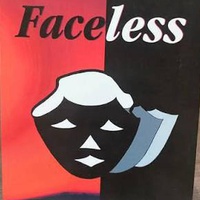
FACELESS: THE PEOPLE WE DON'T SEE

<p style="text-align: justify; ">There are people we pass every day without really seeing.</p><p style="text-align: justify; "><br/></p><p style="text-align: justify; ">We see them on the roadside, at the bus stop, around the market, under bridges, sometimes sitting quietly while the rest of the world moves around them.</p><p style="text-align: justify; "><br/></p><p style="text-align: justify; ">We get used to their presence.</p><p style="text-align: justify; "><br/></p><p style="text-align: justify; ">Maybe that is one of the things that makes Faceless by Amma Darko uncomfortable.</p><p style="text-align: justify; "><br/></p><p style="text-align: justify; ">The book takes us into the streets of Accra and introduces us to children whose lives have been shaped by poverty, neglect, broken homes, abuse and the simple struggle to survive. At the centre of it all is Fofo, a young girl whose life has taken her far away from the kind of childhood most children should know.</p><p style="text-align: justify; "><br/></p><p style="text-align: justify; ">But while reading, I kept thinking about something bigger than the characters.</p><p style="text-align: justify; "><br/></p><p style="text-align: justify; ">How did we become so comfortable with people suffering in front of us?</p><p style="text-align: justify; "><br/></p><p style="text-align: justify; ">A child can disappear from school and nobody asks enough questions.</p><p style="text-align: justify; "><br/></p><p style="text-align: justify; ">A young person can sleep on the street and we call it their fate.</p><p style="text-align: justify; "><br/></p><p style="text-align: justify; ">Someone can grow up surrounded by hardship and, instead of asking what happened, we simply say, “That is how life is.”</p><p style="text-align: justify; "><br/></p><p style="text-align: justify; ">Maybe that is the real danger.</p><p style="text-align: justify; "><br/></p><p style="text-align: justify; ">Not poverty alone.</p><p style="text-align: justify; "><br/></p><p style="text-align: justify; ">Not broken families alone.</p><p style="text-align: justify; "><br/></p><p style="text-align: justify; ">But the moment suffering becomes ordinary.</p><p style="text-align: justify; "><br/></p><p style="text-align: justify; ">Faceless does not allow that ordinary feeling to remain completely comfortable. It puts faces behind the things we usually reduce to statistics, rumours or passing conversations.</p><p style="text-align: justify; "><br/></p><p style="text-align: justify; ">And those faces have stories.</p><p style="text-align: justify; "><br/></p><p style="text-align: justify; ">Some stories begin inside the home.</p><p style="text-align: justify; "><br/></p><p style="text-align: justify; ">Some begin with poverty.</p><p style="text-align: justify; "><br/></p><p style="text-align: justify; ">Some begin with decisions made by adults.</p><p style="text-align: justify; "><br/></p><p style="text-align: justify; ">Some begin with children having to become adults before they are ready.</p><p style="text-align: justify; "><br/></p><p style="text-align: justify; ">And some are simply the result of people looking away for too long.</p><p style="text-align: justify; "><br/></p><p style="text-align: justify; ">We often talk about changing society as if society is somewhere far away from us.</p><p style="text-align: justify; "><br/></p><p style="text-align: justify; ">But society is made from ordinary people.</p><p style="text-align: justify; "><br/></p><p style="text-align: justify; ">The parent.</p><p style="text-align: justify; "><br/></p><p style="text-align: justify; ">The neighbour.</p><p style="text-align: justify; "><br/></p><p style="text-align: justify; ">The teacher.</p><p style="text-align: justify; "><br/></p><p style="text-align: justify; ">The friend.</p><p style="text-align: justify; "><br/></p><p style="text-align: justify; ">The person selling by the roadside.</p><p style="text-align: justify; "><br/></p><p style="text-align: justify; ">The person walking past.</p><p style="text-align: justify; "><br/></p><p style="text-align: justify; ">Even the person who says, “It doesn't concern me.”</p><p style="text-align: justify; "><br/></p><p style="text-align: justify; ">Maybe improvement begins when we stop asking only, “What is wrong with these people?”</p><p style="text-align: justify; "><br/></p><p style="text-align: justify; ">And start asking, <strong>“What happened to them?”</strong></p><p style="text-align: justify; "><br/></p><p style="text-align: justify; ">There is still much more to the story of Faceless.</p><p style="text-align: justify; "><br/></p><p style="text-align: justify; ">For now, I only want to leave the door slightly open.</p><p style="text-align: justify; "><br/></p><p style="text-align: justify; ">Because sometimes, before we listen to what happened to someone, we need to understand the kind of world they were living in.</p><p style="text-align: justify; "><br/></p><p style="text-align: justify; ">And perhaps that is where we should begin.</p>


 43
43


Other insights from Mu Chen





Contributor Points

Points-to-Coupons

Referral Earning

Insights for you.


Gen Z, Are We.... Hungry?
If aliens were to read our texts, they'd think Gen Z are in a perpetual state of starva...
596 views
59 upvotes
68 comments



The Gender War.
I was doomscrolling yesterday.I hardly do that, but for some reason, I chose that and s...
196 views
54 upvotes
67 comments

In Her Likeness.
I hail from the southwestern part of Nigeria, and oftentimes, when I walk through the n...
168 views
48 upvotes
55 comments

The Yahoo Culture.
Let's talk about the Yahoo CultureSomething that is gradually becoming a norm.And every...
177 views
49 upvotes
60 comments


Dear Dad
Dear dad,It's been 7 years, 3 months and 1 day and your name still echoes in my brain.W...
289 views
48 upvotes
44 comments

Curiosity or Clout?
Omooo I have a bad habit. 😭Whenever something starts trending in Nigeria, I click on it...
221 views
36 upvotes
48 comments