


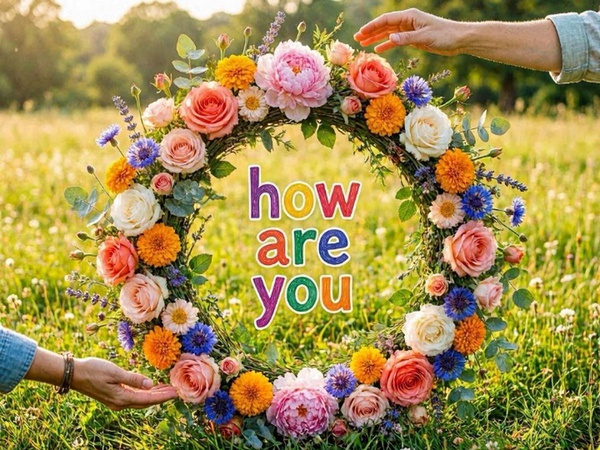
How are you?
It sounds like such a simple, everyday question.
A casual pleasantry we exchange without much thought. We've come to expect the standard replies: "Fine," "Good," or "Very well, thank you."
Because of this, we often don't even wait for a real answer. We already presume it will be "fine."
I remember first learning the phrase in primary school. I didn't truly understand it — I just heard everyone using it, and noticed the usual response was always "fine."
As a curious child eager to expand my vocabulary, I adopted it too. I said it almost every day.
Then came a difficult emotional phase in my life.
Someone asked, "How are you?" Out of habit, I sharply replied, "I'm very well, thank you."
But inside, I immediately questioned myself. Was that really true?
What else could I have said? "Not fine"? Would that even register with someone who was barely waiting for my response?
That moment taught me the hidden weight of this seemingly ordinary sentence .
What if I told you that this phrase, so often reduced to a meaningless pleasantry, is actually far deeper than it appears?
What if I told you that a genuine "How are you?" could help reduce suicide rates?
What if I told you it can matter as much as therapy?
What if I told you that it works better than anti depressants?
What if I told you that, when asked with real care, "How are you?" carries more emotional weight than "I love you"?
Would you believe me? Would you argue?
How are you? should not be marginalised as mere small talk.
When used sincerely, it holds pure affection and profound emotional depth.
To the one who silently carries everyone else's burdens, while having no one to share their own with —
how are you?
To the softest hearts living inside the toughest shells —
how are you?
Don't rush your reply. Take a deep breath.
Do a real emotional and mental check-in before answering.
In French, it's Ça va? In German, Wie geht's? No matter the language, the intention remains the same.
Check in on the people around you.
Be the reason someone feels seen.
Be the reason we see fewer lives lost to despair.
How are you? (Truly.)



 284