What if I told you that there’s actually nothing that is truly good or bad…
That everything you believe about right and wrong might just be something you were taught… and accepted without question?
Sounds wrong, right?
Maybe it is..
Or maybe… it’s just uncomfortable.
Let’s look into it more closely
What exactly is good? And what is bad?
According to the dictionary:
Good is what is considered morally right, beneficial, or desirable.
To do good is to act in a way that brings positive outcomes.
On the other hand:
Bad is what is considered morally wrong, harmful, or undesirable.
To do bad is to act in a way that leads to negative consequences.
Simple enough.
But here’s where it starts to get interesting.
The only thing consistent about good and bad… is the definition.
Outside of that, everything becomes unstable.
Because in reality, good and bad are not fixed; they shift.
They bend or change depending on who is looking.
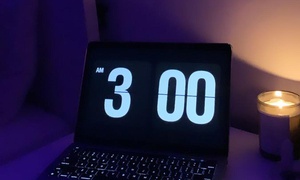
Take something as simple as sleep.
You’re told sleeping 8 hours a day is 'good' important, healthy, necessary.
But look at it differently: 8 hours every day is a third of your life gone. Years lost to unconsciousness.
Now tell me… is that still good?
Or have you just been trained to accept it as good?
Let’s go further.
Stealing is bad.
That’s what everyone has been made to believe.
But what about a situation where stealing actually saves a life?
Hunger doesn’t care about morality.
Desperation doesn’t wait for permission.
So when survival is on the line… what exactly is that act?
What do we call it then; good stealing?
Or something else entirely?
And that’s the problem.
The moment you start questioning it, the lines begin to blur.
What you call good, someone else might call foolish.
What you call bad, someone else might call necessary.
Environment shapes it.
Experience shapes it.
Sometimes even power shapes it.
So when you say something is good… is it truly good?
Or is it just what you’ve been conditioned to believe?
If I really wanted to, I could take almost anything you label as “bad” and show you a version of it that leads to something positive.
And if you’re not careful, you’ll start to realize how fragile your certainty is.
The unsettling part is this:
Most people don’t actually know why they believe something is good or bad.
They just do.
It reminds me of those moments when my mom would tell me not to do something, and when I asked why, she’d simply say, “It’s not good,” and shut down any further questions.
It just didn't feel right to not do something because sometimes or set of people concluded it is bad.
Some people will point to laws.
Some will point to morals.
Others point to culture.
But laws, morals, and culture are not absolute truth; they are agreements.
Systems created by people to guide behavior and maintain order.
And even these doesn't necessarily mean it's good or whatever.
I even asked AI:
“Why is something good or bad?”
And the simplest answer comes down to this:
Things are judged based on impact, intent, and context.
Not a fixed rule or something absolute.
So where does that leave us?
Maybe there is no clear good or bad.
Maybe there are only perspectives… shaped by need, fear, survival, and control.
Maybe what you call “good” is just what benefits you.
And what you call “bad” is simply what threatens you.
Or maybe…
There was never a clear line to begin with.
My conclusion is Just Do You; leave this biased talks for people trying to make themselves feel better.
I might be wrong though.
But if I am…
Then answer this:
What truly makes something good or bad?
Drop your thoughts.
Convince me.
P.S: Not a negative person, just a logical human.


 257