Score |
1286


Stargirl.

 Student and freelancer. @ Adekunle Ajasin University Akungba Akoko
Student and freelancer. @ Adekunle Ajasin University Akungba Akoko



Lace Mouth.
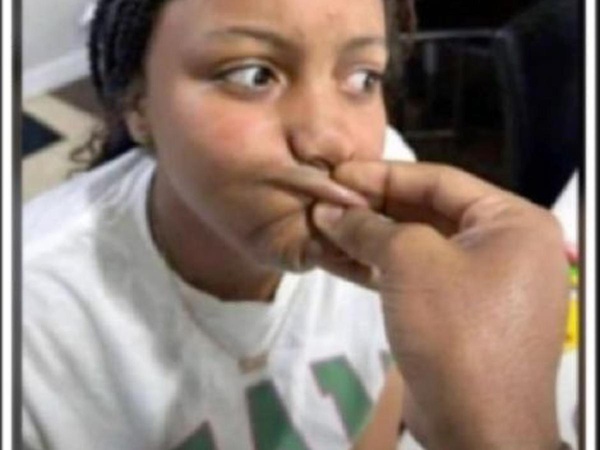
<p>Dola's mouth was burnt with a lace fabric; hence, words spilled out sometimes without restraint.</p><p><br/></p><p>At least, that was the explanation her mother gave whenever Dola's mouth carried her into trouble, which was often enough for the entire neighbourhood to believe that the poor girl had suffered some terrible lace-related accident that left her lips with tiny holes through which words escaped whenever they pleased. Dola herself believed this story because it was much easier to blame lace than to admit that she simply enjoyed talking.</p><p><br/></p><p>Dola could talk anywhere, anyhow and to almost anybody.</p><p><br/></p><p>She talked in the bus, where she would sit beside complete strangers and, before the conductor had finished shouting the destination, already know where they were going, why they were going there and whether the person they were going to meet was worth the journey. She talked in church, at weddings, in the market, during examinations and, on one particularly unfortunate occasion, at a funeral, where she leaned towards the woman beside her and whispered that the woman's lace blouse looked exactly like the one she had worn to the deceased's birthday celebration three years earlier.</p><p><br/></p><p>When the woman turned to stare at her, Dola smiled politely and added, “I am only saying.”</p><p><br/></p><p>“I am only saying” was Dola's favourite escape route, although everybody knew that whenever she said it, something had already gone terribly wrong.</p><p><br/></p><p>Her mother had tried reasoning with her, threatening her, praying over her and, eventually, pretending not to know her in public. None of it worked. Dola's mouth appeared to have a mind of its own, and the more inappropriate the occasion, the more urgently it seemed to require an audience.</p><p><br/></p><p>Then, one afternoon at school, Dola heard two girls whispering about their teacher, and although she knew perfectly well that the conversation had nothing to do with her, the words sat in her ears like a pot of hot stew placed directly in front of a hungry person. She tried to ignore them, but by break time she had repeated the story to three people, improved it with details nobody had supplied and somehow turned a small piece of gossip into a matter serious enough to summon the teacher.</p><p><br/></p><p>By the time Dola's mother arrived at school, the teacher was angry, the girls were crying and Dola was standing in the middle of the office with the unusual expression of someone whose mouth had finally outrun her good sense.</p><p><br/></p><p>For once, she did not have an explanation.</p><p><br/></p><p>She looked at the girls and realised that what she had treated as harmless entertainment had been somebody else's embarrassment, somebody else's secret and somebody else's trust, all of which she had carried around in her mouth until she found an audience large enough to spit them into.</p><p><br/></p><p>That evening, Dola went home so quietly that her mother became suspicious.</p><p><br/></p><p>“Are you sick?” she asked.</p><p><br/></p><p>Dola shook her head.</p><p><br/></p><p>“Did somebody beat you?”</p><p><br/></p><p>Another shake.</p><p><br/></p><p>Her mother stared at her for a long moment before asking, with genuine concern, “Then what happened to your mouth?”</p><p><br/></p><p>Dola almost answered.</p><p><br/></p><p>Almost.</p><p><br/></p><p>Instead, she smiled.</p><p><br/></p><p>It was the beginning of the longest silence she had ever attempted.</p><p><br/></p><p>It was not easy. The first day, she lasted barely fifteen minutes before she nearly told a woman at the bus stop that her wig was sitting too far backwards. The second day, she swallowed an entire observation about the neighbour's new boyfriend. By the third week, however, Dola had discovered that not every thought deserved a journey from her brain to her tongue.</p><p><br/></p><p>She began keeping things to herself, especially the things that had been entrusted to her, and whenever gossip came knocking, she learnt to leave the door firmly shut.</p><p><br/></p><p>Little by little, the imaginary holes in her mouth began to mend.</p><p><br/></p><p>The lace had not healed them.</p><p><br/></p><p>Time had not healed them.</p><p><br/></p><p>It was Dola herself who did.</p><p><br/></p><p>She discovered that having something to say was not the same as needing to say it, and that sometimes the most powerful thing a person could do with words was to keep them safely behind her teeth.</p><p><br/></p><p>Of course, Dola did not become completely quiet.</p><p><br/></p><p>Nobody expected a miracle of that magnitude.</p><p><br/></p><p>She still talked too much at weddings, still had opinions about everybody's cooking and still occasionally forgot herself and began telling a story that nobody had asked to hear.</p><p><br/></p><p>But now, before the words escaped, Dola would pause, touch her lips and remember the little holes that once lived there.</p><p><br/></p><p>Then she would ask herself the question that had finally saved her mouth:</p><p><br/></p><p>“Does this really need to come out?”</p>


 170
170





Other insights from Stargirl.











Contributor Points

Points-to-Coupons

Referral Earning

Insights for you.


All that I gave
Oh, hey there!It's me... again...You know, There's so much I want to saySo much I want ...
561 views
94 upvotes
94 comments




The Root of Evil.🌚
I like money.But they said it's the root of evil. 🙂Sorry, get your facts straight.The l...
285 views
77 upvotes
87 comments

The Manipulation.
"Mom started looking at me differently from that day.I remember it like the back of my ...
289 views
75 upvotes
90 comments




The 3AM World.
My favourite time of every day is between 1 a.m. and 4a.m.That's when the world is the ...
253 views
67 upvotes
72 comments

Drowning.
I can't breathe.I tried again.Nothing.My lungs burned.The water surrounded me, cold and...
254 views
61 upvotes
72 comments

Eden.
I came to this house very young, with one other.We were accepted so warmly.Everyone lov...
233 views
56 upvotes
66 comments