January 16, 1970.
It was a Friday, if memory serves.
Nobody believed Ikemefuna.
It had been three years. To come back and tell us it was over didn't just make sense.
It must be one of his usual jokes. Youthful exuberance.
It didn't land well today.
But you could see in his mien he was telling the truth.
We scolded him anyways.
Classic Igbo adults.
We would hear the news later that night on the radio.
The war was over.
You could feel the joy coming from our broken down shacks.
Rejuvenation. Revelry. Relief.
That was when Amaka approached me.
" Ozoemena. Ozoemena. Your own is getting too much. Now that the war is finally over, you sit here looking dejected. Instead of you to jolly with us. Hian!"
She walked away, visibly disgusted.
Not even looking back once.
She just didn't understand.
January, 2026.
It's 1:03. In the morning.
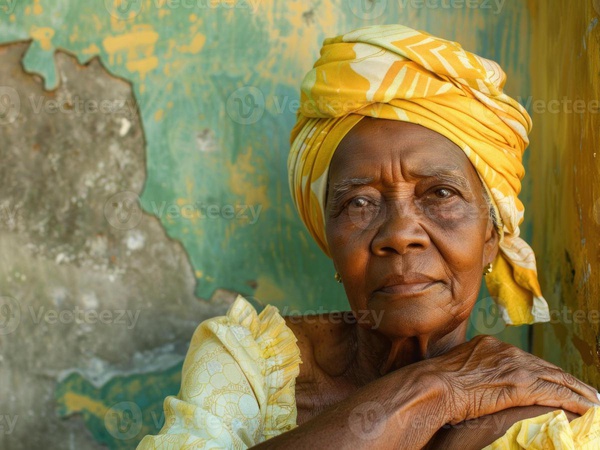
You would agree with me that it is very uncommon to find a woman in her late eighties awake at this time.
Especially in a graveyard.
The undertaker knows me now.
He thinks I'm crazy. He told me so once.
The memory makes me chuckle.
But I'm not here for him.
I'm here for them.
To listen to their rhythm, their sound, their song.
I've done it for what? Fifty years?
What?
You'll join me today?
Lean in.
Listen.
This is my husband's grave.
His name is Madu.
I am the dust beneath your passing boot.
The silent name upon a granite wall.
I don't wish to hear the Oja flute.
Nor do I care for medals that recall
The day I stepped into bullet fire
And traded youth for ash and mire.
I watched my Biafrans vanish one by one.
Their laughter eaten by gun muzzle screams.
We left our daughters, wives, first son
To be greeted by morning from a broken dream.
What scared us? The torture? The bloodshed? The pain?
Or the thought that we'd never see family again?
My waterloo came with a reminiscence.
A sudden bang, a tearing in my vest.
Asking myself: was it folly or sense?
I feel the hands touching my forced-open chest.
I sense my essence slip into the clay.
I see you one more time, then all fades away.
Ozoemena.
Won't you forgive me?
I admit my mistakes.
Obim, I was wrong.
Come.
Sing with me.
What?
You don't like the song?
I guessed so.
You young people like modern beats.
I hear you.
Listen.
Do you hear it?
The melodic beats and the fast rhythm?
I know you will like it.
This is my daughter.
My only child.
My joy in sorrow.
Meet Ada.
My days were bright before the borders broke,
Laughter echoed through our garden wall.
Secure behind gates and doors of oak.
I never thought I'd see my nation fall.
But war claims every familiar space.
Erasing harmony without a trace.
Can you relate?
The iron boots trampled down the oak door,
Their eyes harder than Oke Nkume stone.
They pinned my fragile youth against the floor,
Turning my home into a military zone.
They took my force what was never their prize.
Similar pain I see in my mother's eyes.
While the harmony of dane guns filled the skies.
The agony was more than life could bear.
My life retreated from the battlefield.
A final breath, a silent prayer,
To fly to the place where broken souls are healed.
So from blood and flesh my spirit flew.
Away from the cruelty the living do.
Into the clouds and the heavens blue.
It's 2:00 a.m now.
The undertaker tells me I've overstayed my welcome.
I thank him.
But does he understand?
August,2026.
The rhythm of the monitor is slow.
Tired, shallow, ready to go.
My fingers, like Ogirisi on the white bed,
Keep tracings of the long life that I've led.
The daughter I grieved, the husband I mourned.
The quiet and simple songs that have gone.
Doctor sees a thin frame of ninety years.
They don't see the history of tears and fears.
See my strong husband , see my daughter young.
See all the lyrics of their satire song.
See the cruel world that held me back so long.
See as it fades like a cool jazz song.
A final peace has settled inside the room.
I see on the nurses the picture of gloom.
Come Madu, Come Ada, I hope you'll remember.
This is my own part.
Let's all sing together.
You should understand.



 111