Score |
103


Phil Leonard
 Relation Manager and Corporate Sales for Health Insurance @ HMO
Relation Manager and Corporate Sales for Health Insurance @ HMO



Man's Heart (Author's note)
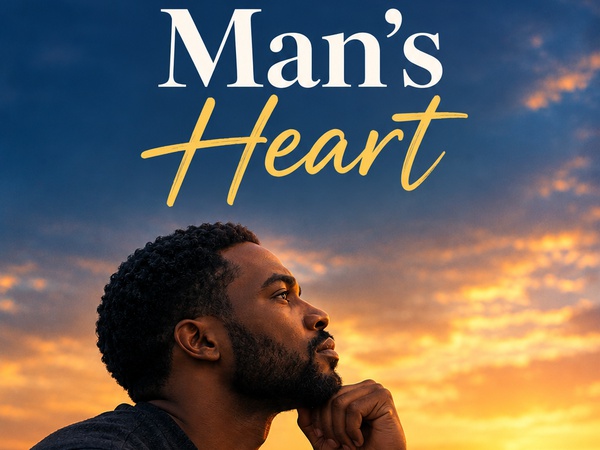
<p><img alt="" src="/media/inline_insight_image/Untitled_-_15_August_2026_at_18.55.23.png"/></p><p><br/><h1><strong>Author's Note</strong></h1>I didn’t set out to write a poem about anatomy. I set out to write about the thing inside a man that decides who he becomes — and somewhere along the way, "heart" was the only word that fit both the muscle and the mystery.</p><p>I’ve always been fascinated by how little control we actually have over our own hearts, even as we treat them like a compass. We speak of following our hearts as though the heart were a wise elder, patiently pointing us toward the right door. But in my experience, the heart is closer to a loaded spring. It doesn’t just guide — it triggers. It reacts before it reasons. Half of what I’ve said in anger, half of what I’ve done in grief, came from that place before my mind had a chance to weigh in. That’s the tension I wanted to sit inside when I wrote this poem: <em>the heart as both the source of a man’s intent and the source of his undoing.</em></p><p>There’s a phrase I use in the poem — <em>that the heart is fragile and insoluble at once</em>. I chose those two words deliberately, because they don’t usually belong together. Fragile things are supposed to be simple; insoluble things are supposed to be sturdy enough to resist being broken down. But the heart is both. It cracks easily and yet refuses to be solved, no matter how many years a man spends trying to understand his own impulses. I wanted the poem to sit with that contradiction rather than resolve it, because I don’t think it resolves in real life either.</p><p>The middle of the poem turns toward pain and violence, toward numbness. That wasn’t an abstract choice. Most of the people I’ve known — myself included — carry some version of a heart that has been hurt enough times that it starts protecting itself by going quiet. We call it being "numb," but I think it’s really the heart trying to survive its own history. The trouble is that a numbed heart doesn’t stop driving action; it just drives it blindly. That’s what I mean when I call it a "<em>fickle object</em>" — not fickle in the sense of romance, but fickle in the sense that you can never quite predict which version of it will show up on a given day: the guide, or the trigger.</p><p>I ended the poem the way I did — with confusion deepening the more a man tries to understand — because I wanted to resist the tidy ending. So many poems about the heart arrive at some hard-won clarity by the final stanza. Mine doesn’t, because mine isn’t true if it does. The longer I’ve lived with my own heart, the less I’ve figured it out. Every year adds a new layer of "mystification" rather than peeling one away. I used to think that was a failure of insight on my part. Now I think it might just be what a heart is — not a puzzle with a solution, but a weather system a man learns to live inside.</p><p>If there’s anything I hope readers take from "Man’s Heart," it’s permission to stop expecting their own hearts to make sense. Mine hasn’t, not fully, not yet. I’ve come to believe that’s not a problem to be solved so much as a condition to be honest about — and that honesty, more than any answer, is what I was really after when I sat down to write this.</p><p><br/></p>


 10
10


Other insights from Phil Leonard




Referral Earning

Points-to-Coupons

Insights for you.


Silence: The things we don't say.🥺
I walked out of my house, shutting the door behind me, and moved to the terrace.I neede...
194 views
58 upvotes
62 comments
Suicide: The Permanent Solution.
“Did you regret it?”“You know…”I hesitated.“What happened?”A heavy sigh was the first r...
191 views
49 upvotes
51 comments

2 a.m.
Maybe it's all the nights I spent not sleepingOr all the days I sat thinkingOf how I've...
208 views
46 upvotes
44 comments
Yours in the Empty
Losing a father is one thing,Losing a best friend is another.Losing the "head" is one t...
369 views
56 upvotes
41 comments

I’m Skinny, and So What?
What if I told you that I have cried more over my own arms than over any guy who has ev...
183 views
46 upvotes
48 comments


One step forward, Three steps back
I'm tired...But not for the reason you're thinking How much more must life take?How muc...
404 views
49 upvotes
38 comments


After Alhaji
"Kai, yarinyar nan ta yi sa'a ƙwarai.""Wallahi. Alhaji Ibrahim da kansa zai aura ta.""T...
237 views
34 upvotes
41 comments

HARBINGER
HARBINGERWhere have I come to catch you? In your room? At your workplace? In school? Wh...
86 views
39 upvotes
40 comments

A Passing Thought
Literally didn't even know it,How could I miss it when it was always right in front of ...
344 views
60 upvotes
27 comments