Score |
60


Nonso Obi
 Student @ Nnamdi Azikiwe University,Awka.



MR SMILE.
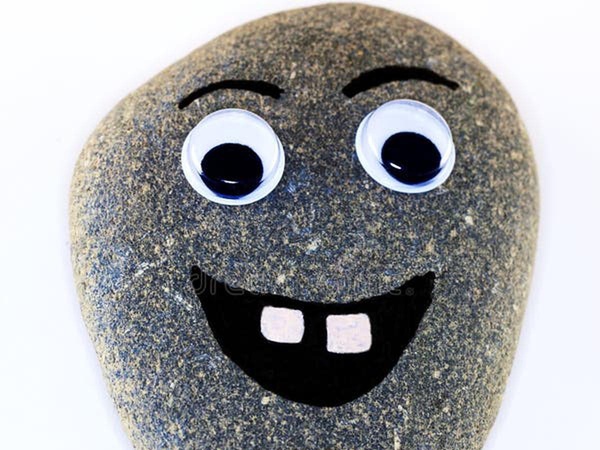
<p><br/></p><p>They set down their mics, tripods, and everything else journalists needed to document a haunted hut.</p><p><br/></p><p>Ade and Amara were ready, or at least they had convinced themselves they were. According to local myth, the hut had been abandoned for longer than anyone could remember. Long before Oduduwa made Ile-Ife. Long before Eri was sent down to earth.</p><p><span style="background-color: transparent;"><br/></span></p><p><span style="background-color: transparent;">“This is going to be enough,” Amara said, though her voice carried the uncertainty of a prayer spoken into darkness.</span></p><p><span style="background-color: transparent;">“You dey sure?” Ade asked.</span></p><p><span style="background-color: transparent;">“I dey sure, Ade.”</span></p><p><span style="background-color: transparent;"><br/></span></p><p><span style="background-color: transparent;">He raised the microphone and began recording. His voice assumed that practiced cadence of broadcast, steady and deliberate, wearing authority like a borrowed coat.</span></p><p><span style="background-color: transparent;">“Now, we're inside the oldest hut known in Nigeria. According to myth, this hut housed gods and goddesses, from Sango to Ali, whenever they visited the earth. Its interior is said to be bigger than its exterior.”</span></p><p><span style="background-color: transparent;">“I think we should go inside,” Amara said.</span></p><p><span style="background-color: transparent;">Ade glanced at her.</span></p><p><span style="background-color: transparent;">“We're already inside.”</span><span style="background-color: transparent;"></span></p><p><span style="background-color: transparent;">She laughed, and for a moment the darkness seemed less threatening.</span></p><p><br/></p><p>The hut was smaller than they had imagined. Its walls were bare mud, its floor uneven, its roof darkened by age. There were no endless corridors, no impossible chambers, no evidence that the space had swallowed centuries without growing old. It was just a hut, small enough for a family to live in, with the exception of the objects hanging along its walls.</p><p><br/></p><p>They were strange things, fashioned into little boxes with golden faces and googly eyes. Their surfaces caught the light, and the eyes seemed to shift whenever the journalists moved. Some were cracked. Others appeared untouched by time. They hung in rows, watching the visitors with the cheerful, vacant expressions of toys abandoned in a place where children had long since ceased to exist.</p><p><br/></p><p>“It's empty,” Ade said.</p><p><span style="background-color: transparent;"><br/></span></p><p><span style="background-color: transparent;">“Well, I wouldn't say it's empty,” Amara replied. “Wetin be these things wey hang for wall? We've visited several local village huts, and this seems to be the only one that has them.”</span></p><p><br/></p><p>Ade examined the objects. He had expected something he could explain to an audience, something that would make the viewers stay until the end of the report. Instead, he had found a collection of peculiar boxes in an abandoned hut. He could already imagine the comments beneath the video.</p><p><br/></p><p>Still, the objects were beautiful in their own unsettling way. Their gold faces reflected the light from his camera, and the googly eyes gave them an absurd innocence that seemed misplaced in a structure older than the stories people told about it. <span style="background-color: transparent;">They began removing them from the walls.</span></p><p><br/></p><p>Perhaps they would take the artifacts to the authorities, have them examined, and return them to their original location. That was what they told themselves. But as each object came down, they imagined something else: their names in newspapers, their discovery discussed in lecture halls, their faces appearing on television. They had come looking for a mystery and found something that might make them important. <span style="background-color: transparent;">It was easy to mistake discovery for permission.</span></p><p><span style="background-color: transparent;"><br/></span></p><p><span style="background-color: transparent;">By the time they finished, the walls looked naked. They packed the artifacts into a bag, gathered their equipment, and left the hut behind. Outside, their cameraman, Jude, was waiting beside the car. He had never liked these trips into eerie, godforsaken villages, where the roads forgot themselves and the air seemed to preserve secrets that had outlived the people who kept them. He preferred the city, where there was always noise, always movement, always something to distract a person from whatever waited inside his own head.</span></p><p><br/></p><p>“You people don finish?” he asked as they approached. </p><p><span style="background-color: transparent;">“Jude, you should have seen the things inside,” Amara said. “We found artifacts. Real artifacts.”</span></p><p><span style="background-color: transparent;">Ade opened the boot and placed the bag inside.</span></p><p><span style="background-color: transparent;">Jude looked at the bag for a little longer than necessary.</span></p><p><span style="background-color: transparent;">“Okay,” he said.</span></p><p><span style="background-color: transparent;">On the journey home, he sat quietly in the back seat, watching the trees pass. Ade and Amara discussed the report they would prepare and the interviews they might give. They spoke about museums, historians, and the possibility that their discovery could become one of the most remarkable stories of their careers. Jude listened without joining the conversation. There were things he had wanted from life, too, once. He could not remember when he had stopped believing that wanting them was enough.</span></p><p><br/></p><p>At home, Ade and Amara unpacked the artifacts and spread them across the table. Under the electric light, the golden faces seemed brighter, their googly eyes more animated. They looked ridiculous. They looked ancient. They looked like something a child might have made if a child had been given a thousand years and no one to play with. </p><p><span style="background-color: transparent;">“These are golden,” Amara said.</span></p><p><span style="background-color: transparent;"><br/></span></p><p><span style="background-color: transparent;">Ade picked one up and turned it over in his hands. He wondered what stories the objects might contain, who had made them, and why anyone would abandon something so strange. Then he imagined the questions a reporter might ask him on live television, and the other questions he would be unable to answer. He put the object down carefully.</span></p><p><span style="background-color: transparent;"><br/></span></p><p><span style="background-color: transparent;">“We need to make sure we do this properly,” he said.</span></p><p><br/></p><p>Amara nodded. She wanted the discovery to mean something beyond the attention it would bring them. She had grown up hearing stories about things taken from their rightful places and displayed elsewhere, their histories rewritten by people who had never known the hands that made them. She did not want their discovery to become another such story. Yet she had already imagined seeing the artifacts behind glass in a museum, with a plaque bearing their names. <span style="background-color: transparent;">Good intentions, she was beginning to understand, did not always prevent a person from becoming part of the problem.</span></p><p><br/></p><p>Jude returned to the table after the couple had gone upstairs. He stood over the objects for several minutes, studying their little golden faces. Their eyes followed him, or so it seemed. He picked one up, turned it over, and ran his thumb across its surface. It was cold.</p><p><span style="background-color: transparent;"><br/></span></p><p><span style="background-color: transparent;">He remembered the arguments. Ade telling him he could not continue living the way he did. Amara asking him to slow down, to stop taking so much, to understand that they were worried about him. He remembered the way their voices changed when they spoke to him, the carefulness, the pauses, the looks exchanged when they thought he was not watching. </span><span style="background-color: transparent;">They called it concern. He had begun to hear contempt.</span></p><p><br/></p><p>There were days when the world felt like a room from which every door had been removed. He had tried to escape it through drugs, through sleep, through the promise that somewhere beyond the ordinary there was a place where he could feel something other than the weight of being himself. The relief never lasted. The money disappeared. The arguments returned. And the world continued to demand that he become someone he could no longer imagine being. </p><p><span style="background-color: transparent;"><br/></span></p><p><span style="background-color: transparent;">He had wanted his sister to understand. He had wanted Ade to stop looking at him as if he were a problem that could be solved with enough patience. Most of all, he had wanted to feel that something in his life belonged to him.</span></p><p><br/></p><p>Now, on the table before him, were objects that had survived generations. They had been hanging in a place no one visited, waiting for someone to discover them. Ade and Amara intended to hand them over to the authorities in the morning. Soon they would belong to a museum, or an archive, or some institution whose name Jude could not remember. They would be catalogued, photographed, and placed behind glass. People would travel to see them. Their discoverers would be celebrated.</p><p><br/></p><p>Jude looked down at the artifact in his hand. <span style="background-color: transparent;">He wondered what it meant to own something, and what it meant to have everything taken away.</span></p><p><br/></p><p>The night before the artifacts were to be handed over, Jude opened the bag again. He had told himself he only wanted to look at them, to understand what had so fascinated his sister and her husband. But the longer he sat with them, the less he could bear the thought of their departure. <span style="background-color: transparent;">The little golden faces stared up at him. Their googly eyes shifted in the dim light, rolling toward him with every movement. He knew it was only the light. He knew objects could not watch people. Yet the knowledge offered no comfort. </span><span style="background-color: transparent;">He had seen them before, he thought. Not these particular objects, perhaps, but their faces. Their eyes. The expression that seemed to say they knew something he did not.</span></p><p><br/></p><p>He could not remember when the thought had first entered his mind. It might have been in the hut. It might have begun in the car, or during one of the nights when sleep refused to come. He remembered the drugs, the strange sensations, the feeling that the world had opened a door and invited him to step through. He remembered waking with the certainty that someone had been standing beside his bed. <span style="background-color: transparent;">The artifacts were not ordinary things. He was certain of it now. </span><span style="background-color: transparent;">They were his.</span></p><p><br/></p><p>He would not let anyone take them away. <span style="background-color: transparent;">That night, while Ade and Amara slept upstairs, Jude sat alone with the artifacts. He listened to the house, to the distant sounds of the city, to the silence between one sound and the next. Somewhere in his mind, a thought began to repeat itself. They would take the artifacts. They would take the only things that had ever made him feel that he had discovered something beyond the miserable limits of his life.</span></p><p><br/></p><p>He went into the kitchen and picked up a knife.</p><p><br/></p><p>The blade caught the moonlight and held it, a small, silver smile. <span style="background-color: transparent;">Ade had gone downstairs for a glass of water when he heard the noise. At first, he thought Jude was still awake and searching for something in the kitchen. He called his name, but received no answer. He followed the sound into the sitting room.</span></p><p><span style="background-color: transparent;"><br/></span></p><p><span style="background-color: transparent;">Jude stood beside the table, the knife in his hand. The artifacts lay scattered before him, their golden faces reflecting the moonlight through the windows. Their googly eyes stared in every direction, cheerful and vacant. For a moment, Ade thought his friend had been crying.</span></p><p><span style="background-color: transparent;">“Jude, wetin dey happen?”</span></p><p><span style="background-color: transparent;">Jude turned toward him. His expression was strangely calm.</span></p><p><span style="background-color: transparent;">“They're not going anywhere,” he said.</span></p><p><span style="background-color: transparent;">Ade glanced at the knife, then at the artifacts.</span></p><p><span style="background-color: transparent;">“Put that thing down. Wetin be all this?”</span></p><p><span style="background-color: transparent;">“They're mine.”</span></p><p><span style="background-color: transparent;">“Jude, listen to me. Nobody is taking anything from you. We just need to—”</span></p><p><span style="background-color: transparent;">Jude lunged.</span></p><p><br/></p><p>The blade caught Ade in the throat. His words became a wet, incomprehensible sound. He reached for Jude, then for the air, as if he could find something to hold on to. Blood spread across his shirt and spilled onto the floor. He fell beside the table, his body suddenly heavy and unfamiliar. <span style="background-color: transparent;">Jude watched him die.</span></p><p><br/></p><p>For a moment, the room was silent. Then he looked down at the artifacts. Blood had reached their golden surfaces, darkening the spaces around their eyes. The little faces seemed different now, though Jude could not have explained how. He believed they were watching him. He believed they had wanted this. The thought settled over him with the comfort of an answer. <span style="background-color: transparent;">He smiled.</span></p><p><br/></p><p>Then he went upstairs with the knife.</p><p><span style="background-color: transparent;">Amara woke to the sound of her brother's voice. She called out, asking what was wrong, but Jude did not answer her question. He told her she had betrayed him. She tried to speak to him, to remind him of who they were, of the years they had shared, of the times she had stood beside him when no one else would. He would not listen.</span></p><p><span style="background-color: transparent;"><br/></span></p><p><span style="background-color: transparent;">According to the account later given to the authorities, he stabbed her in the stomach and dismembered her that night. By morning, the bed had become a scene of terrible violence, and the room held the remains of a family that had not understood how close it was to its own destruction.</span></p><p><span style="background-color: transparent;">“She betrayed me,” Jude said afterward. “She had betrayed me.”</span></p><p><br/></p><p>He repeated the words as if repetition could make them true, as if a sentence spoken often enough might become a reason.</p><p><br/></p><p>The authorities arrived early in the morning. The sun rose over the city, golden and indifferent, touching rooftops and windows as though nothing had happened during the night.</p><p><br/></p><p>Inside the house, they found two dead bodies. Jude sat close to the artifacts, the little golden boxes with their googly eyes scattered around him. A tube of superglue lay beside the objects. His hands were stained, and his expression was one of terrible concentration. He looked less like a man who had committed a crime than a child who had been caught doing something he could not explain. <span style="background-color: transparent;">He had called the police himself.</span></p><p><br/></p><p>When they questioned him, he told them about the hut, the artifacts, and the voices he believed had come from them. He said they had possessed him. He said he had done what they told him to do. He spoke of their eyes, their golden faces, and the things they had promised him. His account moved between certainty and confusion, and whenever the officers asked him why he had killed his sister and her husband, he returned to the artifacts.</p><p><br/></p><p>The authorities found another explanation. There had been arguments about the drugs he took, about the money he spent, about the way he had begun to behave. Neighbours had heard him insist that he needed the drugs to stay high, to feel something, to visit places beyond the world he knew. Ade had warned him to reduce his consumption. Amara had tried to help him. Neither had understood how far he had withdrawn into himself, or how little of the person they loved they could still reach.</p><p><br/></p><p>The officers did not believe his story about the artifacts. They collected the objects and took them away for examination. The hut was left behind, its walls bare, its history no clearer than before. Whatever the artifacts meant, their ownership would now be decided elsewhere.</p><p><br/></p><p>Jude was detained.</p><p><br/></p><p>He was a communication student, a man who had once loved smiling and talking to people. He had imagined a future in which his voice would carry beyond the rooms he occupied, in which he might tell stories that mattered. Now, whenever someone asked him what had happened to his sister and her husband , he told them about the artifacts. He explained how they had spoken to him, how they had possessed him, how they had made him do things he would never otherwise have done. <span style="background-color: transparent;">Afterward, he would say that the economy had failed him.</span></p><p><br/></p><p>The sentence was strange enough that people sometimes laughed. Others shook their heads. Nobody knew what to do with it. The murders were a crime, the artifacts were evidence, and Jude was the man who had killed two people. There were procedures to follow, forms to complete, explanations to record. His story did not fit neatly into any of them.</p><p><span style="background-color: transparent;">Perhaps it was easier to dismiss the story than to consider what it meant that a man could be so desperate to escape his life that he had begun to believe in another one.</span></p><p><br/></p><p>Jude was eventually admitted to St. Lucy Mental Hospital for treatment after experiencing severe disturbances in his perception and thinking. His condition was assessed in the context of his substance use and the events surrounding the murders. The doctors gave their explanations. They prescribed treatment. They asked questions he could not always answer.</p><p><br/></p><p>But Jude continued to smile. <span style="background-color: transparent;">He smiled when they brought him food. He smiled when they asked him about his family. He smiled when the other patients cried, when the nurses raised their voices, when the doors closed behind visitors who had come to see someone else. He smiled because he believed the artifacts could still reach him. He believed that if he stopped smiling, they would know he was afraid. He believed that the expression on his face was the only thing keeping them away.</span></p><p><br/></p><p>The smile became his shield, his prayer, his last defense against the dark. Perhaps, somewhere beneath it, there remained a part of the man who had once wanted to communicate with the world, who had wanted to be understood and had mistaken possession for belonging. Or perhaps that man had been lost long before the night of the murders, disappearing so gradually that even those who loved him had failed to notice. <span style="background-color: transparent;">No one could say for certain.</span></p><p><br/></p><p>The artifacts were no longer in his possession. The authorities had them now. They would be examined, classified, and assigned a place in the records. Their history would be reconstructed as far as the available evidence allowed. Someone would eventually decide what they were worth, where they belonged, and what the public ought to know about them.</p><p><span style="background-color: transparent;">Jude knew none of this. He sat in his room and smiled at the walls.</span></p><p><br/></p><p>Outside, the world continued to demand its little performances. People went to work, greeted one another, answered questions, and assured their friends that they were fine. They smiled through exhaustion, through disappointment, through the humiliations of living in a world that measured their worth by what they could produce and how well they concealed the cost. Some smiles were sincere. Others were habits. Some were the last thing a person had left to offer.</p><p><span style="background-color: transparent;">Jude's smile was different only because no one could pretend it was h</span><span style="background-color: transparent;">armless. </span><span style="background-color: transparent;">And so he sat. And so he smiled. Whether he was keeping the artifacts away or keeping himself together, nobody could tell. </span></p><p><br/></p>


 33





Other insights from Nonso Obi







Contributor Points

Points-to-Coupons

Referral Earning

Insights for you.

All that I gave
Oh, hey there!It's me... again...You know, There's so much I want to saySo much I want ...
599 views
97 upvotes
95 comments



The Root of Evil.🌚
I like money.But they said it's the root of evil. 🙂Sorry, get your facts straight.The l...
315 views
78 upvotes
88 comments
The Manipulation.
"Mom started looking at me differently from that day.I remember it like the back of my ...
312 views
75 upvotes
91 comments



The 3AM World.
My favourite time of every day is between 1 a.m. and 4a.m.That's when the world is the ...
282 views
67 upvotes
72 comments

Drowning.
I can't breathe.I tried again.Nothing.My lungs burned.The water surrounded me, cold and...
293 views
61 upvotes
72 comments

Eden.
I came to this house very young, with one other.We were accepted so warmly.Everyone lov...
281 views
59 upvotes
71 comments

Think with Me?
A series of random thoughts flooded my mind yesterday, and I just decided to pour them ...
238 views
56 upvotes
58 comments































