Score |
17


Nonso Obi
 Student @ Nnamdi Azikiwe University,Awka.
Student @ Nnamdi Azikiwe University,Awka.



SERVING WITH ALL MY STRENGTH.
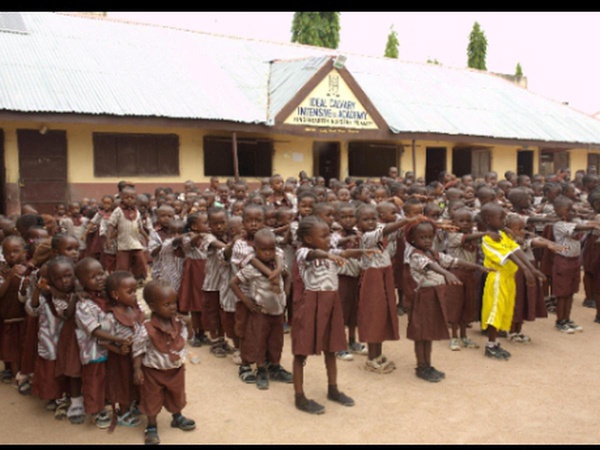
<p style="text-align: center; "><sup>Serving With All My Strength: The Pledge Nobody Asked Us to Sign</sup></p><p><br/></p><p>"To serve Nigeria with all my strength." Most of us first said those words at seven or eight years old, in uniform, under a sun that did not care whether we understood them. Nobody asked for consent. Nobody explained the terms. It is worth pausing on that, because the pledge is a promise made by children to a country that made none in return.</p><p><br/></p><p>I say this not to mock the pledge but to question the debate built on top of it. When people argue that young Nigerians owe the country their presence, they are usually invoking a debt. Yet a debt requires a creditor who delivered something. It is fair to ask what, exactly, was delivered.</p><p><img alt="" src="/media/inline_insight_image/1000233253.png"/></p><p>Consider what the country asks of a graduate in 2026. Generate your own power, since the grid is unreliable. Secure your own safety, because protection is uneven at best. Fund your own opportunity, given that employment is scarce and connections often outweigh competence. Then, in the same breath, be grateful, be patient, be patriotic. A nation that outsources its basic functions to individuals cannot easily claim those individuals as its property. Self-preservation, in this light, is not betrayal. It is arithmetic. <span style="background-color: transparent;">Still, the arithmetic has a second column, and honest writing has to look at it.</span></p><p><br/></p><p>Central to the pro-staying argument is the notion of collective responsibility, and it is not empty. One nurse, one engineer, one developer leaving is a personal story. Millions leaving is a structural event. It is believed that when a country loses its trained professionals faster than it can produce them, the institutions everyone complains about lose the very people who might have repaired them. The hospital with fewer doctors does not improve. The university with fewer lecturers does not sharpen. A system cannot be reformed by the people who have already exited it.</p><p><br/></p><p>So we arrive at a knot that resists clean cutting. A country cannot demand sacrifice from a generation it has failed to protect. And a generation cannot build a better country if everyone able to leave does. Both statements are true at once, which is precisely why the shouting matches in group chats never resolve anything.</p><p><br/></p><p>Although the "stay and build" position is often delivered as moral clarity, it carries a quiet assumption worth challenging. It presumes the young are the correct party to fix mistakes they did not make. The institutions failing us were designed, neglected, or looted long before Gen Z could vote. Telling a twenty-four-year-old to spend decades in resilience mode so that things might improve for someone else is, at minimum, uncomfortable.</p><p><br/></p><p>The "japa" camp deserves the same scrutiny. Migration is sold as a universal escape hatch, yet it is nothing of the sort. It costs money. It demands credentials, visas, savings, and often a willingness to leave parents and siblings behind. For a large share of young Nigerians, japa is not a decision but a daydream. The debate about whether leaving is betrayal quietly excludes those for whom leaving was never an option, and that exclusion is itself a kind of class blindness.</p><p><br/></p><p>What of those who do go? Here the conversation improves, though only slightly. The diaspora contributes, undeniably. Remittances keep households and, arguably, entire local economies afloat. Founders abroad hire back home, mentors advise across time zones, and some people return with skills the country could not have trained. Yet I would caution against treating this as a full answer. Remittances sustain families; they do not automatically build institutions. Money sent home can cushion a failing system just as easily as it can help fix it.</p><p><br/></p><p>Which brings me to the question underneath the others. Does loving Nigeria require standing on Nigerian soil? I doubt it. A person in Toronto who funds a school, or a person in Lagos who does nothing but complain, are not equivalent simply because of coordinates. Patriotism measured by location alone is a thin idea. Measured by contribution, it becomes broader, and considerably harder to fake.</p><p><br/></p><p><img alt="" src="/media/inline_insight_image/1000233251.png"/></p><p><br/></p><p>My position, then, is unfashionably split. Nigeria needs its best people, and those people owe it no martyrdom. Both claims can be held without contradiction. Some will build micro-grids in Enugu. Some will write code in Berlin. The measure of independence at 66 should be whether the country gives either group a reason to care, and whether we, as citizens, are honest about the difference between loving a nation and volunteering to be its shock absorber.</p><p><span style="background-color: transparent;">The pledge said to serve with all my strength. Perhaps the fairer reading is that strength should be spent where it can actually do something.</span></p><p><br/></p><p><br/></p>



 12
12





Other insights from Nonso Obi











Contributor Points

Points-to-Coupons

Referral Earning

Insights for you.


Drums Before Guns
Before we had tanks, we had talking drums. Before we had political parties, we had prai...
285 views
32 upvotes
29 comments
Classism in a third-world country is ...
If you've ever driven through Abuja, you'd see the absurd theater of our class wars. A ...
453 views
21 upvotes
29 comments


We Are All Olodo's
/oh-loh-doh/ A Nigerian slang used to describe someone who is dull, slow to grasp conce...
177 views
21 upvotes
21 comments

Tight purse strings: trying to mainta...
Tight Purse StringsChinedu stared at his phone, the banking app's balance glaring back ...
509 views
17 upvotes
14 comments


The Fallen Giant: A lament for Nigeri...
Oh My Country NigeriaOh My Country Nigeria, your soil drinks the tears of toddlers, l...
223 views
18 upvotes
18 comments


Olodo Must Go! Or Must He?
The Big Celeb runs for dear life.The mob is faster.“See him there!”“Him wan try run. Ca...
161 views
21 upvotes
18 comments


THIS IS NIGERIA- NOT ALL OF IT
Popo stop me I fear dem wan to shoot meSearch my bags like say He wan to loot meComot m...
410 views
15 upvotes
19 comments


A CASE FOR JANUARY.
The hype of December is the very sponsor of the dread of January. But upon closer exami...
1024 views
16 upvotes
15 comments


Dear Chicken, Beware of Christmas
My mum is approaching the empty nest phase of life. My dad doesn’t live in Nigeria, so ...
385 views
13 upvotes
21 comments


Lagos..... The Agbero uprising.
In Lagos, Looking Rich Is Becoming a Security RiskThere is a new kind of anxiety that c...
160 views
17 upvotes
18 comments