Score |
201


R.3.N
 Student/Freelancer @ University of Benin
Student/Freelancer @ University of Benin



Obiageli the Orphan Chapter 2
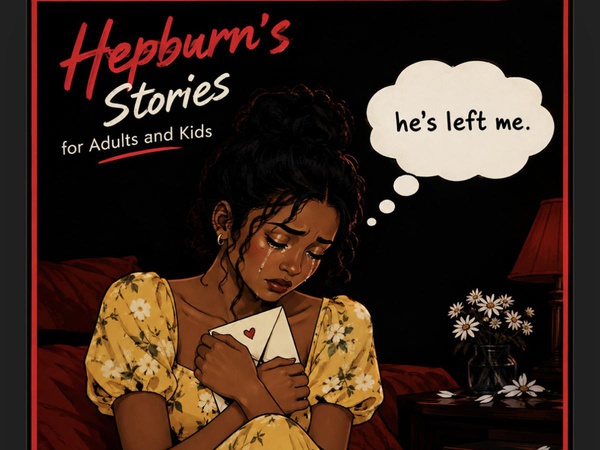
<p>The compound was still in the grey half-light of dawn when Officer John emerged from his room, buttoning his uniform with an air of a man who knew the whole village watched him. He was a hefty man, his belly straining against the fabric, and his boots made a deliberate, heavy sound against the scold.</p><p><br/></p><p>"Obiageli," he called, not unkindly, but with the distracted air of a man checking off a list.</p><p><br/></p><p>She straightened from where she was crouched, gathering the last of the nylons into a rusty bucket. "Good morning, sir."</p><p><br/></p><p>He grunted, his eyes already scanning the horizon beyond the compound. "You've eaten?"</p><p><br/></p><p>The question was a pointless one, a formality he performed each morning. He did not care for an answer. He never did.</p><p><br/></p><p>"Yes, sah," she lied, the words as automatic as his question.</p><p><br/></p><p>"Good. The yams in the back need weeding before the sun gets too high. See to it." He adjusted his cap, and walked out of the gate without a backward glance. The sound of his boots faded, swallowed by the village's morning chorus of roosters and distant coughs.</p><p><br/></p><p>Obiageli had barely picked up her bucket when the door to the main house swung open again. Mama Chidebere stepped out, a wrapper tied loosely around her chest. She was a slim woman with a face perpetually set in a scowl, as if the world itself was a personal offense. Her eyes, sharp and small, immediately found Obiageli.</p><p><br/></p><p>"You," she said, her voice a low rasp. "Is this how you sweep a compound? Look at that corner. Is that not a piece of nylon staring at me?"</p><p><br/></p><p>Obiageli’s eyes followed her pointing finger. It was a single, tiny scrap of black polythene, almost invisible against the dark soil. "Sorry, ma. I will pick it."</p><p><br/></p><p>"Sorry for yourself," Mama Chidebere hissed. "You think you're living here for free? You think Officer John picked you from the bush because of your pretty face? You are here to work. My children will not live in a pigsty because of your laziness."</p><p><br/></p><p>She walked over to the line where Obiageli had just finished washing the breakfast plates. She ran a finger over one, then held it up for inspection. "Water. Still water. Do you call this clean? You are more useless than a broken pot. Go and fetch water from the stream and wash them again. All of them."</p><p><br/></p><p>Obiageli knew it was useless to argue. The plates were clean. The single nylon was a trap. This was the morning ritual, a prelude to the day's suffering. She simply bowed her head. "Yes, ma."</p><p><br/></p><p>As she trudged towards the stream, the sun began to crest the hills, painting the sky in hues of orange and gold. The village was waking up properly now.</p><p><br/></p><p>By the time she returned, her back aching from the weight of the water pot, Mama Chidebere's children Chidi, Ngozi, and little Emekawere outside, scrubbed clean and wearing their school uniforms. Their mother was fussing over them, straightening Chidi's collar and pressing a wrapped piece of yam into Ngozi's hand.</p><p><br/></p><p>"Make sure you finish it before you reach the school gate," she instructed, her voice a stark contrast to the one she used for Obiageli. It was soft, almost musical.</p><p><br/></p><p>She then turned her gaze to Obiageli, who had set the pot down and was now re-washing the already clean plates. "You. When you finish that, go and turn the cassava we soaked yesterday. And then sweep the rooms. All of them. And don't you dare step on my mat with your dirty feet."</p><p><br/></p><p>"Ma," Obiageli started, her voice small. "Please ma I have to go early to school... i will be beaten if I come late again."</p><p><br/></p><p>Mama Chidebere let out a short laugh. "Late? You? And what will you learn there that is more important than the work that feeds you? You think you will become a doctor? A lawyer?" She scoffed, the sound full of contempt. "Your mates are already on their way. Look at them." She gestured to her own children, who were now filing out of the gate, their satchels swinging. "They have a future. You have a broom. Now get to work."</p><p><br/></p><p>The words were a physical blow, but Obiageli had learned to absorb them. She watched Chidi and Ngozi disappear down the path, their laughter echoing back to her, a sound of freedom she could only dream of. The sun was climbing higher, its heat beginning to prickle her skin. A quick glance at the position of the shadows told her it was past eight.</p><p><br/></p><p>She finished the plates, her movements quick and efficient despite the tremor in her hands. She turned the cassava, the sour smell of fermentation filling her nostrils. She swept all three bedrooms, the living room, and the kitchen, her heart a frantic drum beating against her ribs. With every sweep of the broom, she imagined the headmaster's cane, a thin, wicked stick he kept on his desk. She had felt its sting twice before, and the memory was a cold knot in her belly.</p><p><br/></p><p>Finally, she was done. It was nearly nine. The compound was silent, Mama Chidebere having retired to her room. Obiageli's own school uniform, a faded and patched hand-me-down from a distant relative, was hidden under a loose floorboard in her tiny, windowless room. Her only possession of value was a small, worn-out exercise book and a stub of a pencil.</p><p><br/></p><p>Her legs were heavy with fatigue, her stomach ached with hunger, and her spirit was bruised by a thousand tiny cruelties. But as she looked down the long, dusty path that led to the village school, a fierce, stubborn fire ignited in her chest.</p><p><br/></p><p>She would go.</p><p><br/></p><p>She had to.</p>


 12
12


Other insights from R.3.N








Contributor Points

Points-to-Coupons

Referral Earning

Insights for you.


All that I gave
Oh, hey there!It's me... again...You know, There's so much I want to saySo much I want ...
566 views
95 upvotes
95 comments




The Root of Evil.🌚
I like money.But they said it's the root of evil. 🙂Sorry, get your facts straight.The l...
285 views
77 upvotes
87 comments

The Manipulation.
"Mom started looking at me differently from that day.I remember it like the back of my ...
289 views
75 upvotes
90 comments




The 3AM World.
My favourite time of every day is between 1 a.m. and 4a.m.That's when the world is the ...
254 views
67 upvotes
72 comments

Drowning.
I can't breathe.I tried again.Nothing.My lungs burned.The water surrounded me, cold and...
257 views
61 upvotes
72 comments

Eden.
I came to this house very young, with one other.We were accepted so warmly.Everyone lov...
235 views
56 upvotes
66 comments